
0%
In the demanding world of industrial textile manufacturing, the double needle chain stitch stands as a cornerstone for creating seams that balance extreme durability with necessary flexibility. Unlike a standard lockstitch, this specific stitch architecture is engineered to withstand significant tension, making it indispensable for heavy-duty applications where structural integrity cannot be compromised.
From the production of reinforced automotive upholstery to the construction of high-capacity FIBC bags, the global reliance on the double needle chain stitch ensures that products can endure rigorous operational stress. The ability of this stitch to "give" slightly without unraveling makes it the gold standard for materials that undergo constant stretching or heavy load-bearing.
Understanding the mechanics and application of this stitching technique is not merely a technical requirement but a commercial advantage. For manufacturers aiming to meet ISO quality standards and increase product lifespans, optimizing the use of the double needle chain stitch is key to reducing failure rates and enhancing end-user safety in industrial environments.
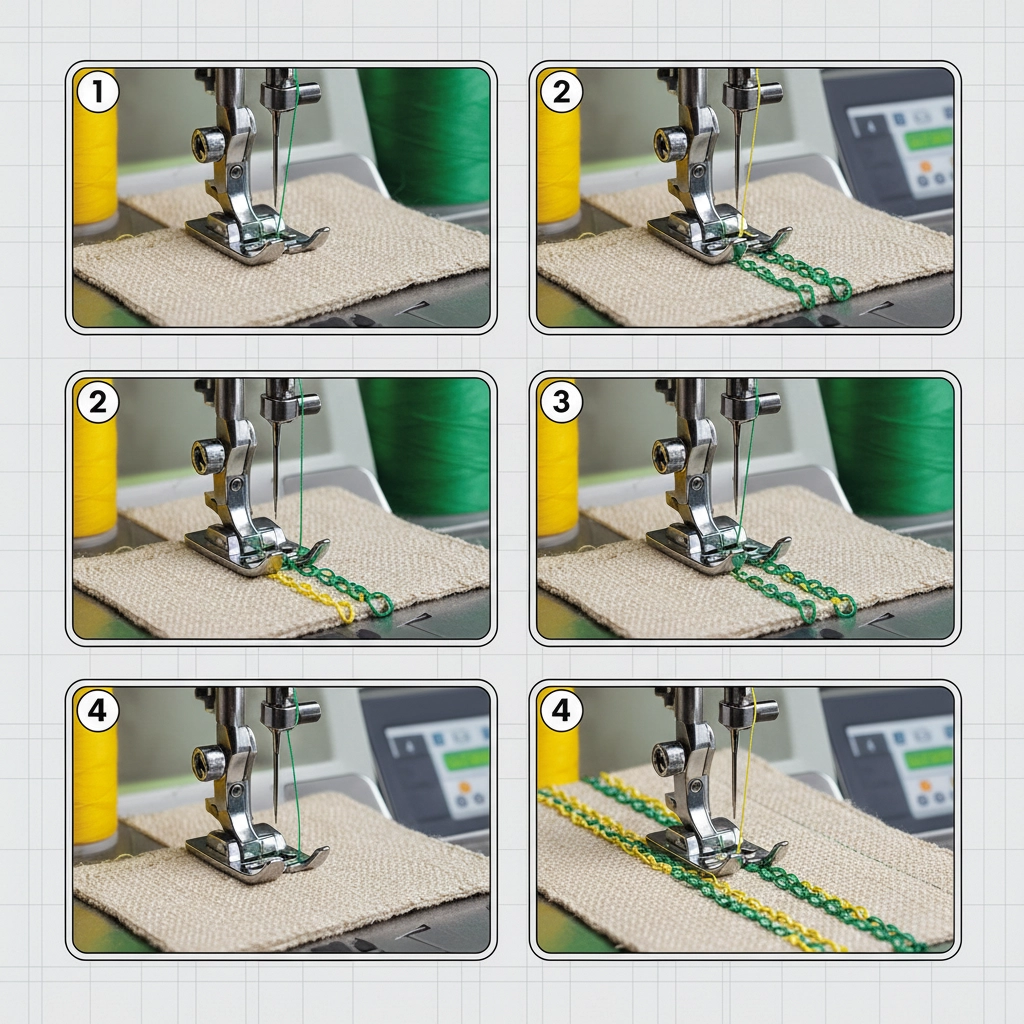
Table of Contents [Hide]
Global Relevance of Double Needle Chain Stitch
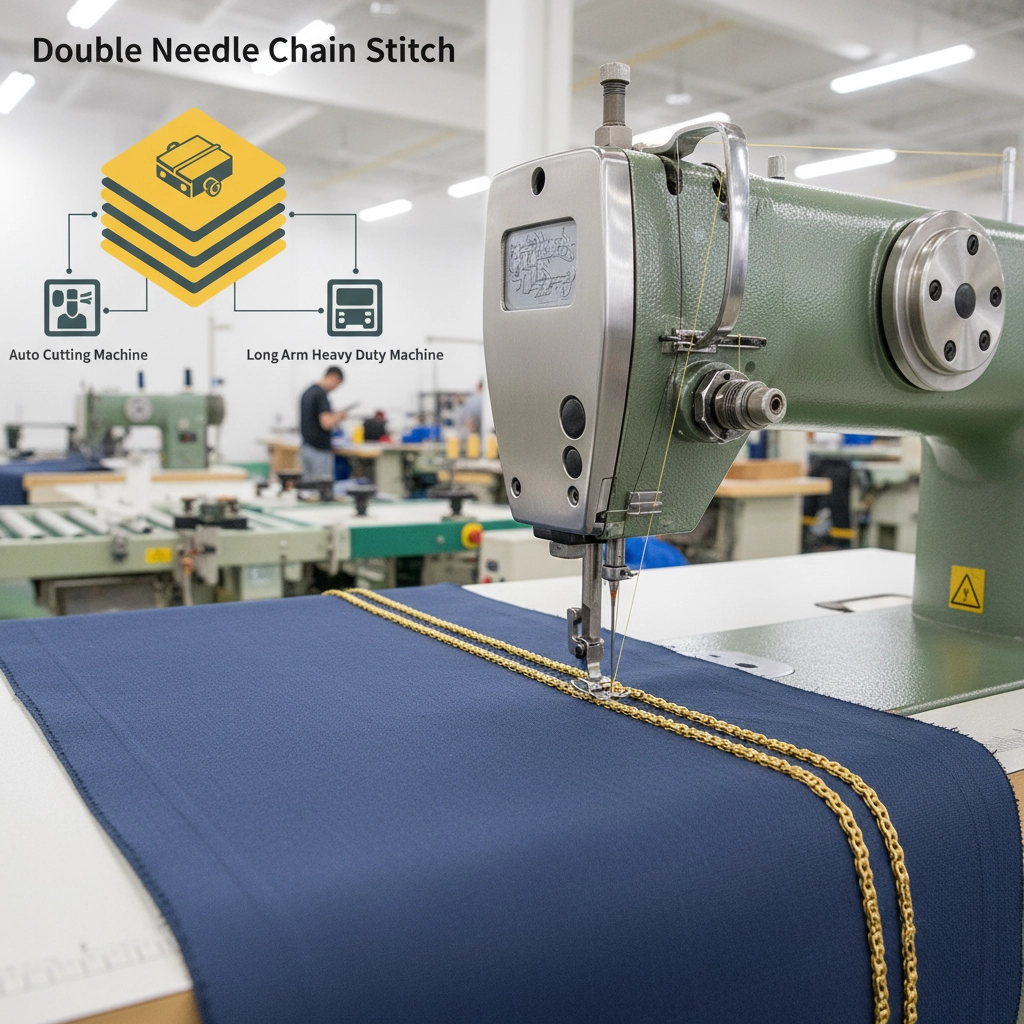
The global textile machinery market has seen a surge in demand for high-strength joining techniques, particularly in developing industrial hubs across Southeast Asia and Latin America. The double needle chain stitch has become a critical requirement for manufacturers who must comply with international safety standards for heavy-duty lifting gear and protective clothing.
As global supply chains move toward "heavy-duty" longevity over "fast-fashion" disposability, the industrial application of this stitch ensures that products are not only functional but sustainable. By reducing the frequency of seam failure in heavy-duty equipment, companies can significantly lower their warranty costs and improve their brand reputation for reliability on a global scale.
FAQS
What is the main difference between a lockstitch and a double needle chain stitch?
The primary difference lies in the construction. A lockstitch uses a bobbin to lock the thread in place, creating a rigid seam. A double needle chain stitch uses loopers to create an interlocking chain of threads. This makes the chain stitch significantly more flexible and prevents the entire seam from unraveling if a single stitch is broken, making it far superior for heavy-duty industrial materials.
Can I use a double needle chain stitch on very thin fabrics?
While technically possible, it is not recommended. The double needle chain stitch is designed for strength and bulk. On thin fabrics, the stitch can be too heavy, causing the material to pucker or "tunnel." For lightweight materials, a standard lockstitch or a single-needle chain stitch is usually more appropriate to maintain the aesthetic and structural integrity of the fabric.
How do I prevent thread breakage when using a double needle chain stitch?
Thread breakage is usually caused by incorrect tension or needle heat. First, ensure you are using a needle gauge appropriate for your material. Second, calibrate the looper tension to ensure it isn't pulling too tightly on the fabric. Finally, for high-speed production on synthetics, consider using a needle cooler or a lubricated thread to reduce friction and heat buildup.
Is a double needle chain stitch machine harder to maintain than a lockstitch machine?
Yes, it is slightly more complex due to the looper mechanism. While a lockstitch machine mainly requires bobbin case cleaning, a chain stitch machine requires precise timing of the loopers and frequent lubrication of the moving parts to ensure the interlocking chain forms correctly. However, modern heavy-duty machines from Longsew are designed for easy access and simplified maintenance.
Which industry benefits most from the double needle chain stitch?
The heavy-duty textile industry benefits most, particularly those manufacturing FIBC bags, automotive interiors, and industrial outdoor gear. Any product that must withstand high tension, stretching, or extreme loads relies on this stitch to prevent catastrophic seam failure and ensure the safety of the end-user.
Can computerized machines improve the quality of a double needle chain stitch?
Absolutely. Computerized pattern sewing machines can maintain perfectly consistent stitch lengths and automate the start and stop points of the seam. This eliminates human variability and ensures that every double needle chain stitch is identical, which is critical for passing strict ISO quality inspections in industrial manufacturing.
Conclusion
The double needle chain stitch is far more than just a sewing technique; it is a critical engineering solution for the global heavy-duty textile industry. By combining the strengths of redundant stitching with the flexibility of a chain-link structure, it provides the ultimate insurance against seam failure in the most demanding environments, from automotive cabins to industrial bulk shipping.
As the industry pivots toward automation and sustainable materials, the importance of precision machinery in executing this stitch will only grow. Manufacturers are encouraged to invest in high-quality, computerized heavy-duty equipment to ensure their products meet the evolving safety and durability standards of the modern market. For world-class industrial sewing solutions, visit our website: www.longsew.com
Related Posts
Updated:

Michael Thompson
Michael Thompson is the Regional Sales Representative for the Eastern US, representing LongSew Machinery Technology. He has a robust understanding of the packaging and industrial sewing industries. Michael specializes in connecting with companies utilizing FIBC bags and other large-scale industrial sewing applications. He is focused on demonstrating the value of



