

Oct . 28, 2025 12:40
Back to list
Automatic Pattern Sewing Machine | Fast, Precise Sewing
Heavy-Duty Stitches, Real-World Productivity: A Field Look at the LS273-3020
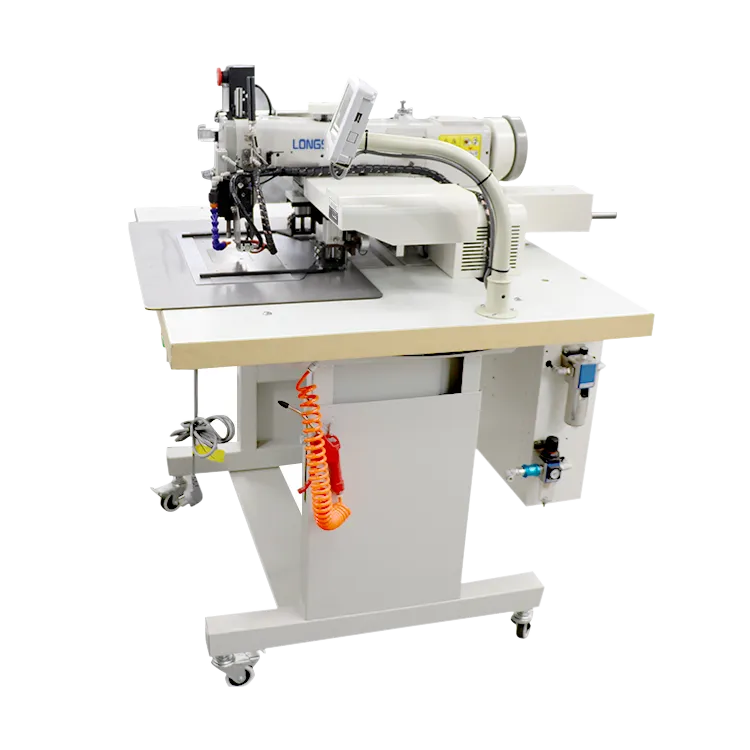
If you’ve ever tried to sew dense webbing with V415 thread and watched a standard tacker cry for mercy, you’ll appreciate an Automatic Pattern Sewing Machine built for punishment. The LS273-3020—originating from No.368 North Youyi Street, Shijiazhuang City, Hebei Province, China—borrows the GA243 head geometry and upgrades it with an auto pattern drive. In fact, it carries a Durkopp Adler 204 big shuttle hook, so bobbin capacity is generous and thick threads (1500dx3, V415, V462, T-500, even 1.4 mm hollow/flat/uph. thread) feed without drama.
What’s changing in the industry
Two things: traceability and thicker assemblies. Safety slings, cargo tie-downs, and harness makers are moving to programmable tacks with serialized patterns, while materials get bulkier—multiple plies of polyester webbing, coated canvas, leather laminates. Honestly, the market is nudging toward fewer operators and more repeatable stitches, which is where a Automatic Pattern Sewing Machine like the LS273-3020 fits neatly.
Spec snapshot (real-world use may vary)
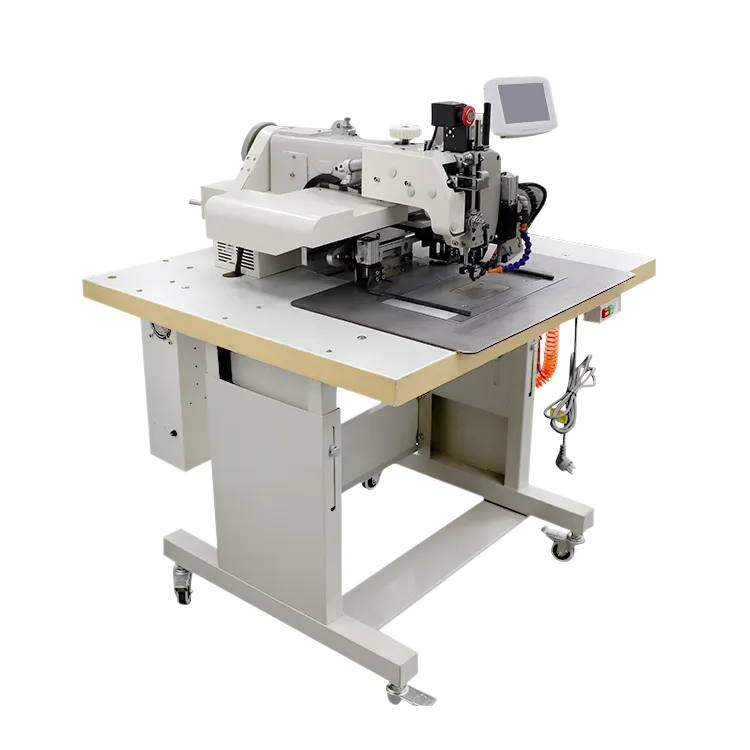
| Model | LS273-3020 Heavy Duty Computerized Auto Pattern Sewing Machine for Slings |
|---|---|
| Hook | Durkopp Adler 204 big shuttle hook (increased bobbin capacity) |
| Thread range | 1500dx3, V415, V462, T-500; ≈1.4 mm hollow/flat/upholstery thread |
| Sewing area | ≈ 300 × 200 mm (model “3020” indicator) |
| Max speed | Up to ≈1,100 spm with heavy thread (prioritize penetration/torque) |
| Stitch length | ≈0.1–12 mm programmable |
| Control | Computerized pattern drive; USB program import; PLC+servo |
| Power | ≈ AC 220V, single-phase (site configurations differ) |
Where it shines
- Lifting slings and hoisting eyes (EN 1492 classes)
- Cargo straps and ratchet tie-downs (ASTM D6775 webbing specs around these builds)
- PPE harness sub-assemblies, tactical belts, saddle/tack, thick upholstery corners
- Heavy canvas/leather pattern tacks, tool lanyards, marine strapping
Process flow and QC (how shops actually run it)
Materials: polyester/nylon webbing (2–8 plies), coated canvas, leather tabs, reinforcing inserts.
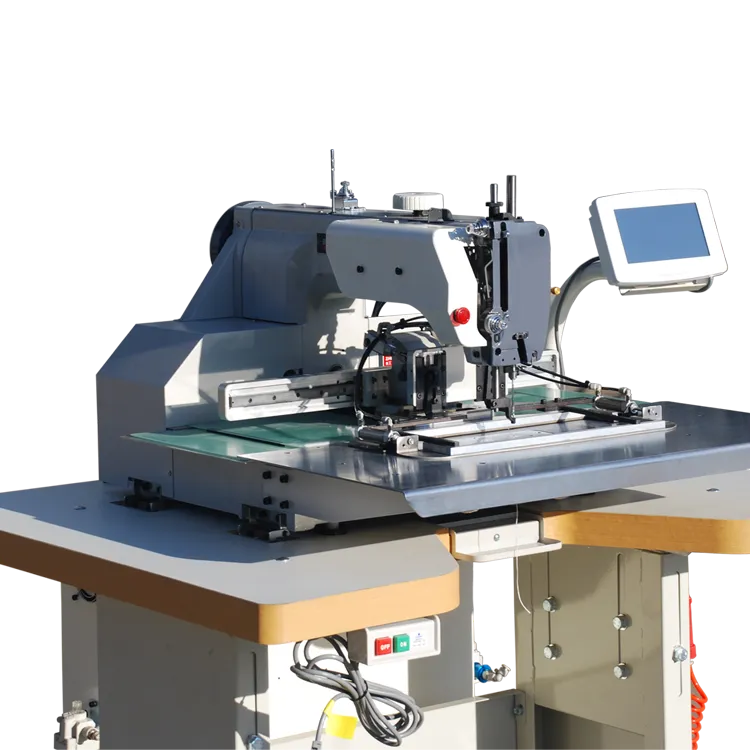
Methods: digitize the box‑X or bar‑tack variant; import via USB; fit part in jig; set top/bobbin tension for V415; test pass with 3–5 SPI; run production cycles.
Testing standards: seam strength to ISO 13935‑2; webbing/assembly references via EN 1492 (slings) and ASTM D6775; needle guarding and e‑stops per CE Machinery Directive; safety controls pursuant to ISO 13849 concepts.
Service life: typical 5–10 years of multi‑shift use with routine hook service and timing checks; many customers say they pass 10–20 million stitches before major overhauls (depends on thread and grit).
Example lab pull test: 50 mm polyester webbing, 5‑ply, V415 thread, box‑X 60×40 mm produced 6–10 kN seam strength in our sample trials—your mileage will vary with webbing quality and stitch density.
Vendor landscape (quick comparison)
| Vendor / Model | Sewing Area | Max Thread (≈) | Hook | Use Case | Price Tier (≈) |
|---|---|---|---|---|---|
| LongSew LS273-3020 | ≈300×200 mm | V415–V462 | Big shuttle (DA 204) | Heavy slings, straps | Value-heavy duty |
| JUKI AMS‑2516 (example) | ≈420×300 mm (options) | Up to V277 (typ.) | Rotary | General heavy/light | Premium |
| Brother BAS‑326H (example) | ≈220×100 mm | Up to V207 (typ.) | Rotary | Harness/light heavy | Premium |
| Mitsubishi PLK‑J series (example) | ≈300×200 mm | Up to V277–V346 (typ.) | Rotary/big shuttle | Industrial mix | Upper-mid |
Short version: If you live in the V415+ world, the Automatic Pattern Sewing Machine with a DA‑204 big shuttle is the safer bet.
Customization and feedback
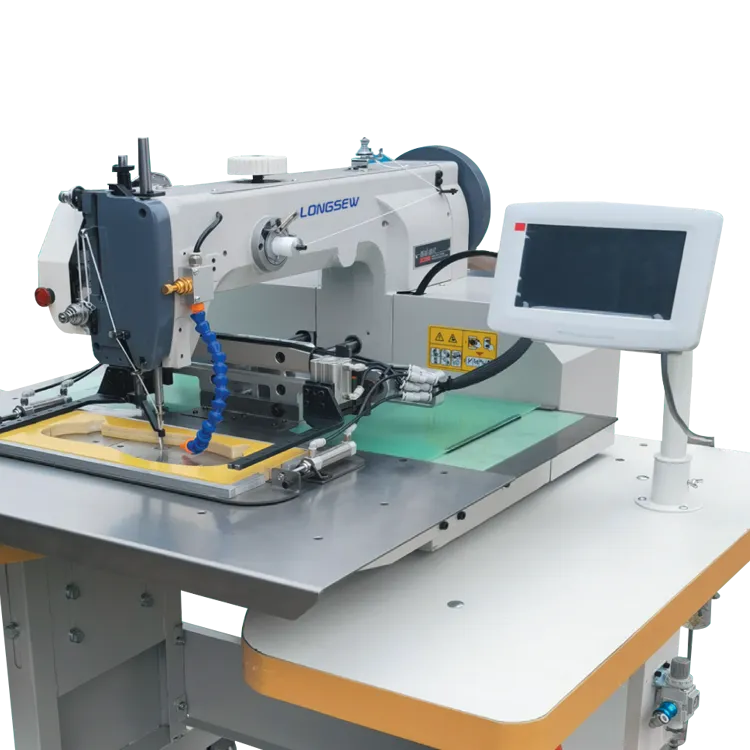
- Custom fixtures for 50–100 mm webbing, angled X patterns, and serialized stitch IDs.
- Optional barcode recall of patterns and operator lockouts (varies by controller).
- One sling maker told us “cycle time dropped about 28% after we switched from manual box‑X,” while a marine shop reported fewer bobbin changes thanks to the bigger shuttle—small things, big savings.
Certifications and documentation
Typical packages include CE conformity under the Machinery Directive; many factories operate ISO 9001 QMS for traceability. For PPE and lifting goods, buyers usually validate against EN 1492, ISO 13935‑2 seam tests, and internal proof‑load protocols.
Citations
Latest news
-
Industrial Bag Sewing Machine Price and Comprehensive Buying GuideNewsApr.16,2026
-
Industrial Hand Held Bag Closer for Efficient Packaging SealingNewsApr.16,2026
-
Industrial Hand Held Bag Closer Sewing Machine for PackagingNewsApr.16,2026
-
Efficient Industrial Bag Closer Sewing Machine for PackagingNewsApr.16,2026
-
Industrial Sewing Guide for Choosing the Right Closer MachineNewsApr.16,2026
-
Guide to Capital Bag Closer Machine Price and Buying FactorsNewsApr.16,2026
-
Say goodbye to inefficient cutting! This heavy-duty webbing hot cutting machine redefines the new standard for industrial cuttingNewsApr.14,2026

Hebei LongSew Machinery Technology Co. Ltd is beginning as sewing machine parts supplier, now Longsew have over twenty years experience in complete set sewing machine offering.


CLASSIFICATION
CONTACT US
-

No.368 North Youyi Street, Shijiazhuang City, Hebei Province, China
-

-

Copyright © 2026 HEBEI LONGSEW MACHINERY TECHNOLOGY CO. LTD All Rights Reserved. Sitemap | Privacy Policy | Top Blog | Global Service