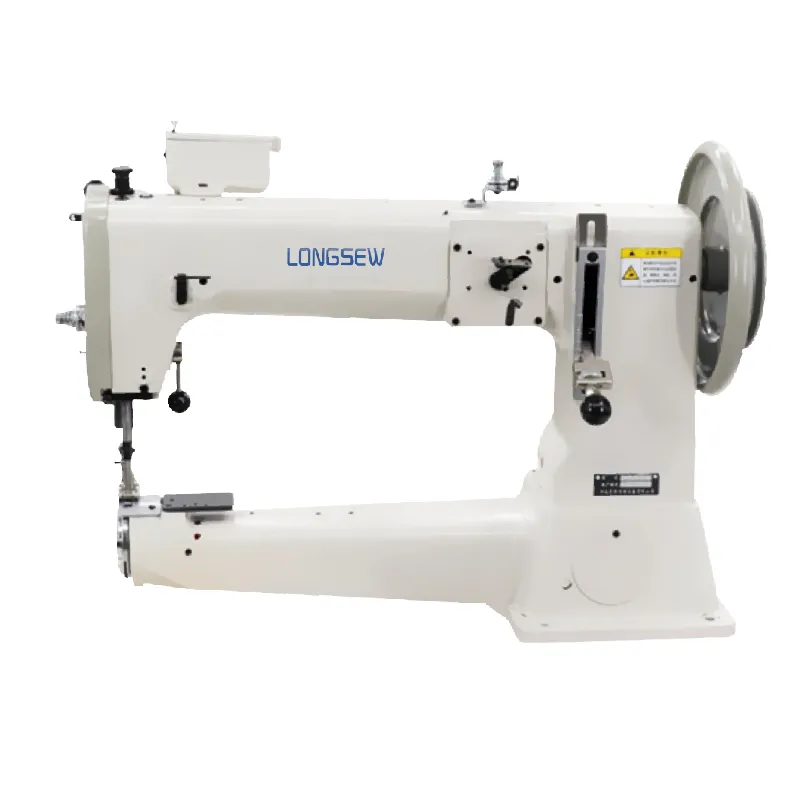
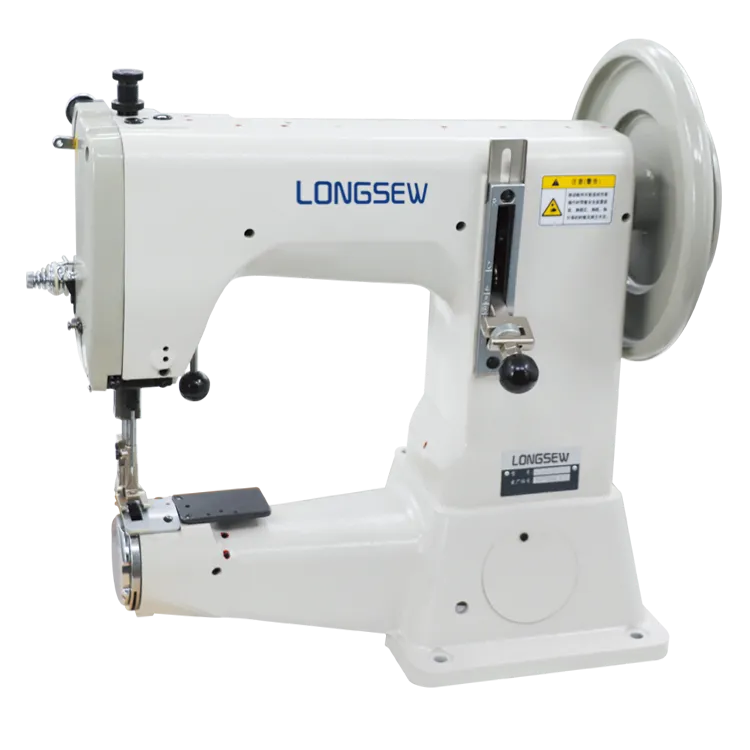
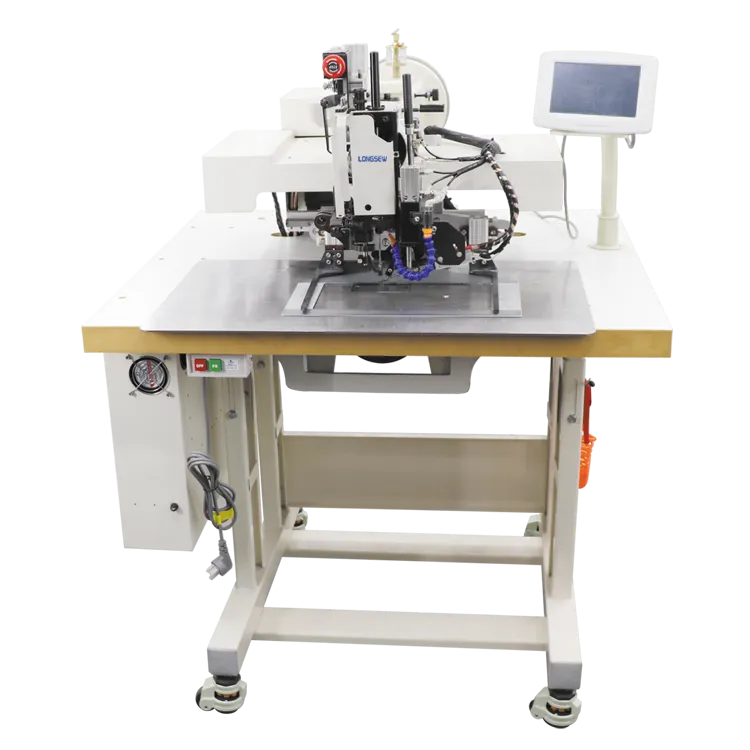
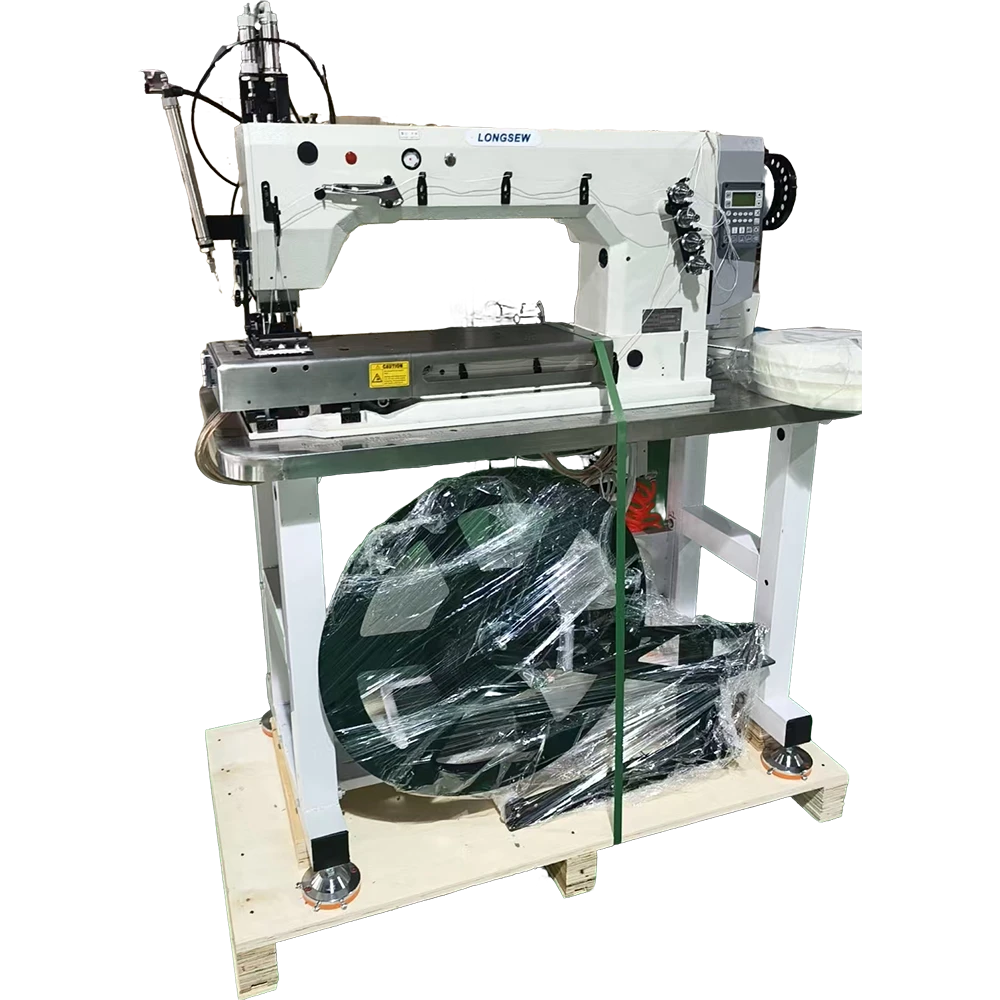
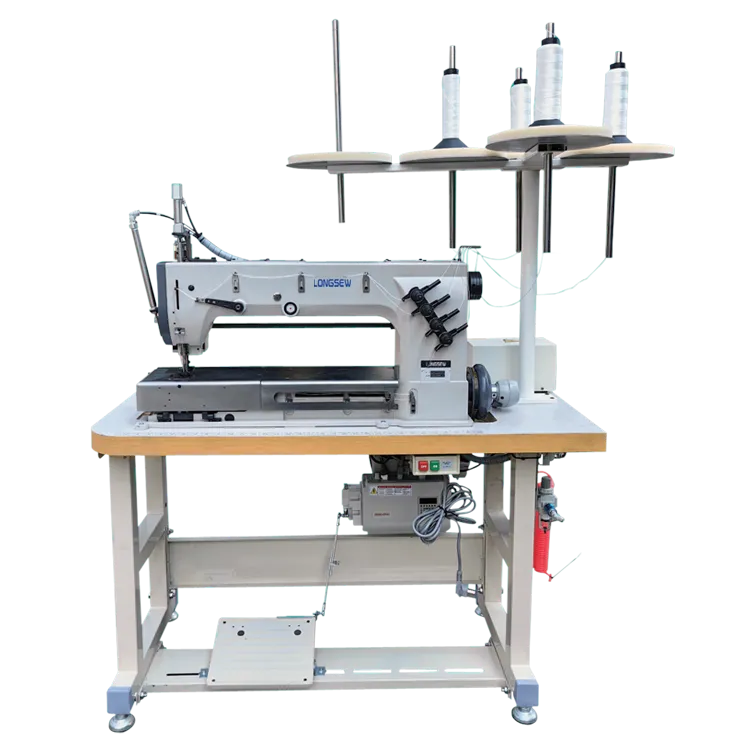
Advanced jumbo bag sewing machine Solutions for Denmark's Industrial Packaging

High-precision stitching technology engineered for the demanding standards of the Danish textile and bulk packaging sector.

The State of Industrial Bag Manufacturing in Denmark

Analyzing the intersection of Danish engineering precision and bulk packaging needs.

Denmark's manufacturing landscape is characterized by a strong emphasis on sustainability and high labor costs, which drives the local demand for a high-performance fibc sewing machine. The region's focus on wind energy and pharmaceutical logistics requires packaging that meets stringent safety and durability certifications.

Due to the temperate maritime climate and the prevalence of agricultural exports, there is a consistent need for moisture-resistant stitching. Local workshops are increasingly replacing manual processes with a professional big bag sewing machine to ensure seam integrity under heavy loads.

Economic pressure to optimize throughput has led Danish firms to seek equipment that reduces material waste. The integration of automated jumbo bag stitching machine systems has become a competitive necessity for factories serving the Nordic logistics hub.
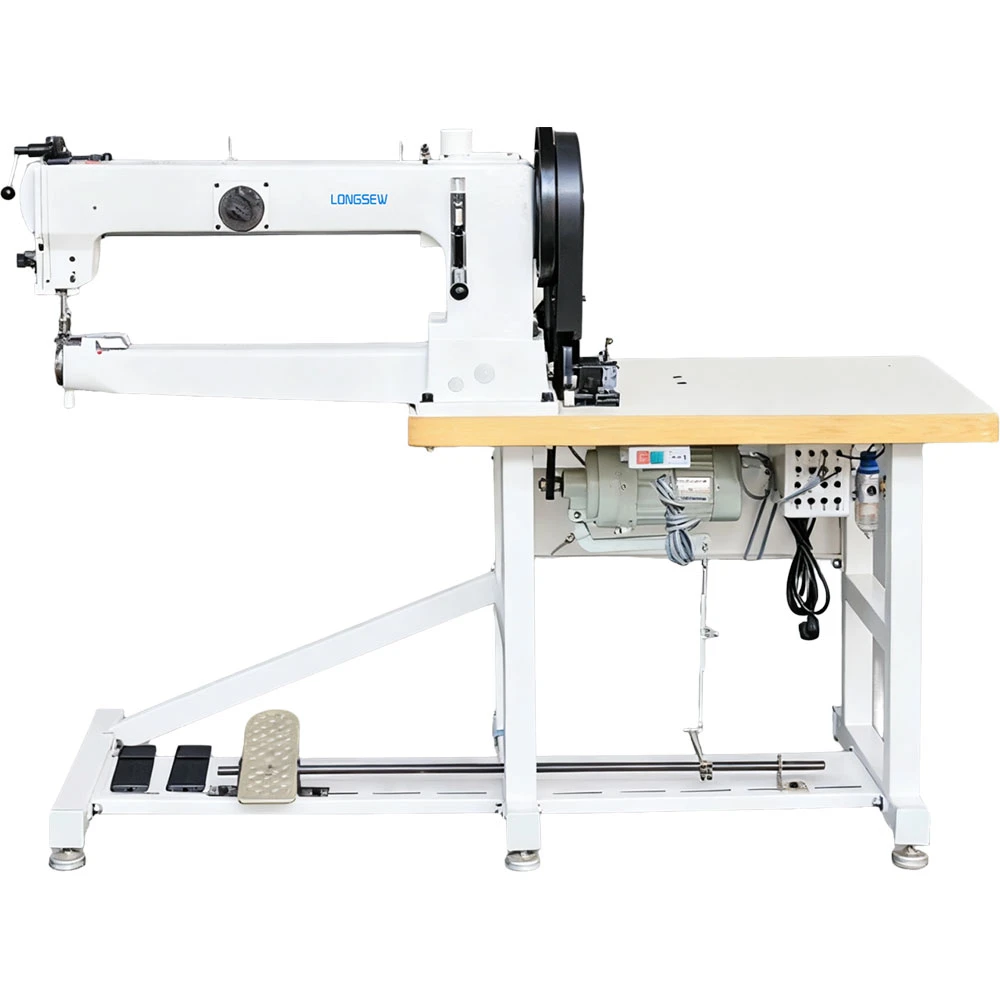
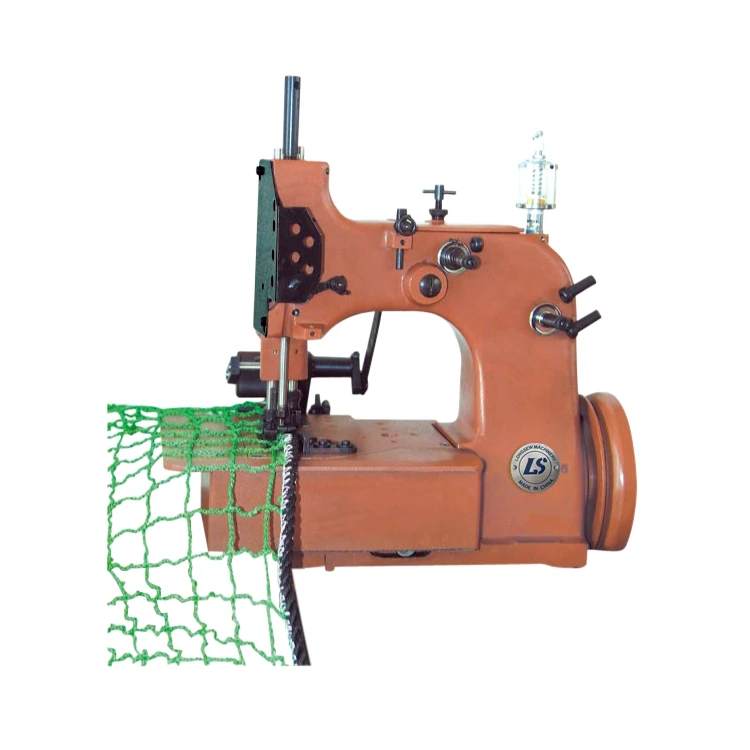
Evolution and Trajectory of Bag Closing Technology

From manual handheld units to fully automated industrial lines.

Market Development History

In the early 2000s, the Danish market relied heavily on basic mechanical closing tools. The shift began around 2010 when the introduction of electronic speed control in the jumbo bag sewing machine allowed for consistent stitch lengths across varied fabric thicknesses.

By 2015, the industry transitioned toward specialized machinery. The emergence of the 50 kg jute bag making machine addressed the specific needs of the organic fertilizer and grain sectors, bridging the gap between small-scale sacks and bulk containers.

From 2020 onwards, the "Industry 4.0" movement in Europe integrated IoT sensors into stitching heads, allowing Danish operators to monitor thread tension and needle wear in real-time, drastically reducing downtime in FIBC production.

Future Development Trends

Smart Tension Adaptation

Future systems will utilize AI to automatically adjust tension based on the GSM of the polypropylene fabric, ensuring zero-defect seams without manual calibration.

Energy-Efficient Servo Drive Integration

In alignment with Denmark's green energy goals, new machines will feature ultra-low consumption servo motors that reduce electricity usage by 40% compared to traditional clutch motors.

Biodegradable Thread Optimization

As EU regulations on plastics tighten, machinery is being redesigned to handle high-strength biodegradable threads without causing friction-induced breakage.

Future Trends and Industry Outlook

Projecting the next 5 years of textile machinery innovation in the EU.

Full Automation Integration
Transitioning from semi-automatic to fully robotic stitching cells to combat rising labor costs in Denmark.
Eco-Friendly Engineering
Developing machinery that optimizes thread usage and utilizes recycled metals in the chassis construction.
Modular Design Architecture
Creating interchangeable sewing heads that allow quick switching between FIBC and smaller jute bag production.
Predictive Maintenance AI
Integrating cloud-based diagnostics to predict needle failure before it impacts production quality.

Industry Outlook

Based on Google search trends for "industrial sewing automation" in Northern Europe, there is a sharp increase in demand for precision-engineered equipment that reduces human error. The Danish market is moving away from general-purpose machines toward specialized task-oriented hardware.

We expect the next three years to see a convergence of textile machinery and robotic arm technology, where the sewing head becomes a peripheral to a fully automated bag-forming line, increasing output per square meter of factory space.

Local Application Scenarios in Denmark

Tailored solutions for specific Danish industrial requirements.

01. Agricultural Grain Export Packaging

Utilizing the 50 kg jute bag making machine for high-volume seeding and grain exports, ensuring burst-proof seams for long-distance maritime transport.

02. Pharmaceutical Raw Material Logistics

Implementation of precision fibc sewing machine units to create clean-room compatible bulk bags that prevent contamination of sensitive chemical powders.

03. Waste Management & Recycling Bulk Bags

Deploying heavy-duty jumbo bag stitching machine systems to produce reinforced bags for industrial plastic scrap and metal recycling collection.

04. Wind Turbine Component Protection

Customized big bag sewing machine setups for creating oversized protective covers and transport bags for turbine parts.

05. Specialty Food Grade FIBC Production

High-speed jumbo bag sewing machine lines dedicated to food-grade certified bags for the Danish dairy and confectionery export industries.

Brand Story

Global Development History of Hebei Longsew Machinery Technology Co., Ltd.

Foundation and Vision

Established with a mission to solve the most critical pain points in heavy-duty textile machinery, focusing on seam strength and operational longevity.

Technological Breakthrough

Developed the first generation of high-stability stitching heads that eliminated common thread-breaking issues in thick polypropylene fabrics.

European Market Expansion

Strategically entered the EU market, adapting our machinery to meet CE standards and the high precision requirements of Northern European clients.

Innovation in Automation

Pioneered the integration of smart sensors into bulk bag sewing systems, reducing manual labor dependency for our global partners.

Sustainable Future

Committing to a carbon-neutral manufacturing process, ensuring our machines help clients achieve their own sustainability goals.

Frequently Asked Questions in Denmark

Expert answers to common technical queries from our local partners.

How do I choose the right fibc sewing machine for heavy-duty polypropylene?

You should focus on the needle penetration power and the motor's torque. For heavy-duty PP, a machine with a dedicated servo-driven feed system is recommended to maintain consistent stitch quality.

Can a jumbo bag sewing machine handle varying fabric thicknesses?

Yes, our advanced models feature adjustable presser foot pressure and automatic tension controllers that adapt to different material densities without stopping production.

What is the maintenance cycle for a big bag sewing machine in a high-dust environment?

In dusty environments typical of Danish grain silos, we recommend daily cleaning of the bobbin area and weekly lubrication of the main shaft to prevent abrasive wear.

Is the 50 kg jute bag making machine compatible with biodegradable threads?

Absolutely. Our jute bag machines are designed with smooth thread guides to reduce friction, making them ideal for eco-friendly and biodegradable sewing materials.

How does a jumbo bag stitching machine improve production safety?

By providing uniform seam strength and incorporating automatic stop sensors, these machines eliminate the risk of bag rupture during hoisting and transport.

Do your machines comply with EU safety and electrical standards?

All equipment exported to Denmark is fully CE certified and meets all European safety regulations regarding industrial electrical components and operator ergonomics.

Ready to Upgrade Your Production Line?

Our engineering team is available to provide customized technical consultations for manufacturers across Denmark.

Contact Us Now

If you are interested in our products, you can choose to leave your information here, and we will be in touch with you shortly.