

Oct . 18, 2025 12:15
Back to list
FIBC Spout Rosettes – Durable, Precise, Template-Sew Ready
If you’ve spent time around big-bag lines, you already know the unsung hero is the rosette. For those new to it: fibc spout rosettes are the finicky, circular reinforcements around discharge spouts that decide whether your bag empties cleanly or makes a mess. Longsew’s LS200-3020CM pattern sewing machine steps in precisely here—automating a job that used to burn time, needles, and tempers. The unit comes out of No.368 North Youyi Street, Shijiazhuang City, Hebei Province, China, and to be honest, the build feels more “industrial quiet confidence” than flashy.
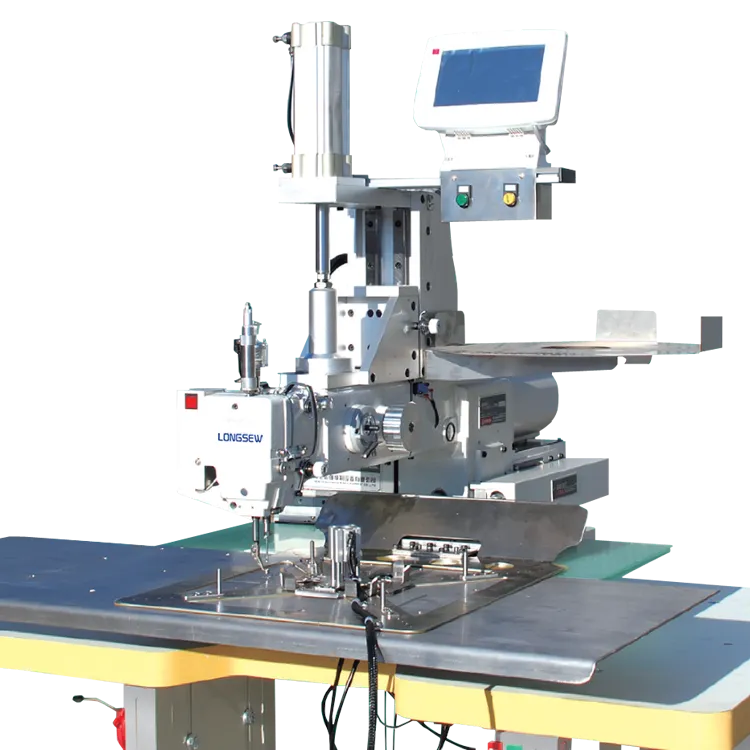
Why rosette automation is trending
Three converging pressures: labor gaps, tighter QC, and faster changeovers. Chemical and mineral packers tell me they can’t afford rework when fines leak. Food and feed plants need cleaner stitch profiles for hygiene. And across the board, programmable sewing beats “good enough” by hand. In fact, customers say a predictable pattern on fibc spout rosettes cuts discharge complaints dramatically.
Typical process flow on LS200-3020CM
- Materials: PP woven base cloth, spout fabric, rosette patch (laminated or unlaminated), polyester/PP thread.
- Method: heat-cut rosette; clamp; run programmed lockstitch (301) pattern with back-tack and corner tie-offs.
- Testing: seam tensile per ISO 13935-2; visual defect check; optional leak test with fines; ESD checks for Type C/D bags per IEC 61340-4-4.
- Service life: matches bag duty cycle; stitch integrity retained through multiple fills on reusable (R) bags when applicable—real-world use may vary.
- Industries: chemicals, minerals, agriculture, food & feed (cleanroom variants), recycling granulates.
Product snapshot (key specs)
| Model | LS200-3020CM (automatic, computerized pattern sewer) |
| Programmable sewing area | ≈ 300 × 200 mm (fixture-dependent, customization available) |
| Stitch type / speed | 301 lockstitch; up to ≈ 2,500 spm (pattern complexity affects speed) |
| Needle / thread | DPx17 (≈ 18–23); polyester/PP 20s/3–40s/3, as specified |
| Power / drive | ≈ 220V, 50/60 Hz; servo-driven with clamp fixtures |
| Pattern storage | Hundreds of patterns; USB import/export; operator recall |
| Rosette range | Common diameters around 160–320 mm; fixtures for larger |
Internal trials I’ve seen on fibc spout rosettes showed seam tensile often ≥ 600 N per stitch line (ISO 13935-2, PP fabric, 3 mm stitch length)—your fabric and thread choices matter, of course.
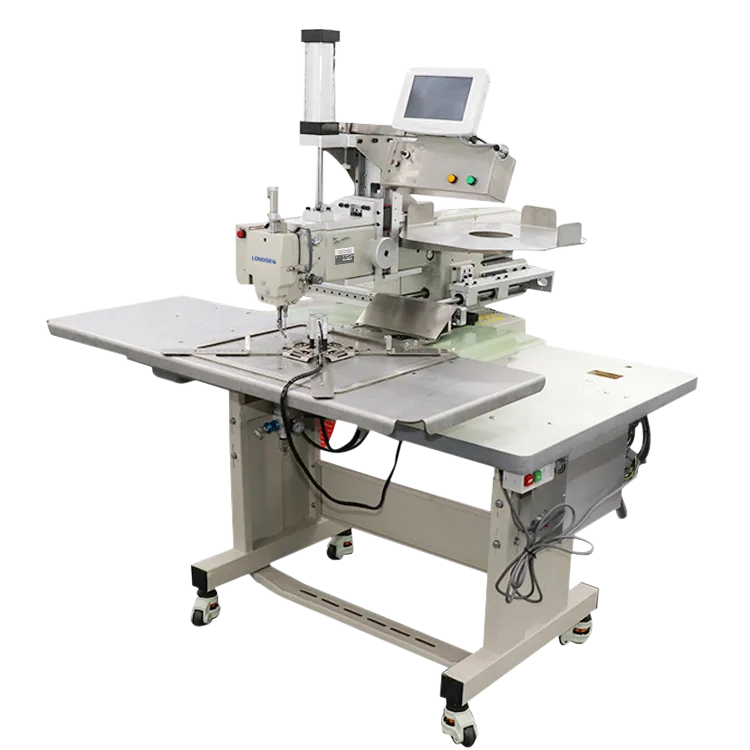
Vendor landscape (quick comparison)
| Vendor | Stitch area | Automation | Certifications | Lead time | After-sales |
|---|---|---|---|---|---|
| Longsew LS200-3020CM | ≈ 300×200 mm | Programmable, clamping fixtures, pattern recall | CE; ISO 9001 plant (vendor statement) | Usually 4–8 weeks (region-dependent) | Remote support, spares kits, operator training |
| Brand A (pattern sewer) | ≈ 220×220 mm | Programmable; fewer fixture options | CE | 6–10 weeks | Standard warranty only |
| Brand B (manual post-bed) | N/A | Manual; operator skill critical | — | Stock | Minimal |
Customization and compliance
Fixtures for 8‑petal or 12‑petal fibc spout rosettes, stitch density tweaks, barcode pattern recall, and ESD-friendly setups for Type C/D bags are common requests. Food-grade plants often pair this with clean-room thread handling and documented changeovers to align with BRCGS Packaging norms. For general FIBC conformity, ISO 21898 is still the anchor standard; add UN/ADR where dangerous goods are in play.
Field notes (mini case studies)
- Minerals packer (EU): automated fibc spout rosettes cut rosette cycle time by ≈ 38% and reduced dust complaints from 6% to 1.2% of shipments in 90 days.
- Feed mill (APAC): switched from manual to programmed cross-hatch pattern; seam failures dropped to near-zero on weekly audits; operators liked the one-touch recalls—less “guesswork stress.”
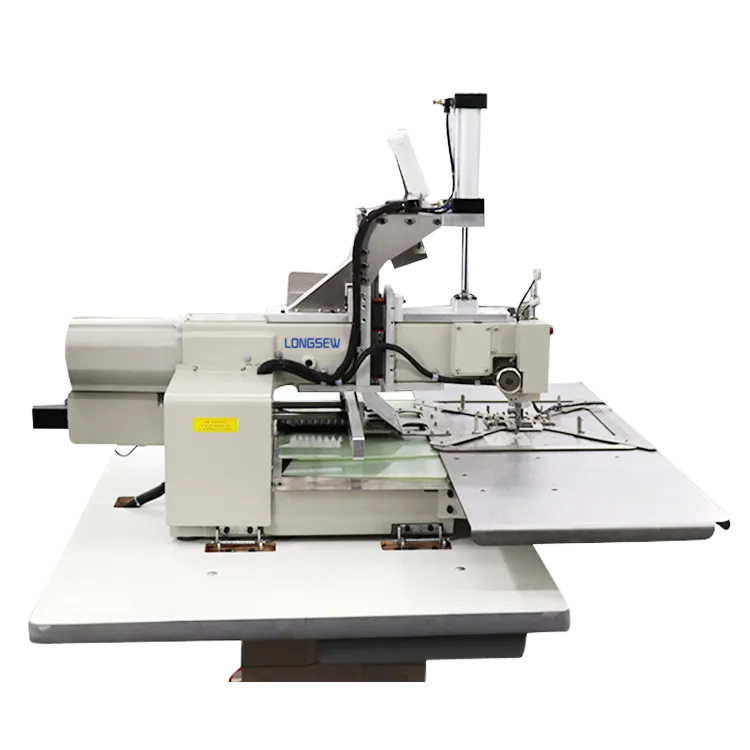
Bottom line: if your discharge complaints trace back to rosette inconsistencies, this machine is a pragmatic upgrade. It’s not flashy. It’s predictable—which is exactly what you want at the spout.
Authoritative references
- ISO 21898: Packaging — Flexible intermediate bulk containers for non-dangerous goods. https://www.iso.org/standard/74110.html
- ISO 13935-2: Textiles — Seam tensile properties — Part 2. https://www.iso.org/standard/72282.html
- IEC 61340-4-4: Electrostatics — ESD for FIBCs. https://webstore.iec.ch/publication/434
- UN Recommendations on the Transport of Dangerous Goods (Model Regulations). https://unece.org/transport/dangerous-goods
- EFIBCA Guidelines for FIBC Safety and Testing. https://www.efibca.com
Latest news
-
Industrial Bag Sewing Machine Price and Comprehensive Buying GuideNewsApr.16,2026
-
Industrial Hand Held Bag Closer for Efficient Packaging SealingNewsApr.16,2026
-
Industrial Hand Held Bag Closer Sewing Machine for PackagingNewsApr.16,2026
-
Efficient Industrial Bag Closer Sewing Machine for PackagingNewsApr.16,2026
-
Industrial Sewing Guide for Choosing the Right Closer MachineNewsApr.16,2026
-
Guide to Capital Bag Closer Machine Price and Buying FactorsNewsApr.16,2026
-
Say goodbye to inefficient cutting! This heavy-duty webbing hot cutting machine redefines the new standard for industrial cuttingNewsApr.14,2026

Hebei LongSew Machinery Technology Co. Ltd is beginning as sewing machine parts supplier, now Longsew have over twenty years experience in complete set sewing machine offering.


CLASSIFICATION
CONTACT US
-

No.368 North Youyi Street, Shijiazhuang City, Hebei Province, China
-

-

Copyright © 2026 HEBEI LONGSEW MACHINERY TECHNOLOGY CO. LTD All Rights Reserved. Sitemap | Privacy Policy | Top Blog | Global Service