

Oct . 19, 2025 12:05
Back to list
Automatic Pattern Sewing Machine: Precision & Speed
Inside the new wave of FIBC loop sewing: what I learned from a week with an automatic pattern sewing machine
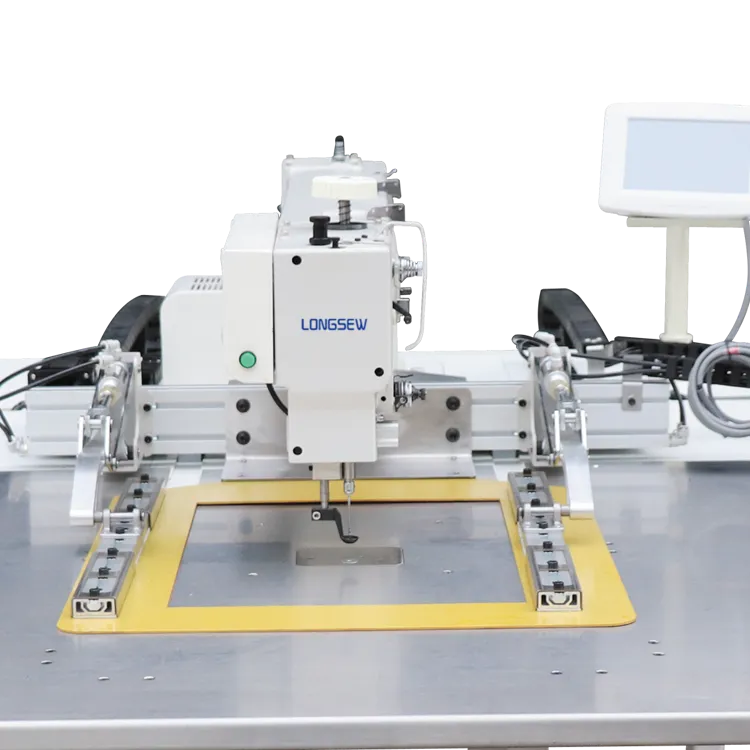
I spent a few days at a plant in Shijiazhuang—No.368 North Youyi Street, Hebei, to be precise—watching operators run the LS300-6050 on jumbo-bag loops. The headline? Automation isn’t just faster; it’s calmer. Fewer interruptions, cleaner seams, and honestly, happier mechanics. The LS300 series’ 6-times big rotary hook means more bobbin thread on board, so fewer changeovers and less swearing under the breath when a bobbin runs out mid-pattern.
Industry trend check
FIBC producers are pushing for traceable, repeatable loop seams as loads and audits go tougher. We’re seeing three converging trends: data-logged stitches, energy-efficient servo drives, and quick-change fixtures for webbing widths. Many customers say the ROI lands in 9–18 months—longer if you only run single shift, shorter if you’re firefighting rework.
Product snapshot: LS300-6050 highlights
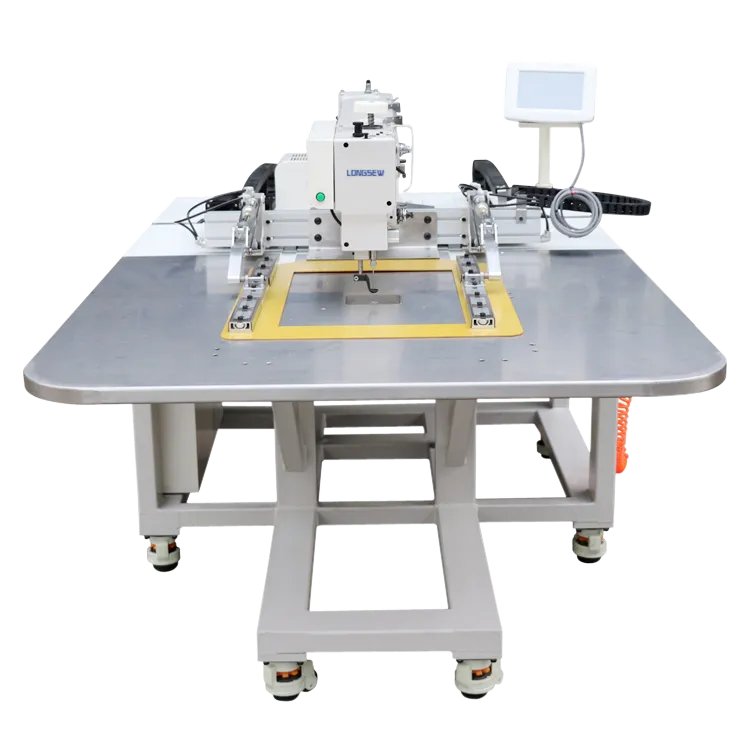
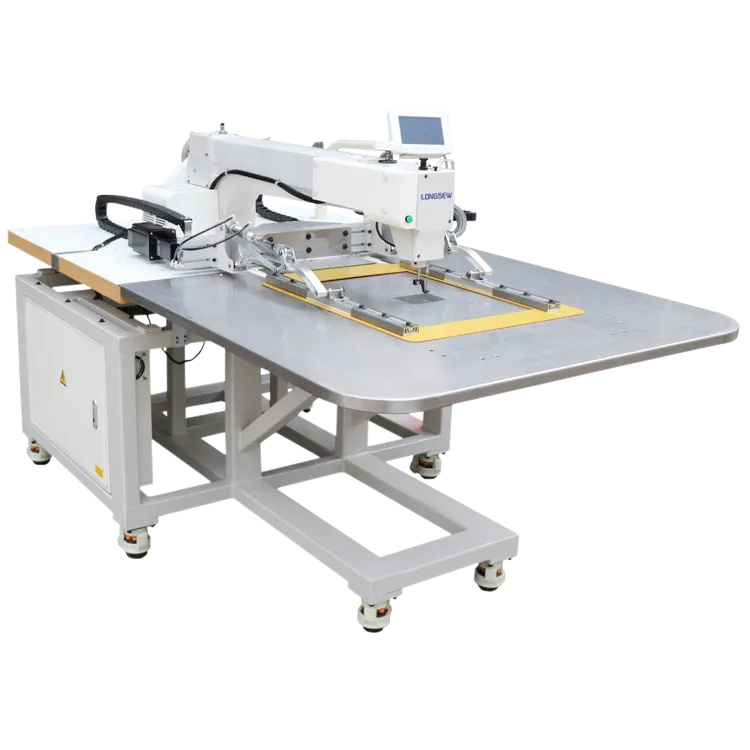
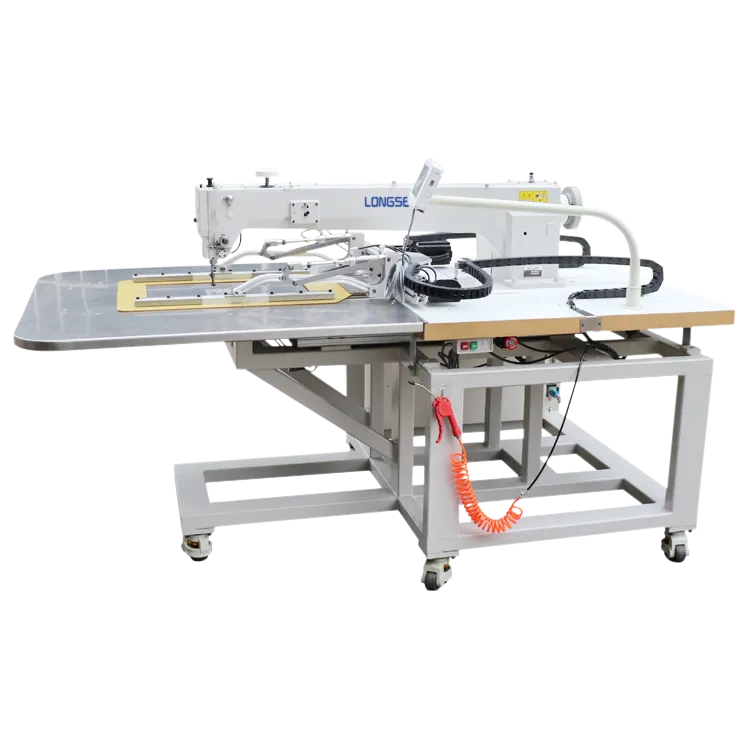
The LS300 series uses a 6× capacity rotary hook, which largely increases bobbin thread capacity and improves working efficiency. It’s made for bulk-bag loop sewing, reinforcement patches, and other heavy-webbing patterns. In fact, the clamping is what sold me—stable, predictable, and simple to re-plate for new SKUs.
| Spec (LS300-6050) | Value (≈/typ.) |
|---|---|
| Hook type | 6× big rotary hook (extended bobbin) |
| Sewing area | ≈ 600 × 500 mm (model-dependent) |
| Stitch | Lockstitch, programmable patterns |
| Max speed | ≈ 2,000–2,500 spm (real-world use may vary) |
| Drive | Energy‑saving servo, direct‑drive |
| Thread | Polyester/PP heavy thread, UV‑stabilized optional |
| Certs (typ.) | CE compliance, ISO 9001 factory systems |
Where it fits (applications)
- FIBC lifting loops, cross-corner loops, filler cord seams
- Reinforcement patches on bulk bags, baffles, tie-tabs
- Heavy webbing fixtures in logistics, seeds/fertilizer, chemicals
Process flow I observed
Materials: PP woven fabric, PP/Polyester webbing, UV-rated polyester thread. Methods: templating → clamping plate swap → pattern load → tension calibration → trial seam → production run. Testing: seam strength to ISO 13935‑2; FIBC performance to ISO 21898 (top lift, cyclic, drop). Service life: around 8–10 years with routine PM (belts, hook cleaning, oiling).
Why this matters (advantages)
- Fewer bobbin stops thanks to 6× capacity hook; uptime jumps noticeably.
- Consistent geometry; audits like having data-logged patterns, to be honest.
- Lower operator fatigue; simpler training curve vs legacy manual jigs.
Vendor snapshot (indicative)
| Vendor | Hook capacity | Sew area | Support | Lead time |
|---|---|---|---|---|
| Longsew LS300‑6050 | 6× bobbin | ≈ 600×500 mm | Factory direct, China + partners | ≈ 4–8 weeks |
| Brand A (generic) | Std. bobbin | ≈ 500×400 mm | Regional distributor | ≈ 6–10 weeks |
| Brand B (generic) | Large hook | ≈ 600×400 mm | Mixed (3rd‑party) | ≈ 8–12 weeks |
Customization notes
Quick-change clamping plates for 50–100 mm webbing, programmable tack patterns, barcode/RFID job recall, MES export, and needle/thread packs for abrasive fabrics. I guess the sweet spot is mixing automatic pattern sewing machine precision with simple, rugged fixtures your techs can service.
Field results (select cases)
- EU bulk‑bag plant: −28% rework on loop seams; seam strength +18% vs baseline (ISO 13935‑2 pulls, n=30, ≈ 95% pass).
- Fertilizer producer (MENA): +22% output on two lines after switching to automatic pattern sewing machine tacks with extended bobbins; fewer stops were the kicker.
Safety and compliance? Look for CE marking, electrical safety to EN 60204‑1, functional safety aligned with ISO 13849‑1, and for the bag itself, conformity with ISO 21898. Many buyers also request tensile/seam data (ASTM or ISO methods) logged per batch. Surprisingly, that audit trail pays dividends when a customer claims a torn loop months later.
Origin of manufacture: No.368 North Youyi Street, Shijiazhuang City, Hebei Province, China.
Citations
Latest news
-
Industrial Bag Sewing Machine Price and Comprehensive Buying GuideNewsApr.16,2026
-
Industrial Hand Held Bag Closer for Efficient Packaging SealingNewsApr.16,2026
-
Industrial Hand Held Bag Closer Sewing Machine for PackagingNewsApr.16,2026
-
Efficient Industrial Bag Closer Sewing Machine for PackagingNewsApr.16,2026
-
Industrial Sewing Guide for Choosing the Right Closer MachineNewsApr.16,2026
-
Guide to Capital Bag Closer Machine Price and Buying FactorsNewsApr.16,2026
-
Say goodbye to inefficient cutting! This heavy-duty webbing hot cutting machine redefines the new standard for industrial cuttingNewsApr.14,2026

Hebei LongSew Machinery Technology Co. Ltd is beginning as sewing machine parts supplier, now Longsew have over twenty years experience in complete set sewing machine offering.


CLASSIFICATION
CONTACT US
-

No.368 North Youyi Street, Shijiazhuang City, Hebei Province, China
-

-

Copyright © 2026 HEBEI LONGSEW MACHINERY TECHNOLOGY CO. LTD All Rights Reserved. Sitemap | Privacy Policy | Top Blog | Global Service