

Oct . 08, 2025 22:35
Back to list
Chain Stitch Sewing Machine—Fast, Durable, Industrial?
Cylinder-bed double-needle power for FIBC: a field report and buying guide
In bulk bag (FIBC) production, the seam is the contract with your customer. That’s why factories keep asking me about the chain stitch sewing machine designed specifically for circular and tubular sections. The Longsew 80900 series—built in No.368 North Youyi Street, Shijiazhuang City, Hebei Province, China—takes the classic 80700 concept and turns it into a cylinder-bed workhorse for big bags. To be honest, that cylinder bed is what makes sewing round body panels and spouts far less of a wrestling match.
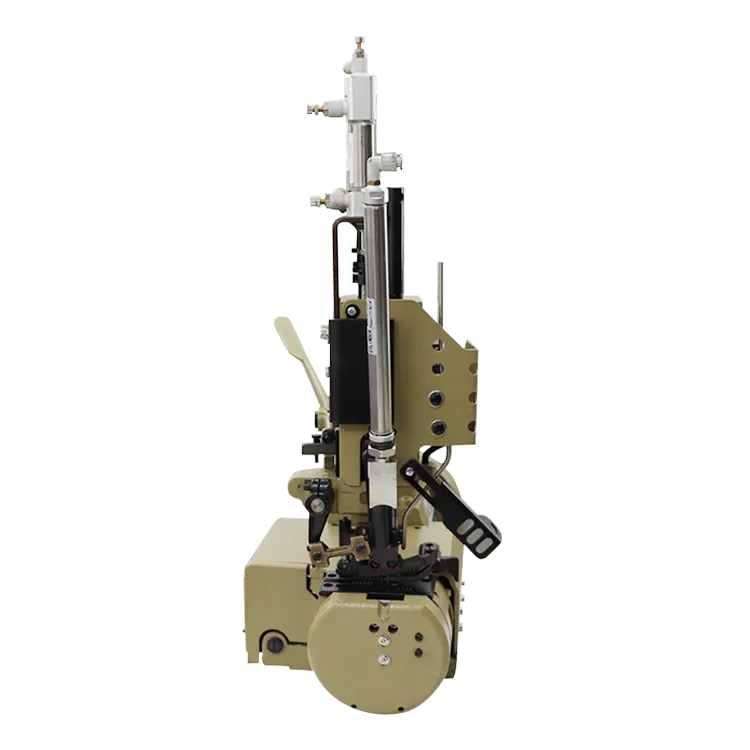
Why cylinder-bed double-needle matters now
Industry trend in a sentence: heavier woven PP fabrics, tighter quality audits, and faster SKU changes. A double-needle class-400 chain stitch provides elastic, load-sharing seams that handle bulk movement during filling and transport. Many customers say they swapped from flat-bed units to a cylinder bed and immediately reduced rework on circular seams—surprisingly, even veteran operators posted better consistency by day two.
80900 Series at a glance
| Model | Stitch / Needles | Bed / Speed | Stitch Length | Gauge Options | Notes |
|---|---|---|---|---|---|
| 80900C | Double-chain (class 400) / 2 | Cylinder bed / up to ≈1,800 spm | ≈6–13 mm (adjustable) | ≈6.4 / 9.5 / 12.7 mm | General FIBC seams, circular parts |
| 80900CD | Double-chain / 2 | Cylinder bed / similar speed | ≈6–13 mm | Multiple sets available | Enhanced feed; options for puller |
| 80900CD4H | Double-chain / 2 | Cylinder bed / heavy-duty | ≈6–13 mm | Wide gauges on request | Higher lift for thick PP + tapes |
Specs are indicative; real-world use may vary by motor, thread, and fabric stack-up. Consult the manufacturer for the final datasheet and needle system.
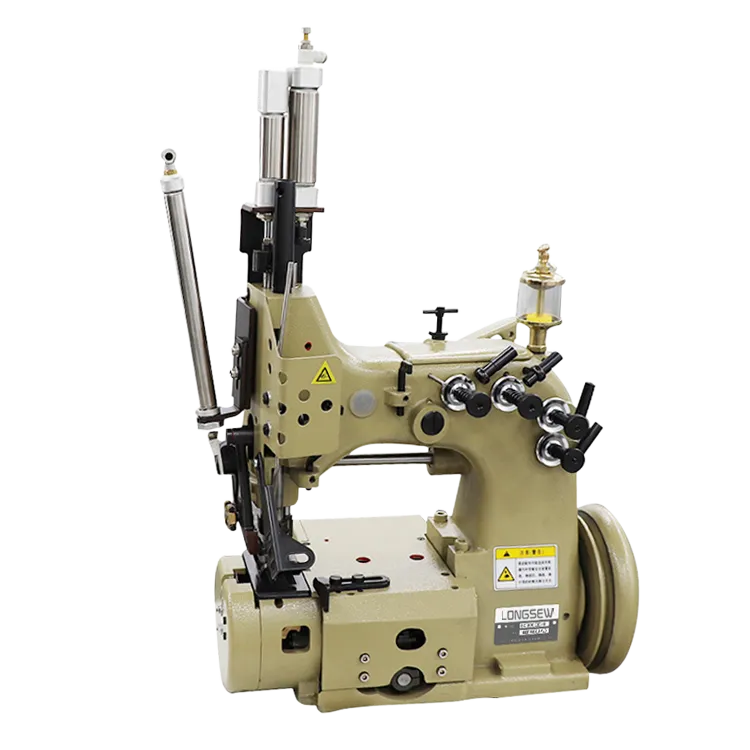
Process flow, testing, and service life
- Materials: woven PP body tube, reinforcement tapes, lifting loops, filler/discharge spouts, sometimes PE liners.
- Methods: double-needle class-400 chain seams (e.g., 401/406 style), with cylinder-bed access for circular joins and spout attachment.
- Testing standards: stitch type per ISO 4915; FIBC performance per ISO 21898 (top lift, cyclic top lift, drop); seam strength checks per ASTM D1683 (lab method).
- Service life: in 2-shift production, units typically run 5–7 years with scheduled maintenance (needles, loopers, feed dog, timing checks).
- Industries: chemicals, fertilizers, cement, food ingredients (with appropriate clean-room and thread selection), mining aggregates.
Vendor snapshot (field perspective)
| Vendor/Model | Bed Type | Needles | Typical Throughput | Pros | Considerations |
|---|---|---|---|---|---|
| Longsew 80900C/CD/CD4H | Cylinder | 2 | High on circular seams | Great access; stable seam quality; customization options | Requires training for optimal settings |
| Legacy 80700 (flat-bed) | Flat | 2 | Medium | Familiar, widely supported | Awkward on circular parts; more re-handling |
| Portable bag-closer | Handheld | 1 | Low | Lightweight, low cost | Not for structural FIBC seams |
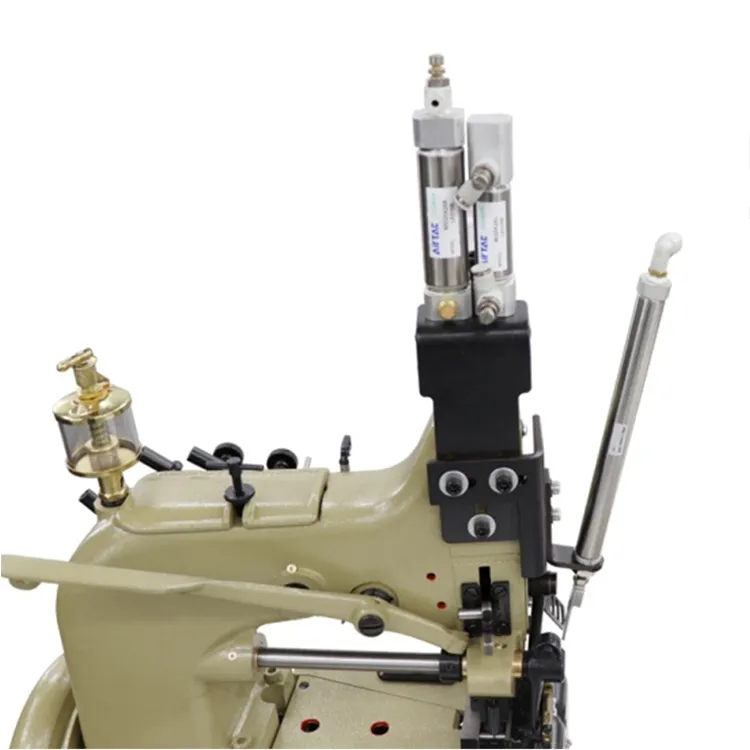
Customization and compliance
Options I’ve seen in the field: gauge sets (≈6.4–12.7 mm), folders/binders for tape reinforcement, puller feeds, pneumatic foot lifter, servo motors with soft-start. For food-grade plants, ask about stainless hardware on contact points and low-shed thread. CE marking and documentation aligned to the EU Machinery Directive can usually be supplied; ISO 9001 at the factory level is common.
Real-world results (quick case)
A Southeast Asia FIBC plant swapped two flat-beds for one 80900CD on spout attachment. After a week: seam rejects dropped from 2.3% to 0.6%, cycle time improved ≈18%, and operators—initially skeptical—liked the visibility around the cylinder. Lab pulls showed seam efficiency in the 85–95% band (ASTM D1683 method). It seems that the chain stitch sewing machine delivers most when material stacks are thick and circular handling is constant.
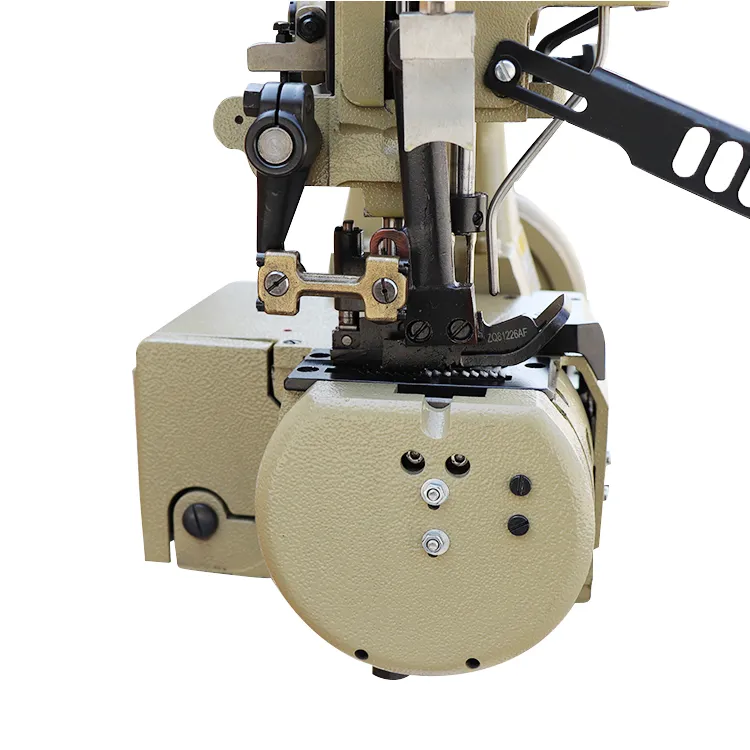
Who should consider it?
If 30–60% of your line time sits on circular bodies, spouts, or reinforcement tapes, a chain stitch sewing machine with a cylinder bed is a sensible upgrade. If your mix is flat side seams only, you might stay with a flat-bed. Actually, try a pilot—data will tell you in a week.
References
- ISO 4915:1991 — Textiles — Stitch types — Classification and terminology.
- ISO 21898:2004 — Packaging — Flexible intermediate bulk container111s (FIBCs) for non-dangerous goods.
- ASTM D1683/D1683M — Standard Test Method for Failure in Sewn Seams of Woven Fabrics.
- Directive 2006/42/EC — EU Machinery Directive (CE marking framework).
Latest news
-
Industrial Bag Sewing Machine Price and Comprehensive Buying GuideNewsApr.16,2026
-
Industrial Hand Held Bag Closer for Efficient Packaging SealingNewsApr.16,2026
-
Industrial Hand Held Bag Closer Sewing Machine for PackagingNewsApr.16,2026
-
Efficient Industrial Bag Closer Sewing Machine for PackagingNewsApr.16,2026
-
Industrial Sewing Guide for Choosing the Right Closer MachineNewsApr.16,2026
-
Guide to Capital Bag Closer Machine Price and Buying FactorsNewsApr.16,2026
-
Say goodbye to inefficient cutting! This heavy-duty webbing hot cutting machine redefines the new standard for industrial cuttingNewsApr.14,2026

Hebei LongSew Machinery Technology Co. Ltd is beginning as sewing machine parts supplier, now Longsew have over twenty years experience in complete set sewing machine offering.


CLASSIFICATION
CONTACT US
-

No.368 North Youyi Street, Shijiazhuang City, Hebei Province, China
-

-

Copyright © 2026 HEBEI LONGSEW MACHINERY TECHNOLOGY CO. LTD All Rights Reserved. Sitemap | Privacy Policy | Top Blog | Global Service