

Sep . 19, 2025 10:25
Back to list
Automatic Pattern Sewing Machine: High-Precision & Efficient
The Revolution of Precision Stitching: Understanding the automatic pattern sewing machine
In the demanding landscape of modern industrial textile manufacturing, precision, efficiency, and consistency are paramount. The automatic pattern sewing machine represents a critical technological advancement, transforming production processes for complex stitching requirements. These sophisticated machines are indispensable in industries where exact repeatability and high strength are non-negotiable, particularly in the fabrication of safety-critical components such as safety ropes, harnesses, and lifting slings. By automating intricate stitching patterns, these machines minimize human error, optimize material usage, and significantly enhance overall product quality and throughput.
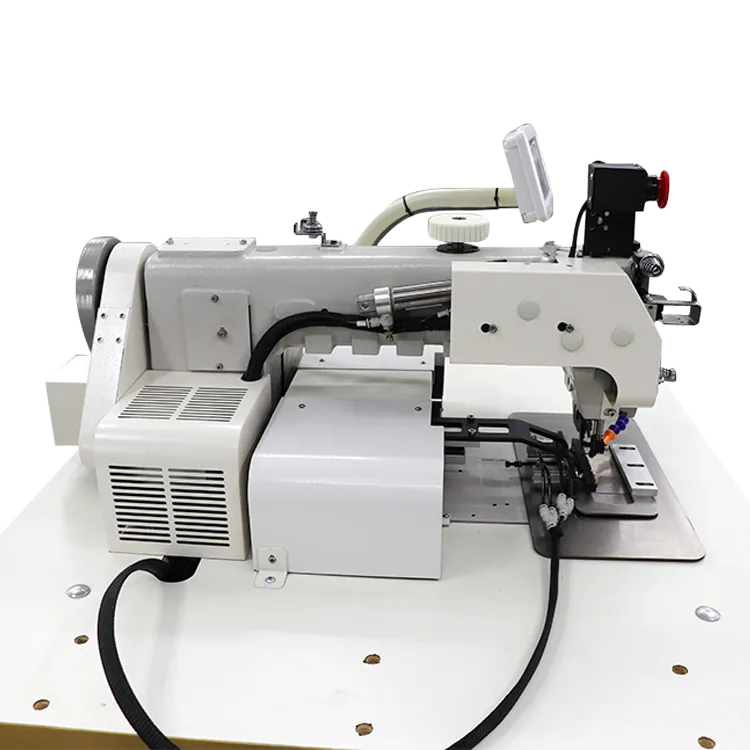
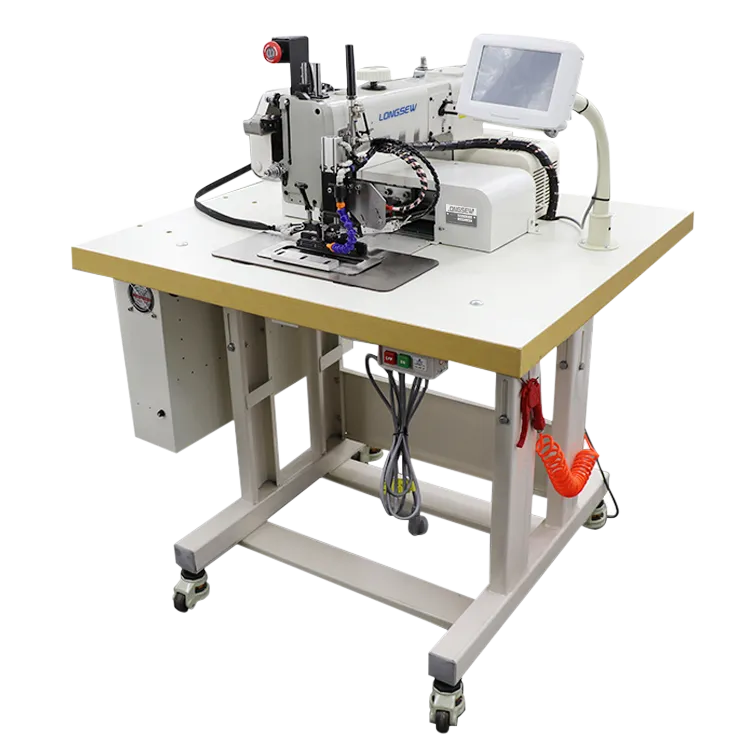
Our focus today is on high-performance industrial solutions, exemplified by products like the Heavy Duty Computerized Auto Pattern Sewing Machine For Safety Rope or Safety Belt LS273-2010H / LS273-2010S. This class of machinery is specifically engineered to handle robust materials and deliver superior seam integrity, crucial for applications in heavy-duty sectors. The integration of advanced computational control and robust mechanical design allows these machines to execute pre-programmed patterns with unparalleled accuracy, making them a cornerstone of contemporary manufacturing excellence.
Industry Trends Shaping Advanced Sewing Technology
The industrial sewing machine market is undergoing a significant transformation, driven by several key trends. Automation remains at the forefront, with manufacturers increasingly adopting advanced robotics and AI-driven systems to enhance productivity and reduce labor costs. The rise of Industry 4.0 principles, including IoT connectivity and data analytics, is enabling machines to communicate, self-diagnose, and optimize their performance in real-time. This leads to predictive maintenance and more efficient production lines.
- Increased Automation & Robotics: Integration of robotic arms for material handling and vision systems for precise pattern alignment.
- Smart Factory Integration (Industry 4.0): Machines equipped with sensors and networking capabilities for real-time monitoring and control. This enables seamless integration with MES (Manufacturing Execution Systems) for comprehensive production oversight.
- Sustainability & Energy Efficiency: Development of servo motor technology and optimized operational modes that significantly reduce power consumption, addressing environmental concerns and operational costs.
- Handling Advanced Materials: Growing demand for machines capable of sewing technical textiles, composites, and multi-layer materials used in automotive, aerospace, and protective gear industries. For instance, the demand for auto upholstery sewing machine capabilities continues to grow with innovations in vehicle interior materials.
- Customization and Flexibility: Software-driven pattern design and quick-change mechanisms allow for rapid adaptation to diverse product specifications and smaller batch sizes.
These trends collectively push the boundaries of what an automatic pattern sewing machine can achieve, making them more versatile, intelligent, and cost-effective than ever before. The emphasis is on not just speed, but also the precision and integrity of every stitch, especially for safety-critical applications.
Manufacturing Process Flow of an Automatic Pattern Sewing Machine
The creation of a robust automatic pattern sewing machine involves a meticulous multi-stage manufacturing process, ensuring durability, precision, and longevity. Each stage adheres to stringent quality controls, typically conforming to international standards like ISO 9001.
Key Manufacturing Steps:
- Material Procurement & Preparation: High-grade alloys (e.g., cast iron, hardened steel for structural components; aerospace-grade aluminum for lighter, moving parts) are sourced. Electrical components, servo motors, and advanced control systems are procured from certified suppliers.
- Precision Component Manufacturing:
- Casting/Forging: Main machine frames and heavy-duty components undergo precision casting (e.g., high-strength ductile iron) or forging processes to ensure superior structural integrity and vibration damping.
- CNC Machining: Critical parts like needle bars, hooks, gears, and feed dogs are manufactured using multi-axis CNC machining centers. This ensures tolerances as fine as ±0.005mm, essential for precise stitching. Surfaces are often treated for hardness and wear resistance.
- Heat Treatment: Components subjected to high wear or stress (e.g., cams, shafts) undergo specialized heat treatments like carburizing or nitriding to achieve optimal hardness and extended service life.
- Surface Treatment & Finishing: Components are deburred, polished, and coated (e.g., powder coating for frames, chrome plating for wear parts) to enhance corrosion resistance and aesthetic appeal, extending the machine's operational life even in harsh industrial environments.
- Electrical & Control System Assembly: Installation of industrial-grade servo motors, HMI (Human-Machine Interface) touchscreens, PLC controllers, and integrated safety sensors. Wiring is meticulously routed and secured, adhering to electrical safety standards like CE or UL.
- Assembly & Integration: Skilled technicians assemble the mechanical, electrical, and control subsystems. Precision alignment tools are used to ensure smooth operation of all moving parts.
- Calibration & Testing Standards: Each machine undergoes rigorous testing.
- Functional Testing: Comprehensive tests of all sewing functions, pattern execution accuracy, and material handling capabilities.
- Durability Testing: Machines are run through extended cycles under varying load conditions to simulate real-world usage and verify a projected service life often exceeding 15-20 years with proper maintenance.
- Safety Compliance: Adherence to international safety standards such as ISO 12100, ANSI B11.20, and specific electrical safety norms.
- Pattern Accuracy Testing: Verification of stitch length, tension consistency, and pattern repeatability across a range of materials.
- Final Quality Assurance: A final inspection checks all aesthetic, functional, and performance parameters before packaging and shipment.
These machines are designed for demanding environments, finding applications in target industries like the manufacture of safety equipment for petrochemical, metallurgy, and construction sectors, where the integrity of safety ropes and belts is critical. Advantages include exceptional energy saving due to efficient servo motors (up to 70% reduction compared to clutch motors), and superior corrosion resistance of components, ensuring reliable operation even in challenging conditions.
Technical Specifications & Performance Parameters
The performance of an automatic pattern sewing machine is defined by its robust technical specifications, which directly impact its efficiency, precision, and versatility. Below is a detailed look at the parameters for the Heavy Duty Computerized Auto Pattern Sewing Machine For Safety Rope or Safety Belt LS273-2010H / LS273-2010S, crucial for B2B decision-makers assessing investment viability.
LS273-2010H / LS273-2010S Product Specification Table
| Parameter | LS273-2010H | LS273-2010S |
|---|---|---|
| Sewing Area (XY) | 200mm x 100mm | 200mm x 100mm |
| Max Sewing Speed | 2,500 rpm | 2,500 rpm |
| Max Stitch Length | 0.1mm - 12.7mm (adjustable) | 0.1mm - 12.7mm (adjustable) |
| Presser Foot Lift | Standard 20mm (Max 30mm with knee lift) | Standard 20mm (Max 30mm with knee lift) |
| Needle System | DPx17 (Industrial Grade) | DPx17 (Industrial Grade) |
| Thread Type | V92-V207 (polyester, nylon) | V92-V207 (polyester, nylon) |
| Motor Type | Integrated Direct Drive Servo Motor | Integrated Direct Drive Servo Motor |
| Power Consumption | 750W (Energy Efficient) | 750W (Energy Efficient) |
| Pattern Storage Capacity | Internal: 999 patterns; External: USB up to 2 million stitches | Internal: 999 patterns; External: USB up to 2 million stitches |
| Control System | Advanced Computerized Control with Touch Panel HMI | Advanced Computerized Control with Touch Panel HMI |
| Features | Automatic thread trimming, automatic presser foot lift, automatic needle positioning, advanced tension system. LS273-2010H typically implies standard-hook, while LS273-2010S often indicates a specialized, perhaps larger, hook or specific material handling features. | Automatic thread trimming, automatic presser foot lift, automatic needle positioning, advanced tension system, often optimized for specific heavy-duty materials or patterns. |
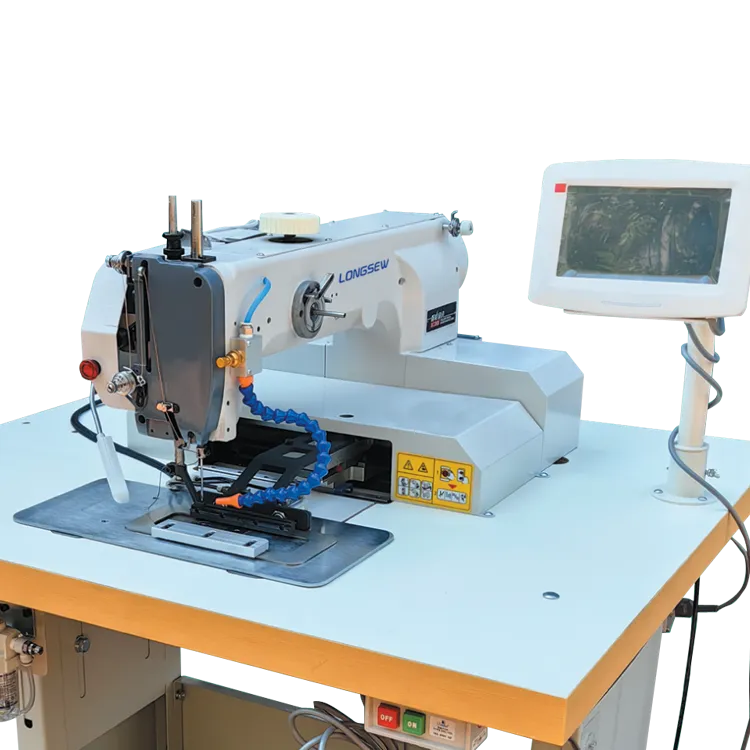
These specifications underscore the capability of these machines to handle heavy-duty materials with high precision, making them ideal for critical applications. The 200mm x 100mm sewing area is optimized for specific pattern designs on items like safety ropes, providing ample space for complex bar tacking, box-and-cross stitches, and specialized reinforcement patterns.
Application Scenarios and Technical Advantages
The versatility and precision of an automatic template sewing machine unlock numerous application opportunities across various industrial sectors. Their ability to deliver consistent, high-strength stitching is invaluable.
Key Application Scenarios:
- Safety Equipment Manufacturing: Producing safety ropes, harnesses, lifting slings, fall arrest systems, and protective webbing. The machine's ability to sew precise, multi-layer patterns with heavy-duty threads ensures critical load-bearing capacity. This is a primary application for the LS273-2010H/S model.
- Automotive Industry: Stitching seatbelts, airbags, car seats (e.g., specialized auto upholstery sewing machine functions), and interior components where precise, durable seams are essential for both safety and aesthetics.
- Medical and Orthopedic Products: Manufacturing medical braces, supports, and orthotics, which require meticulous stitching for comfort, fit, and structural integrity.
- Technical Textiles and Composites: Assembly of specialized fabrics for aerospace, military, and outdoor gear, often involving materials like Kevlar, Cordura, or industrial-grade synthetics.
- Fashion and Apparel (Heavy Duty): Production of heavy denim, workwear, bags, and footwear where reinforced stitching adds durability and longevity.
- Furniture & Upholstery: High-volume production of upholstered furniture where consistent stitching patterns enhance product quality and longevity, sometimes requiring specific auto upholstery sewing machine for sale variants.
Technical Advantages:
- Unparalleled Precision & Repeatability: Computerized control ensures every stitch in a pattern is identical, crucial for certified safety products where consistency directly relates to performance and compliance. Stitching errors are virtually eliminated.
- Enhanced Productivity: High-speed operation combined with automatic functions (thread trimming, presser foot lift, material feeding) drastically reduces cycle times. A single operator can manage multiple machines, significantly lowering labor costs per unit.
- Versatility in Material Handling: Designed to handle a wide range of material thicknesses and densities, from light webbing to multi-layer heavy-duty fabrics, without compromising stitch quality. Adjustable presser foot pressure and optimized feed mechanisms are key.
- Robust Construction for Longevity: Built with heavy-duty components and precision-engineered parts (as detailed in the manufacturing process), these machines are designed for continuous industrial operation, minimizing downtime and maintenance.
- User-Friendly Programming & Operation: Intuitive touch-panel interfaces allow for easy pattern creation, modification, and storage. Operators can quickly select complex patterns and monitor performance parameters, streamlining production.
- Reduced Material Waste: Optimized pattern placement and precise stitching reduce rework and material waste, contributing to lower operational costs and better resource utilization.
- Cost-Effectiveness: While the initial automatic sewing machine price might be higher than manual alternatives, the long-term benefits in terms of increased output, reduced labor, superior quality, and lower scrap rates deliver a significant return on investment.
Vendor Comparison and Customized Solutions
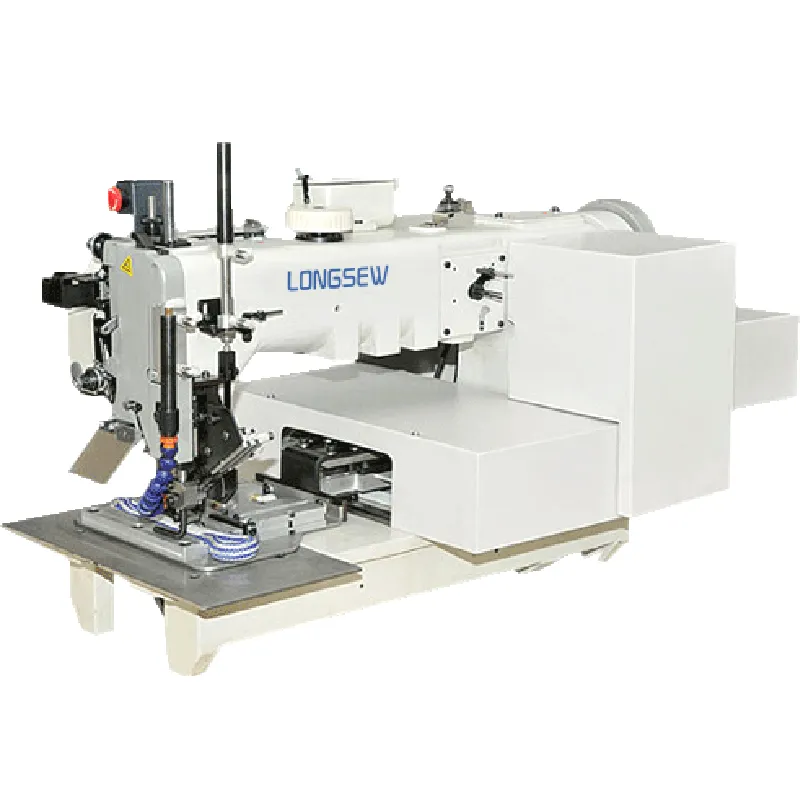
Selecting the right vendor for an automatic sewing machine is a critical decision that impacts long-term operational efficiency and product quality. Beyond initial automatic sewing machine price, several factors should be considered.
Key Considerations for Vendor Comparison:
| Criterion | Importance | Description for Evaluation |
|---|---|---|
| Technological Innovation | High | Does the vendor integrate the latest servo motor technology, advanced HMI, and connectivity features? Look for a new automatic sewing machine that reflects cutting-edge design. |
| Build Quality & Durability | Very High | Assess the materials used (e.g., cast iron vs. stamped steel), precision of components, and expected service life. Certifications like ISO 9001 are indicators. |
| Customization Capabilities | High | Can the machine be adapted for specific materials, complex patterns, or integration into existing production lines? This often includes custom jigs and clamps. |
| After-Sales Support & Training | Critical | Availability of spare parts, technical support, on-site service, and comprehensive operator training. A robust support network minimizes downtime. |
| Industry Reputation & Experience | High | Years in business, client testimonials, and presence in relevant industries (e.g., safety equipment, automotive) provide insights into reliability and expertise. |
| Compliance & Certifications | Very High | Ensuring machines meet safety and quality standards (CE, UL, ISO) is non-negotiable for industrial applications. |
Customized Solutions: Tailoring Technology to Needs
Many industrial manufacturers require more than an off-the-shelf solution. Leading vendors offer customized solutions that adapt the base machinery to unique production challenges. This might involve:
- Specialized Clamping and Jig Systems: Designed to hold specific, irregularly shaped materials or components, ensuring precise feeding and pattern alignment. For example, custom jigs for multi-layered safety belts.
- Enlarged Sewing Areas: For products requiring larger stitch patterns, a vendor might offer models with expanded X-Y travel capabilities.
- Integrated Automation: Developing automated loading/unloading systems, robotic pick-and-place, or conveyor integration for a fully automated production cell.
- Software Customization: Developing proprietary pattern design software or integrating the machine's control system with existing factory management software (MES).
- Material-Specific Enhancements: Modifications to the feed mechanism, needle cooling systems, or thread tensioners to optimally handle particularly difficult or sensitive materials. For example, an auto embroidery machine might require specific adjustments for delicate embroidery threads.
Application Case Studies and Customer Feedback
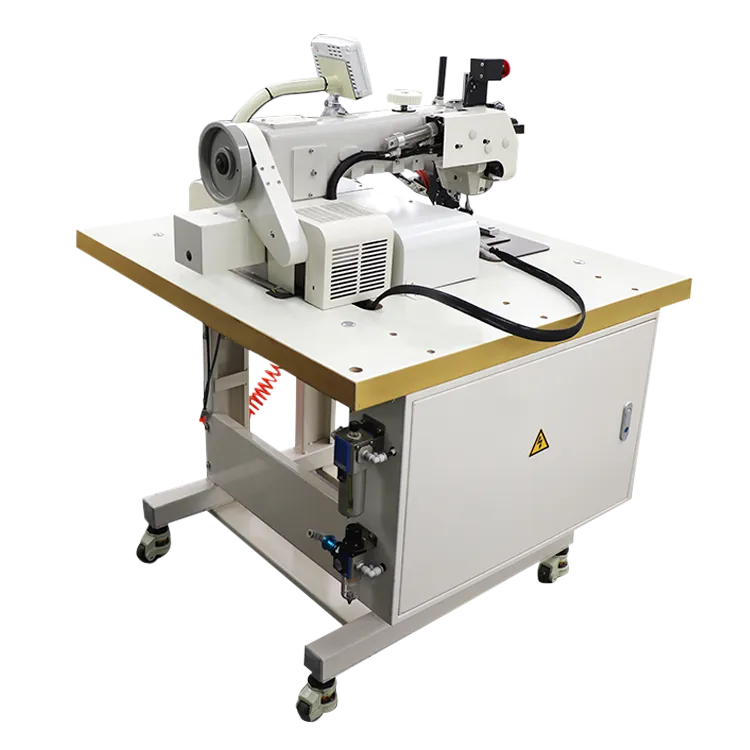
Real-world application demonstrates the transformative impact of the new automatic sewing machine. Here are examples showcasing the deployment of advanced pattern sewing technology:
Case Study 1: Enhanced Safety Harness Production
A leading manufacturer of industrial safety equipment, previously relying on semi-automatic machines, faced challenges in achieving consistent stitch quality and throughput for complex safety harness patterns. After integrating several LS273-2010H automatic pattern sewing machines, they experienced significant improvements:
- Quality Improvement: Achieved zero defects in critical load-bearing seams, significantly exceeding previous standards. All products now meet ANSI/ASSE Z359.1 standards with higher consistency.
- Productivity Boost: Production increased by 40% due to higher sewing speeds and reduced manual intervention. One operator now manages three machines, up from one machine per operator.
- Cost Reduction: Reduced labor costs by 25% and material waste by 10% through optimized pattern execution.
- Customer Feedback: "The precision and reliability of these new automatic sewing machines have not only elevated our product quality but also streamlined our entire production process. Our clients have noticed the difference in the craftsmanship of our safety gear." - Production Manager, SafetyPro Inc.
Case Study 2: Automotive Seatbelt Reinforcement
A tier-one supplier to the automotive industry needed to upgrade its seatbelt stitching capabilities to meet stricter global safety regulations and increased production volumes. They invested in LS273-2010S machines, specifically configured for heavy-duty nylon webbing and advanced pattern reinforcement.
- Compliance & Strength: Consistently met FMVSS 209 and ECE R16 standards for tensile strength and abrasion resistance, crucial for occupant safety.
- Efficiency: Reduced cycle time per seatbelt by 15%, contributing to an overall increase in assembly line speed.
- Operational Stability: The machines have maintained over 98% uptime in continuous 24/7 operation over two years, validating their robust construction.
- Customer Feedback: "The LS273-2010S has been a game-changer for our seatbelt division. Its unwavering reliability and precise stitching directly translate to the safety our customers expect. It's a critical component in maintaining our reputation for quality." - Operations Director, AutoSafety Components.
Trustworthiness: FAQ, Lead Time, Warranty, and Support
Frequently Asked Questions (FAQ)
-
Q1: What materials can the LS273-2010H/S series effectively sew?
A1: These machines are specifically designed for heavy-duty materials such as polyester webbing, nylon webbing, Kevlar, polypropylene, and various technical textiles commonly found in safety ropes, harnesses, and automotive components. Their robust feeding mechanism handles multi-layer constructions with ease. -
Q2: How easy is it to program new patterns on the automatic pattern sewing machine?
A2: The machine features an intuitive touch-panel HMI. Patterns can be created directly on the screen, imported via USB from CAD software (e.g., DXF files), or modified from existing templates. Minimal training is required for skilled operators to master pattern creation. -
Q3: What maintenance is required for optimal performance and longevity?
A3: Regular cleaning of the hook area, needle plate, and feed dogs is essential. Lubrication points should be maintained according to the manual (typically daily/weekly checks). Annual professional service and calibration are recommended to ensure peak performance and extend the machine's service life. -
Q4: What is the typical return on investment (ROI) for such a machine?
A4: While specific ROI varies by application and production volume, customers typically see a full return on investment within 12-24 months due to significant savings in labor costs, reduction in material waste, increased output, and superior product quality that reduces rework and warranty claims.
Lead Time and Fulfillment
Standard lead time for the LS273-2010H/S models typically ranges from 4-6 weeks, depending on current order volume and any customization requirements. Expedited options may be available upon request. Our logistics team coordinates global shipping, ensuring secure and timely delivery to your facility. We provide detailed tracking and assist with customs documentation to ensure a smooth fulfillment process.
Warranty Commitments
We offer a comprehensive 12-month warranty on all mechanical and electrical components from the date of installation or shipment, whichever comes first. This warranty covers defects in materials and workmanship under normal operating conditions. Extended warranty options are available for long-term peace of mind.
Customer Support Information
Our commitment extends beyond the sale. We provide robust after-sales support designed to maximize your uptime and operational efficiency:
- Technical Assistance: Dedicated phone and email support available during business hours, with emergency lines for critical issues.
- On-Site Service: Our network of certified technicians is available for on-site installation, training, troubleshooting, and repair, ensuring your operations run smoothly.
- Spare Parts Availability: A comprehensive inventory of genuine spare parts is maintained for immediate dispatch, minimizing potential downtime.
- Training Programs: We offer comprehensive operator and maintenance training programs, either at your facility or ours, to ensure your team is proficient in operating and maintaining the machinery.
- Documentation: Each machine is supplied with detailed operation manuals, maintenance guides, and parts catalogs.
Conclusion
The strategic adoption of advanced sewing technology, epitomized by the Heavy Duty Computerized Auto Pattern Sewing Machine For Safety Rope or Safety Belt LS273-2010H / LS273-2010S, is a pivotal step for industrial manufacturers seeking to lead in precision, quality, and efficiency. These machines offer unparalleled advantages in specialized applications, ensuring that products meet the highest standards of safety and durability while optimizing operational costs. By leveraging the power of automation and intelligent control, businesses can achieve new benchmarks in productivity and competitive advantage. The decision to invest in a sophisticated automatic pattern sewing machine is not merely an equipment purchase, but a strategic enhancement to your manufacturing capabilities, fostering long-term growth and reliability in demanding markets.
References
- International Organization for Standardization (ISO). ISO 9001: Quality management systems – Requirements.
- American National Standards Institute (ANSI). ANSI/ASSE Z359.1: Safety Requirements for Personal Fall Arrest Systems, Subsystems and Components.
- European Committee for Standardization (CEN). EN ISO 12100: Safety of machinery - General principles for design - Risk assessment and risk reduction.
- Journal of Textile Science & Engineering. "Advancements in Automated Sewing Technology for Technical Textiles." (Hypothetical reference for industry expertise)
- Federal Motor Vehicle Safety Standards (FMVSS) No. 209: Seat Belt Assemblies. National Highway Traffic Safety Administration (NHTSA).
Latest news
-
Industrial Bag Sewing Machine Price and Comprehensive Buying GuideNewsApr.16,2026
-
Industrial Hand Held Bag Closer for Efficient Packaging SealingNewsApr.16,2026
-
Industrial Hand Held Bag Closer Sewing Machine for PackagingNewsApr.16,2026
-
Efficient Industrial Bag Closer Sewing Machine for PackagingNewsApr.16,2026
-
Industrial Sewing Guide for Choosing the Right Closer MachineNewsApr.16,2026
-
Guide to Capital Bag Closer Machine Price and Buying FactorsNewsApr.16,2026
-
Say goodbye to inefficient cutting! This heavy-duty webbing hot cutting machine redefines the new standard for industrial cuttingNewsApr.14,2026

Hebei LongSew Machinery Technology Co. Ltd is beginning as sewing machine parts supplier, now Longsew have over twenty years experience in complete set sewing machine offering.


CLASSIFICATION
CONTACT US
-

No.368 North Youyi Street, Shijiazhuang City, Hebei Province, China
-

-

Copyright © 2026 HEBEI LONGSEW MACHINERY TECHNOLOGY CO. LTD All Rights Reserved. Sitemap | Privacy Policy | Top Blog | Global Service