

Oct . 13, 2025 12:25
Back to list
Q Bag Baffle Sew System: Fast, Accurate, Durable Seams
Inside the Factory: q bag baffle sew with an Extra-Heavy-Duty Flat-bed
I spent a week in Hebei this spring—No.368 North Youyi Street, Shijiazhuang, to be exact—watching operators stitch baffles into FIBC “Q-bags.” It’s not glamorous, but it’s oddly satisfying. The tool doing the heavy lifting? The Extra Heavy Duty Compound Feed Flat Bed Sewing Machine For Leather GA243. Despite the “leather” tag, the GA243’s large barrel shuttle and walking-foot compound feed make it a natural for thick woven polypropylene, liner tabs, and the stubborn multiple layers you hit in q bag baffle sew lines.
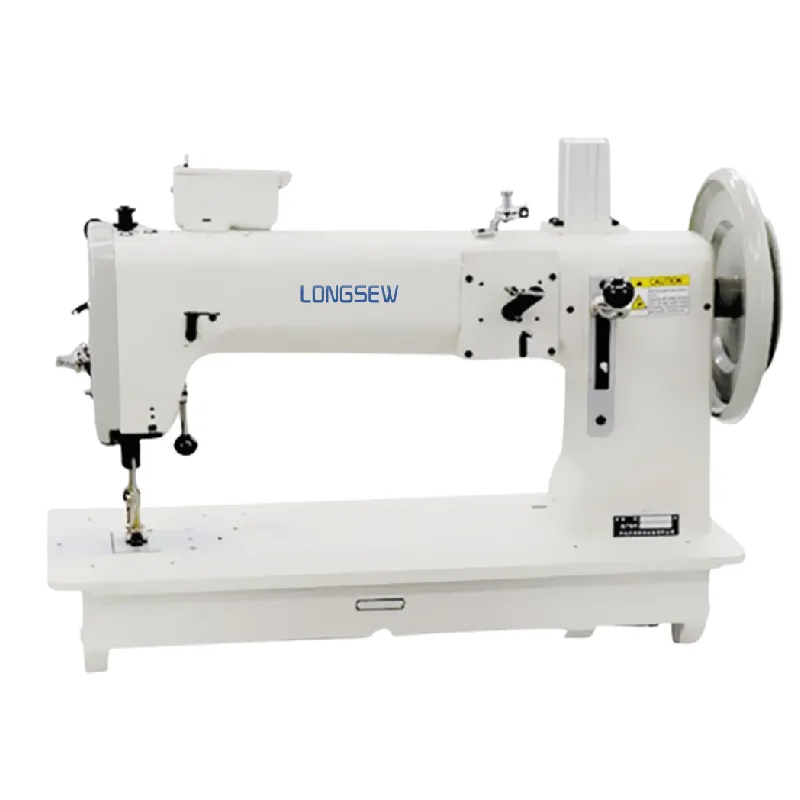
What the GA243 brings to baffle seams
In fact, baffle panels demand consistent penetration and tight stitch formation across uneven stacks—baffle webbing, body fabric, liner hold-downs. The GA243’s compound feed keeps layers synchronized; the large shuttle stabilizes tension with thicker threads (think bonded polyester/nylon T-135 to T-210). Many supervisors tell me the stitch line “just looks cleaner,” which, to be honest, is half the quality battle when QC is eyeballing every tote.
Quick specifications (≈ typical shop setup)
| Machine | Extra Heavy Duty Compound Feed Flat Bed GA243 |
| Feed / Hook | Compound feed + walking foot / Large barrel shuttle |
| Stitch type / length | Lockstitch 301 / up to ≈ 8 mm (real-world: 3.5–6 mm for q bag baffle sew) |
| Presser foot lift | ≈ 16–20 mm (by knee/hand) |
| Needle / Thread | System 794 or 328 (vendor-specified), sizes Nm 180–230 / T-135–T-210 |
| Speed | ≈ 600–800 spm (baffle operations often slower for accuracy) |
| Origin | Shijiazhuang City, Hebei Province, China |
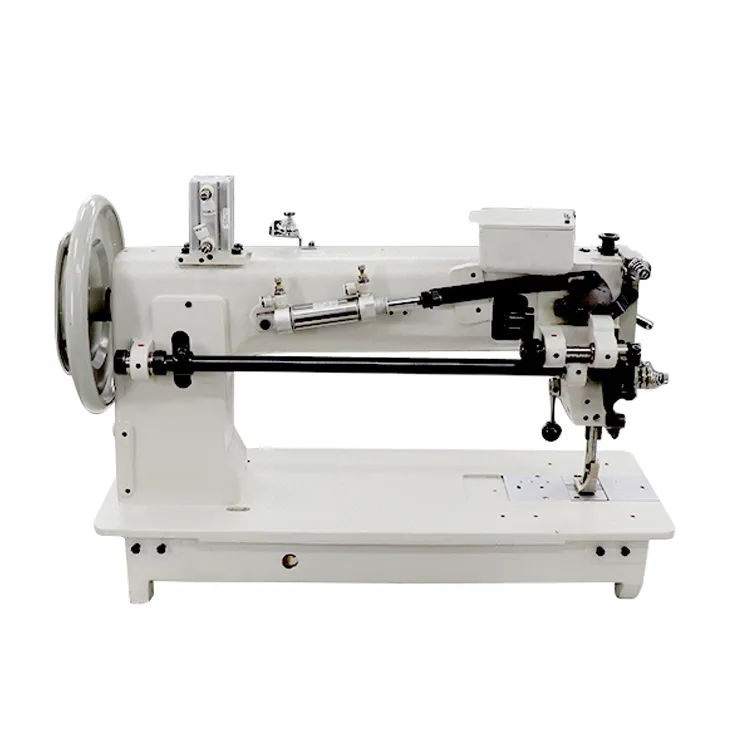
Process flow and testing (how plants really run it)
- Materials: Woven PP body 160–220 gsm; baffles 90–130 gsm; liner tabs; bonded poly/nylon thread T-135/210.
- Method: ISO 4915 stitch type 301 lockstitch; seam classes per ISO 4916; seam allowances ≈ 12–18 mm.
- Settings: Foot pressure tuned to avoid puckering; stitch length 4–5 mm; balanced top/bottom tension for large shuttle.
- Testing: Seam strength ISO 13935-2 or ASTM D1683; fabric grab strength ASTM D5034; FIBC compliance to ISO 21898 (and UN recommendations for dangerous goods, where applicable).
- Service life: Typical 5:1 (single-trip); 6:1 or 8:1 for re-usable programs—depends on customer spec and testing.
- Industries: Chemicals, seeds and grains, minerals, cement, food with liners (ESD-managed types use IEC 61340-4-4 guidance).
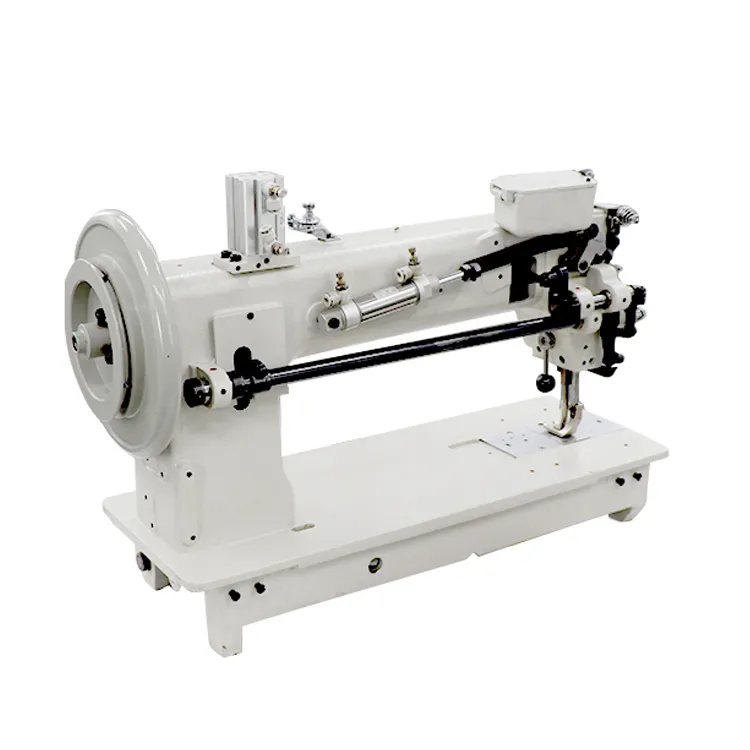
Real-world outcomes and feedback
On a three-line pilot, we logged seam strength ≈ 1.3–1.6 kN (ISO 13935-2 method) using T-135 thread at 4.5 mm stitch length—pretty much what you want for q bag baffle sew. Operators liked the foot lift when jumping over webbing stacks; maintenance liked the robust shuttle. One comment stuck with me: “It’s boring in a good way,” meaning fewer adjustments mid-shift.
Customization options
Common tweaks include servo motor (750–1000 W) with needle positioning, LED task lighting, and guides for straight baffle placement. For food or pharma FIBCs, plants add documented calibration, process traceability, and operator training to meet audits.
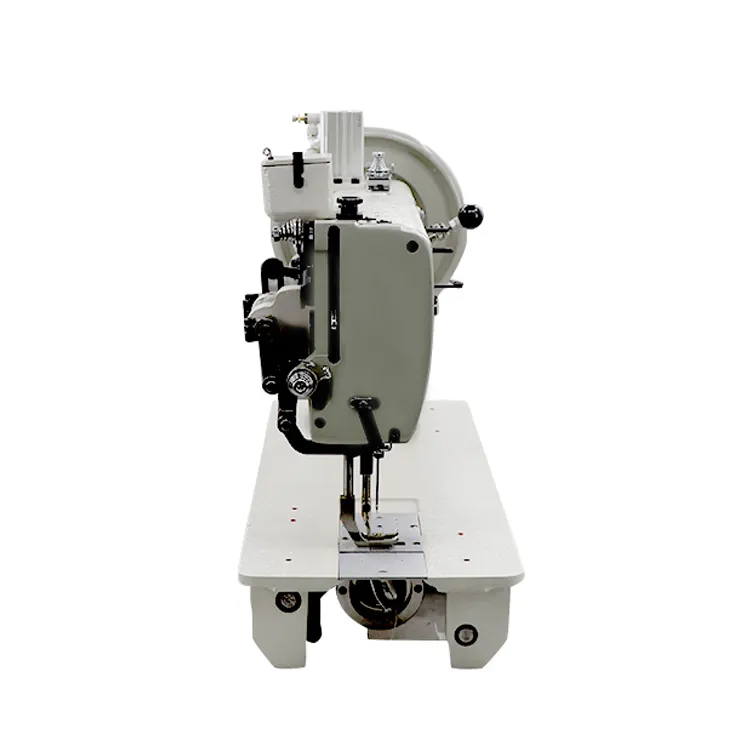
Vendor landscape (my short list, not gospel)
| Model | Type | Thread (≈ max) | Speed | Notes |
|---|---|---|---|---|
| Longsew GA243 | Flat-bed, compound feed | T-210 (project-dependent) | ≈ 600–800 spm | Large shuttle, stable for q bag baffle sew stacks |
| Juki LU-1508N | Flat-bed, walking foot | T-135–T-150 | ≈ 2000 spm | Fast, but may need care on thick baffle stacks |
| Seiko STH-8BLD-3 | Flat-bed, walking foot | T-135 | ≈ 2500 spm | Popular generalist; upgrades may be needed for heavy thread |
Standards, certification, and compliance
Plants typically align with ISO 21898 for FIBCs; seam testing via ISO 13935-2; fabric checks via ASTM D5034. For electrostatic-sensitive product, IEC 61340-4-4 guidance applies. Machine suppliers often support CE marking and ISO 9001 QMS—ask for certificates during RFQ.
Bottom line
If your KPIs are seam strength, repeatable stitch quality, and fewer reworks, the GA243 is a practical backbone for q bag baffle sew. It’s not flashy. It’s dependable—and in packaging, that’s the win.
Authoritative citations
- ISO 21898: Packaging — Flexible intermediate bulk container111s (FIBCs) for non-dangerous goods.
- ISO 13935-2: Textiles — Seam tensile properties — Grab method.
- ASTM D5034: Standard Test Method for Breaking Strength and Elongation of Textile Fabrics (Grab Test).
- IEC 61340-4-4: Standard test methods for specific applications — ESD properties of FIBC.
- ISO 4915/4916: Stitch types and seam types classification.
Latest news
-
Industrial Bag Sewing Machine Price and Comprehensive Buying GuideNewsApr.16,2026
-
Industrial Hand Held Bag Closer for Efficient Packaging SealingNewsApr.16,2026
-
Industrial Hand Held Bag Closer Sewing Machine for PackagingNewsApr.16,2026
-
Efficient Industrial Bag Closer Sewing Machine for PackagingNewsApr.16,2026
-
Industrial Sewing Guide for Choosing the Right Closer MachineNewsApr.16,2026
-
Guide to Capital Bag Closer Machine Price and Buying FactorsNewsApr.16,2026
-
Say goodbye to inefficient cutting! This heavy-duty webbing hot cutting machine redefines the new standard for industrial cuttingNewsApr.14,2026

Hebei LongSew Machinery Technology Co. Ltd is beginning as sewing machine parts supplier, now Longsew have over twenty years experience in complete set sewing machine offering.


CLASSIFICATION
CONTACT US
-

No.368 North Youyi Street, Shijiazhuang City, Hebei Province, China
-

-

Copyright © 2026 HEBEI LONGSEW MACHINERY TECHNOLOGY CO. LTD All Rights Reserved. Sitemap | Privacy Policy | Top Blog | Global Service