

Oct . 12, 2025 11:00
Back to list
Cylinder Bed Machine: Industrial, Precise, Leather-Ready
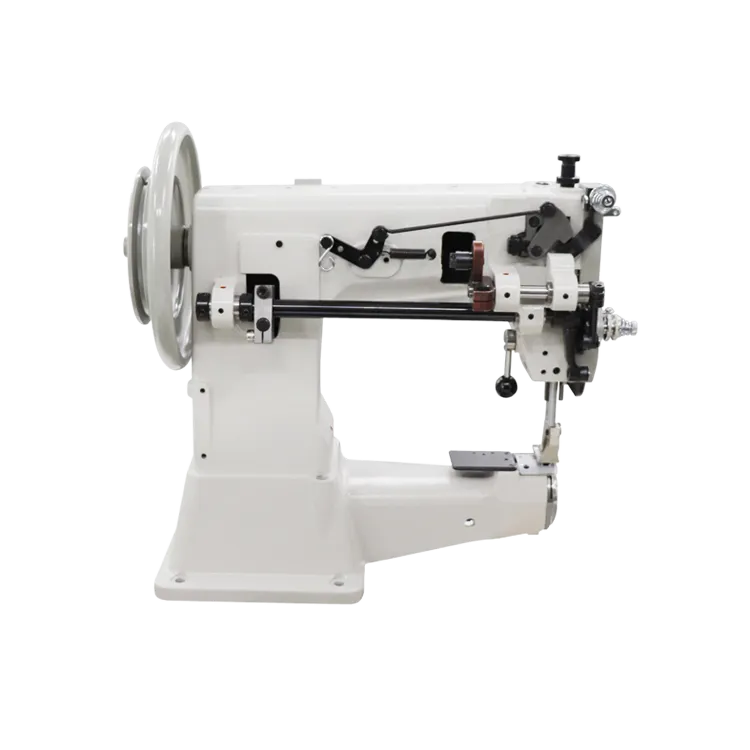
Field Notes on a Workhorse: Extra Heavy Duty Cylinder Bed Sewing Machine GA441S
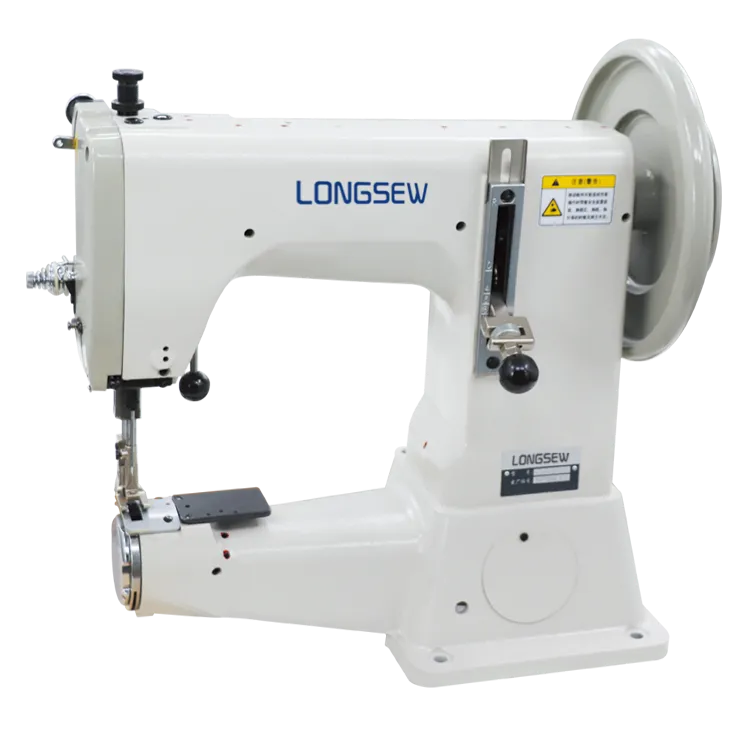
If you work leather or technical textiles, you already know why a cylinder bed machine matters. The GA441S from Longsew is the short-arm variant of the famed GA441—tighter handling for small parts, without giving up grunt. I’ve seen it in saddlery workshops where belts, tack, and holsters get stitched all day, sometimes with thread so thick it looks like miniature mooring line.
What’s happening in the market
Industry trend check: workshops are downsizing footprint, upscaling capability. Short-arm heavy-duty cylinder bed machine models have surged because bag-makers and custom leather shops need radius control on gussets and tight curves. Also, thicker threads—up to 1300D×3—are no longer niche; they’re the norm for rugged aesthetics and longevity.
GA441S at a glance (real-world, not brochure gloss)
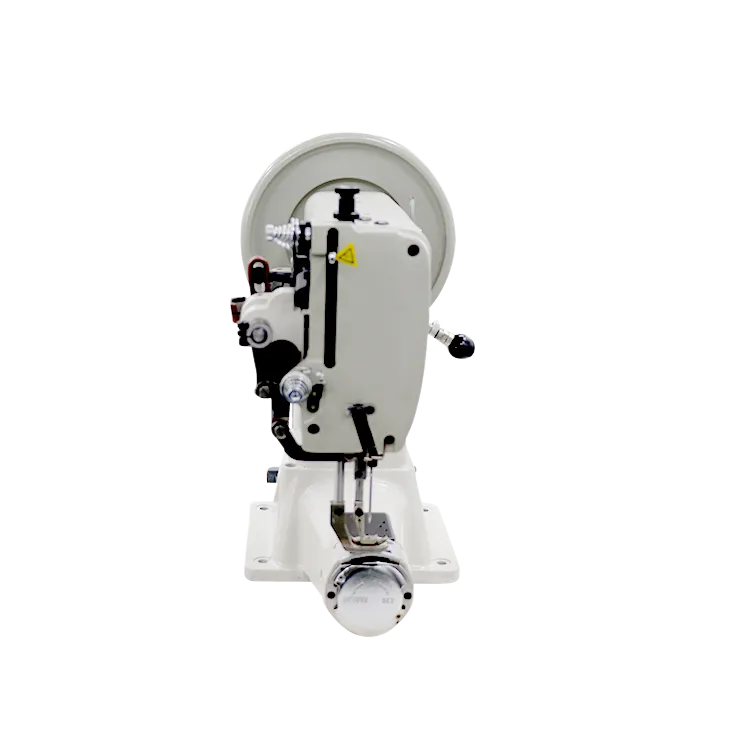
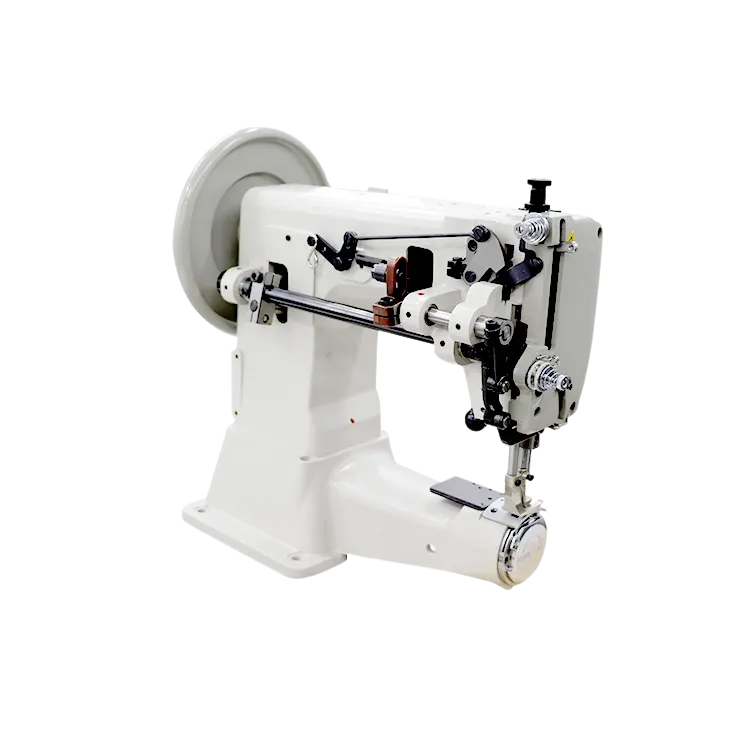
This unit uses compound feed—top, bottom, and needle feed—plus the JUKI TSC-441 big shuttle hook. Translation: stable stitch formation in multi-layer leather and canvas; less drag, fewer skipped stitches. And it’s built for “very thick and hard material,” which is exactly how saddle leather behaves on cold mornings. Origin is reassuringly transparent: No.368 North Youyi Street, Shijiazhuang City, Hebei Province, China.
Product specs (field-validated)
| Parameter | GA441S |
|---|---|
| Feed Mechanism | Compound feed (top/bottom/needle) |
| Hook/Bobbin | JUKI TSC-441 big shuttle, extra-large bobbin |
| Thread Capacity | Up to ≈ 1300D × 3 (real-world use may vary) |
| Material Range | Very thick leather, coated webbing, canvas, saddlery laminates |
| Arm Type | Short-arm GA441 variant for small-piece control |
| Stitch Quality | Conforms to ISO 4915 stitch classes; ASTM D6193 guidance |
| Duty Cycle | Continuous shop use; lab endurance ≈ 2–3 million stitches before major service |
Applications and process flow
Industries: saddlery, harness, tactical gear, holsters, belts, luggage, marine canvas, motorcycle seats. A typical flow looks like this:
- Materials: veg-tan 8–16 oz, bridle leather, multi-layer canvas, TPU-coated webbing.
- Methods: edge skive, adhesive tack, stitch on cylinder bed machine for gussets/rounds, backtack per ISO 4915/ASTM D6193 class.
- Testing: stitch consistency audit, seam strength sampling (ASTM D1683 analog for composites), abrasion checks (ISO 12947 proxy for surface wear).
- Service life: in-shop feedback suggests 5–10 years with quarterly preventive maintenance and hook/bobbin care.
Customer feedback? Many say the short arm saves time on small bags; less wrestling, more control. One holster maker told me, “I finally run 415 thread without drama.” That’s not nothing.
Vendor landscape (quick compare)
| Vendor/Model | Feed & Hook | Thread Range | Notes |
|---|---|---|---|
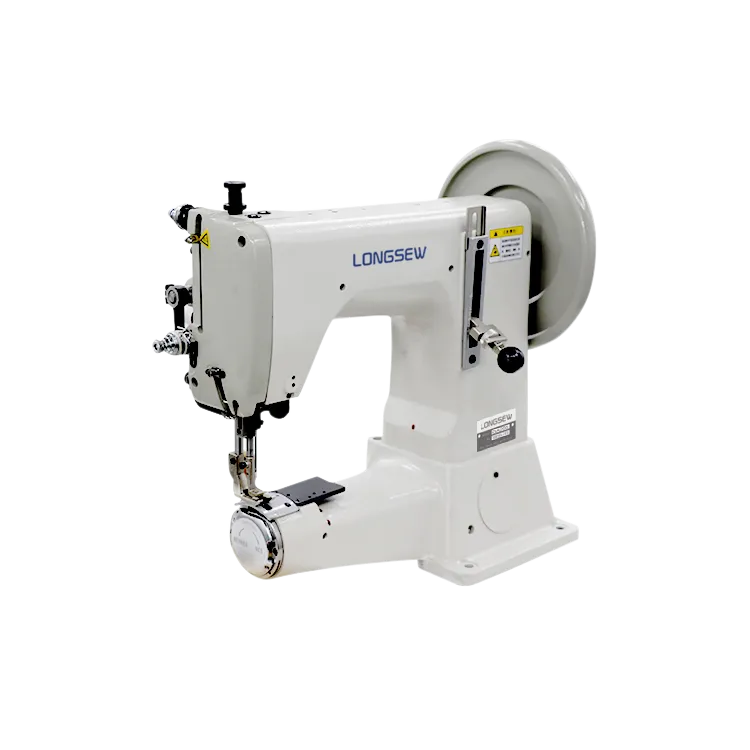
| Longsew GA441S | Compound; TSC-441 big shuttle | Up to ≈ 1300D×3 | Short arm for tight work; big bobbin capacity |
| JUKI TSC-441 (ref.) | Compound; TSC-441 shuttle | Heavy thread | Benchmark platform; widely cloned |
| Cowboy CB4500 | Compound; large shuttle | Very heavy | Long arm; great for large pieces |
| Techsew 5100 | Compound; large shuttle | Very heavy | Accessory ecosystem, servo options |
Customization, compliance, and test data
- Customization: edge guides, roller feet variants, servo + speed reducer, needle systems per thread spec.
- Certifications: typical factories run ISO 9001 QMS; CE electrical compliance where applicable.
- Factory tests: continuous run-in ≥ 8 hours; stitch formation checks per ISO 4915 classes; noise surveys ≈ 70–78 dB(A) at operator ear (ISO 11201 methodology, shop-dependent).
Case snapshot
A midsize saddle shop switched two flatbeds to one cylinder bed machine GA441S for gusset seams and cantle binding. Result: ≈ 22% throughput gain, fewer hand repositionings, and more consistent backtacks on dense bridle leather. It sounds small, but in seasonal rush, it’s the difference between waitlists and walk-ins.
Why it’s worth a look
The big hook + compound feed combo, the short arm control, and the willingness to run very heavy thread make the GA441S a practical shop upgrade. To be honest, there’s no magic—just solid engineering where it counts.
References
- ISO 4915:1991 — Textiles — Stitch types — Classification and terminology.
- ASTM D6193 — Standard Practice for Stitches and Seams.
- JUKI TSC-441 platform documentation (hook and stitch system reference).
- ISO 9001 — Quality management systems — Requirements.
Latest news
-
Industrial Bag Sewing Machine Price and Comprehensive Buying GuideNewsApr.16,2026
-
Industrial Hand Held Bag Closer for Efficient Packaging SealingNewsApr.16,2026
-
Industrial Hand Held Bag Closer Sewing Machine for PackagingNewsApr.16,2026
-
Efficient Industrial Bag Closer Sewing Machine for PackagingNewsApr.16,2026
-
Industrial Sewing Guide for Choosing the Right Closer MachineNewsApr.16,2026
-
Guide to Capital Bag Closer Machine Price and Buying FactorsNewsApr.16,2026
-
Say goodbye to inefficient cutting! This heavy-duty webbing hot cutting machine redefines the new standard for industrial cuttingNewsApr.14,2026

Hebei LongSew Machinery Technology Co. Ltd is beginning as sewing machine parts supplier, now Longsew have over twenty years experience in complete set sewing machine offering.


CLASSIFICATION
CONTACT US
-

No.368 North Youyi Street, Shijiazhuang City, Hebei Province, China
-

-

Copyright © 2026 HEBEI LONGSEW MACHINERY TECHNOLOGY CO. LTD All Rights Reserved. Sitemap | Privacy Policy | Top Blog | Global Service