

Mar . 24, 2026 02:15
Back to list
What is the Difference Between Overlock and Coverstitch Sewing Machines Explained
What is the Difference Between Overlock and Coverstitch?
Understanding the differences between overlock and coverstitch machines is crucial for achieving professional-quality seams in garment construction. Both are specialized sewing techniques, but they serve different purposes and create distinct finishes. This article dives deep into the functionalities, applications, and key distinctions between these two machines, helping you determine which one is best suited for your sewing projects. We’ll explore everything from seam strength to aesthetic appeal, offering insights for both beginners and experienced sewists. Explore our range of high-quality industrial sewing machines at Longsew.
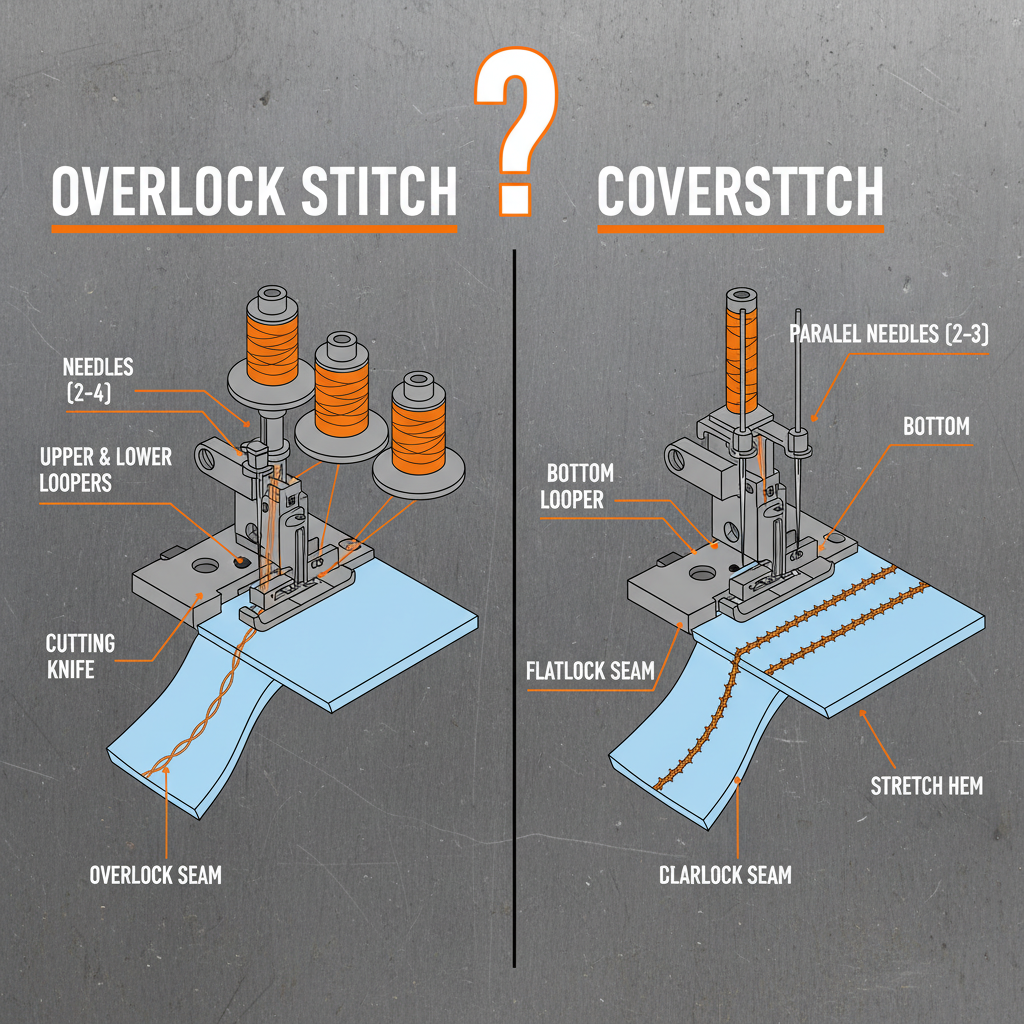
Understanding the Overlock Machine
The overlock machine, also known as a serger, is designed to simultaneously cut, stitch, and finish the raw edges of fabric. This process prevents fraying and creates a neat, professional-looking seam. Overlock machines utilize multiple threads (typically 3-5) to create a secure and durable seam. They’re incredibly efficient for quickly finishing edges, especially on knit fabrics where fraying is a significant concern. The resulting seam is relatively flat and flexible, making it ideal for garments that require stretch and comfort.
Delving into the World of Coverstitch
A coverstitch machine, on the other hand, creates a professional-looking hem or decorative stitch on the right side of the fabric. It typically uses 1 or 2 needles and multiple loopers to form parallel rows of stitching. This stitch is commonly found on ready-to-wear garments, such as t-shirts and activewear, providing a clean and stretchy finish. Coverstitch machines excel at creating hems, attaching elastic, and adding decorative details. Unlike overlock machines, coverstitch doesn’t typically cut the fabric as it sews.
Key Difference: Overlock machines finish raw edges, while coverstitch machines create hems and decorative stitching on the face of the fabric.
Overlock vs. Coverstitch: A Side-by-Side Comparison
To further clarify the distinctions, let’s compare these two machines in detail. Understanding these differences will help you choose the appropriate machine for your specific sewing needs. For a wide range of industrial sewing solutions, visit Longsew’s website.
Applications in Garment Construction
Overlock machines are essential for creating seams in t-shirts, leggings, and other knit garments. They are also commonly used to finish the edges of skirts, dresses, and pants. Coverstitch machines shine when creating hems on t-shirts, activewear, and baby clothes. They are also perfect for attaching elastic waistbands and adding decorative topstitching. The ability to create a professional finish with stretch makes coverstitch machines indispensable for a variety of garments.
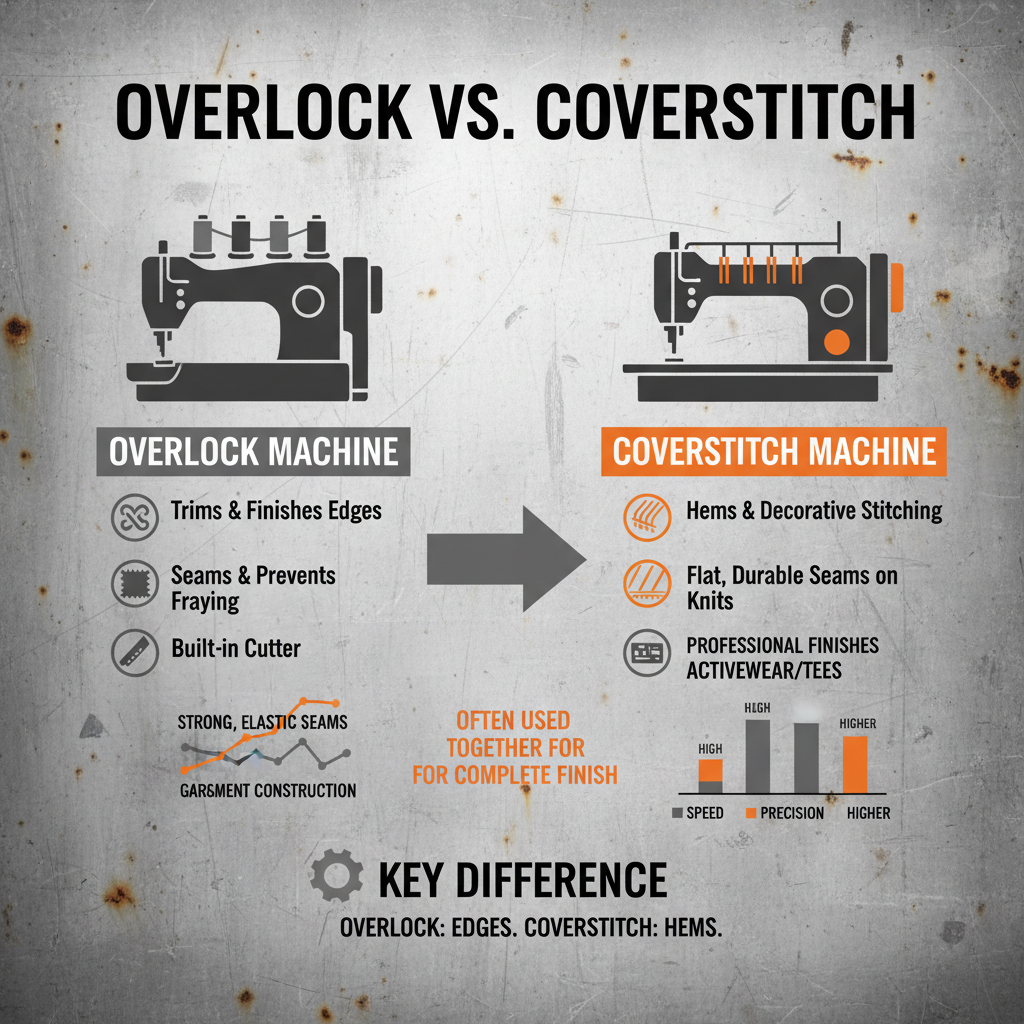
Choosing the Right Machine for Your Needs
If you primarily sew knit fabrics and need a quick and efficient way to finish edges and create seams, an overlock machine is the way to go. However, if you focus on creating professional-looking hems and decorative stitching, a coverstitch machine is the better choice. Many sewists find that having both machines provides the most versatility. Longsew offers both overlock and coverstitch machines to meet all your sewing requirements.
Conclusion: Mastering Your Seams
Understanding the differences between overlock and coverstitch machines empowers you to achieve professional-quality results in your sewing projects. By choosing the right machine for the task, you can create durable, attractive seams and hems that elevate your garments. Don't hesitate to explore the comprehensive range of sewing solutions available at Longsew to find the perfect machine for your needs.
Frequently Asked Questions (FAQs)
Can I use an overlock machine to create a hem?
While an overlock machine can technically finish the edge of a hem, it's not designed for creating a neat, professional-looking hem on the right side of the fabric. The overlock stitch is intended to enclose the raw edge, not to be visible as a decorative element. A coverstitch machine is much better suited for creating hems, providing a clean and stretchy finish that resembles commercially made garments. Attempting to use an overlock machine for a hem might result in a bulky or uneven finish.
What type of fabric is best for each machine?
Overlock machines excel with knit fabrics, as they can effectively prevent fraying and create a stretchable seam. They also work well with lightweight woven fabrics. Coverstitch machines are primarily used with knit fabrics to create hems and decorative stitching that stretch with the fabric. While you can use a coverstitch on wovens, it’s less common, and the stretchiness of the stitch won’t be as beneficial. For the best results, choose the machine specifically designed for the fabric type and desired finish.
Is it possible to learn to use both machines without prior sewing experience?
Yes, it’s definitely possible to learn to use both overlock and coverstitch machines even with limited sewing experience. However, they do require a bit of a learning curve. It’s recommended to start with the overlock machine, as it’s generally considered more straightforward. Take advantage of online tutorials, classes, and practice projects to build your skills. With patience and practice, you can master both machines and unlock a new level of creativity in your sewing projects.
Where can I find high-quality overlock and coverstitch machines?
Longsew offers a comprehensive selection of industrial-grade overlock and coverstitch machines, known for their durability, precision, and performance. Visit our website to explore our range of machines, view detailed specifications, and find the perfect solution for your sewing needs.
Latest news
-
Industrial Bag Sewing Machine Price and Comprehensive Buying GuideNewsApr.16,2026
-
Industrial Hand Held Bag Closer for Efficient Packaging SealingNewsApr.16,2026
-
Industrial Hand Held Bag Closer Sewing Machine for PackagingNewsApr.16,2026
-
Efficient Industrial Bag Closer Sewing Machine for PackagingNewsApr.16,2026
-
Industrial Sewing Guide for Choosing the Right Closer MachineNewsApr.16,2026
-
Guide to Capital Bag Closer Machine Price and Buying FactorsNewsApr.16,2026
-
Say goodbye to inefficient cutting! This heavy-duty webbing hot cutting machine redefines the new standard for industrial cuttingNewsApr.14,2026

Hebei LongSew Machinery Technology Co. Ltd is beginning as sewing machine parts supplier, now Longsew have over twenty years experience in complete set sewing machine offering.


CLASSIFICATION
CONTACT US
-

No.368 North Youyi Street, Shijiazhuang City, Hebei Province, China
-

-

Copyright © 2026 HEBEI LONGSEW MACHINERY TECHNOLOGY CO. LTD All Rights Reserved. Sitemap | Privacy Policy | Top Blog | Global Service