

Oct . 03, 2025 12:35
Back to list
Why Choose Hightex CB3200 for Heavy-Duty Upholstery Sewing?
Field Notes on [hightex cb3200] Class Machines: What Pros Actually Use
Heavy-duty stitchers are having a moment. Leather craft went mainstream, canvas workrooms are stacked, and even small upholstery shops are taking on yacht refits. Machines in the [hightex cb3200] class—flat-bed, compound feed, thick-material specialists—sit right at the center of this shift. I’ve tested a few in messy real-world setups, from oil-tanned belts to waxed-canvas rucksacks, and yes, the right compound feed makes all the difference.
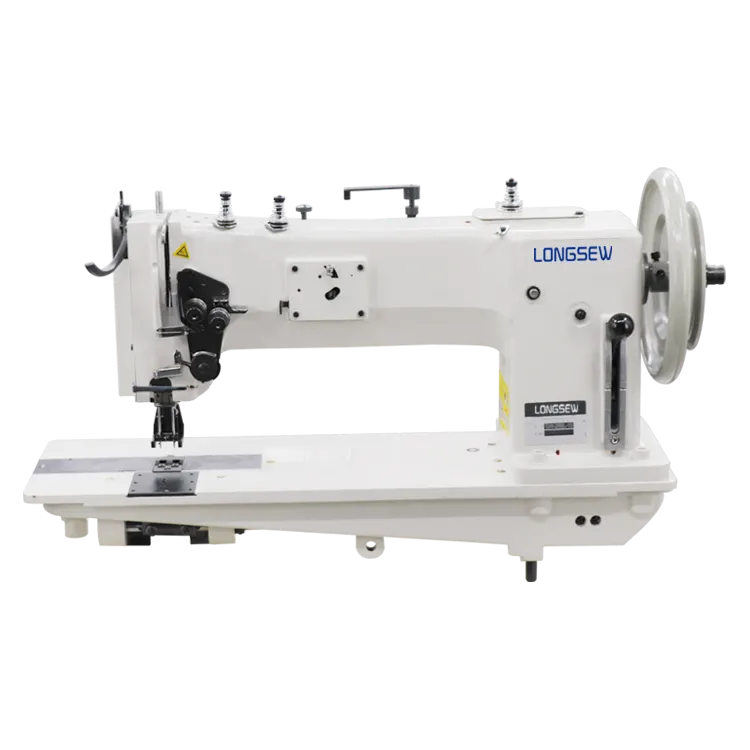
Triple-compound feed, flat-bed workhorse—typical of this class
Why compound feed still wins
The appeal is simple: triple compound feeding (upper presser, bottom feed dog, plus needle feed) keeps layers from creeping. The Longsew JW‑28BL15, for instance, uses that exact stack so top and bottom don’t skate apart—your stitch line stays neat and tension stays sane. Many customers say this is the first time their stacked leather straps look like they were cut by a plotter and sewn by a robot. To be honest, that feels right.
Spec snapshot (JW‑8BL15/JW‑28BL15)
| Model | JW‑8BL15 (single-needle) / JW‑28BL15 (double-needle) |
| Feed mechanism | Triple compound feed (upper + needle + bottom) |
| Bed type | Flat bed, heavy-duty |
| Max stitch length | ≈ 0–9 mm (real-world use may vary) |
| Presser foot lift | around 15–20 mm, material-dependent |
| Recommended threads | Bonded nylon/poly (#92–#277) depending on needle and material |
| Applications | Belts, saddlery, holsters, canvas gear, upholstery seams |
Origin: No.368 North Youyi Street, Shijiazhuang City, Hebei Province, China
Industry use, process flow, and testing
Typical materials: full‑grain veg‑tan (3–6 mm), chrome‑tan leather, laminated straps, heavy canvas (16–24 oz), coated webbing. Methods: balanced lockstitch per ISO 4915 types 301/308; seam choices per ASTM D6193. Shops usually pre‑punch or edge‑skive, then run a 4–6 mm stitch length for belts. For marine canvas, I guess 5 mm with UV thread is the sweet spot.
Testing standards commonly referenced: seam strength (ASTM D1683), leather tear (EN ISO 3377‑1), seam slippage (ISO 13936), and operator safety under the EU Machinery Directive (2006/42/EC). Service life? In fact, with routine oiling and a servo + speed reducer, these machines last ≈5–8 years of two‑shift duty before any major rebuild—longer if you baby them.
How it stacks up: vendor comparison
| Model | Typical use | Feed type | Max thickness (≈) | Price band (≈) |
|---|---|---|---|---|
| [hightex cb3200] | Leathercraft belts/holsters; small upholstery | Compound/unison feed | 12–13 mm | Mid |
| JW‑28BL15 | Double‑row decorative/structural seams | Triple compound feed | ≈10–15 mm (material‑dependent) | Mid |
| Juki 1541S | Upholstery and canvas | Unison feed | 7–9 mm | Upper‑mid |
Customization and real shop feedback
Options that matter: left/right/top piping feet, edge guide, speed reducer pulley, heavy flywheel, and needle plates for thick veg‑tan. Double‑needle gauges for 6–10 mm spacing help with belts. Surprisingly, a simple servo with soft start cures 80% of beginner issues.
Customer notes I hear often: “tracks straight on 3‑layer bridle,” “clean knot bury on #207,” and “less footprint than a cylinder‑arm but more table control.” Certifications buyers ask for: CE conformity and ISO 9001 at the factory level. If you run marine thread, test UV exposure—ASTM G154 style—so your beautiful seams don’t chalk out in a season.
Mini case study
A Midwest leather studio moved from a starter flat-bed to a [hightex cb3200]-class machine and added a JW‑28BL15 for double‑row belt seams. Throughput jumped ≈35% after they standardized on 5 mm stitch length, #138 thread, and a speed‑reduced servo. Returns for seam issues dropped to near zero once they documented tensions and ran weekly needle audits.
Bottom line: if you need tidy, repeatable seams in thick stacks, a compound‑feed flat bed—whether the classic [hightex cb3200] profile or the JW‑8BL15/JW‑28BL15—earns its keep fast.
- ISO 4915:2015 – Stitch types; ISO 13936 – Seam slippage testing.
- ASTM D6193 – Standard Practice for Stitches and Seams; ASTM D1683 – Failure in sewn seams.
- EN ISO 3377‑1 – Leather, tear load test methods.
- Directive 2006/42/EC – Machinery Directive (CE marking requirements).
- Statista – Global leather goods market insights, latest edition.
Previous:
Latest news
-
Industrial Bag Sewing Machine Price and Comprehensive Buying GuideNewsApr.16,2026
-
Industrial Hand Held Bag Closer for Efficient Packaging SealingNewsApr.16,2026
-
Industrial Hand Held Bag Closer Sewing Machine for PackagingNewsApr.16,2026
-
Efficient Industrial Bag Closer Sewing Machine for PackagingNewsApr.16,2026
-
Industrial Sewing Guide for Choosing the Right Closer MachineNewsApr.16,2026
-
Guide to Capital Bag Closer Machine Price and Buying FactorsNewsApr.16,2026
-
Say goodbye to inefficient cutting! This heavy-duty webbing hot cutting machine redefines the new standard for industrial cuttingNewsApr.14,2026

Hebei LongSew Machinery Technology Co. Ltd is beginning as sewing machine parts supplier, now Longsew have over twenty years experience in complete set sewing machine offering.


CLASSIFICATION
CONTACT US
-

No.368 North Youyi Street, Shijiazhuang City, Hebei Province, China
-

-

Copyright © 2026 HEBEI LONGSEW MACHINERY TECHNOLOGY CO. LTD All Rights Reserved. Sitemap | Privacy Policy | Top Blog | Global Service