

Oct . 06, 2025 08:50
Back to list
Need a Chain Stitch Sewing Machine with Speed and Strength?
Inside the FIBC double-needle workhorse: overedging + chainstitch, built for serious seams
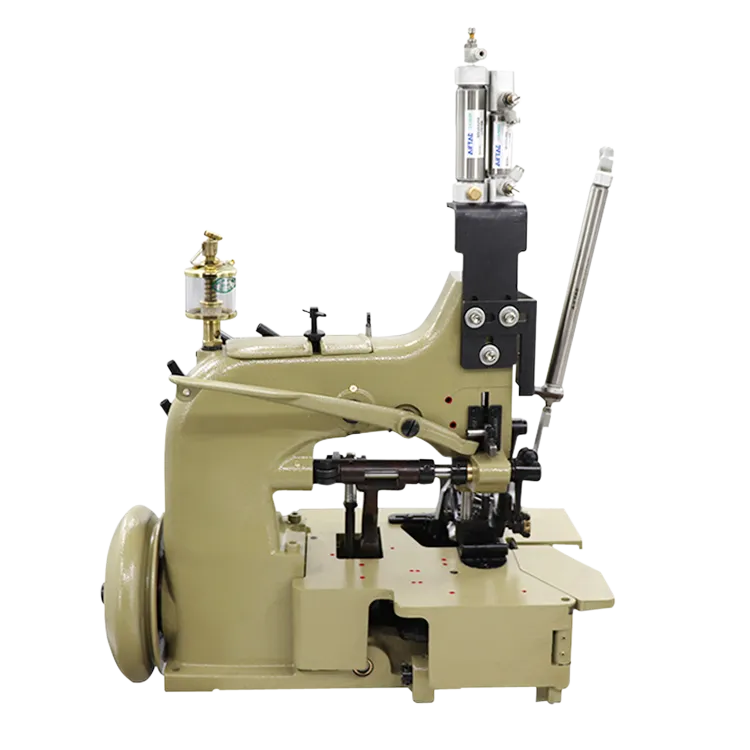
If you sew big bags for a living, you eventually get obsessed with seam integrity. That’s where a chain stitch sewing machine like the 81300 series earns its keep. Made in No.368 North Youyi Street, Shijiazhuang City, Hebei Province, China, the FIBC Bag / Jumbo Bag / Big Bag Double Needles Overedging & Chain Stitch Sewing Machine 81300A/81300A1/81300A1H is, frankly, a staple on factory floors where PP woven fabric meets unforgiving load tests.
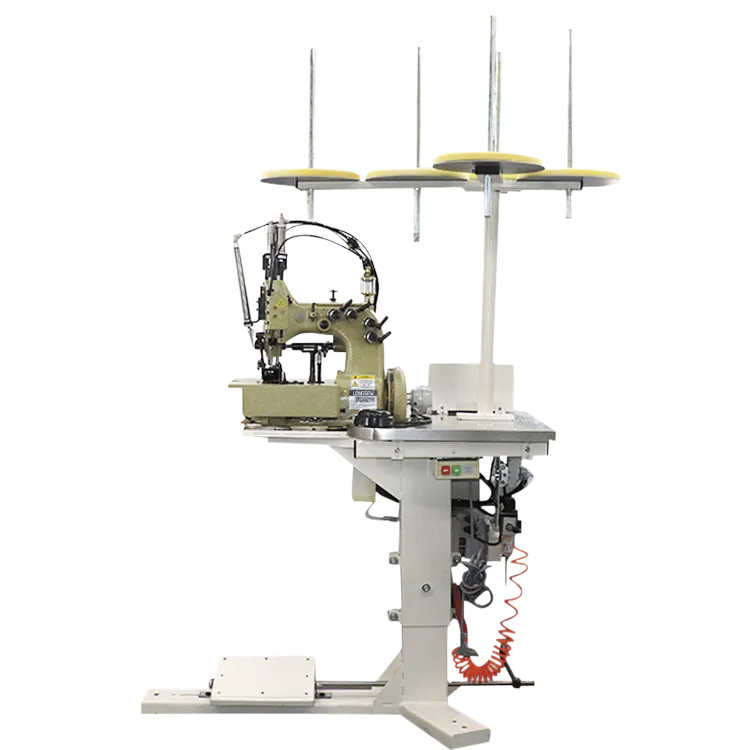
Why the 81300 series keeps popping up in FIBC plants
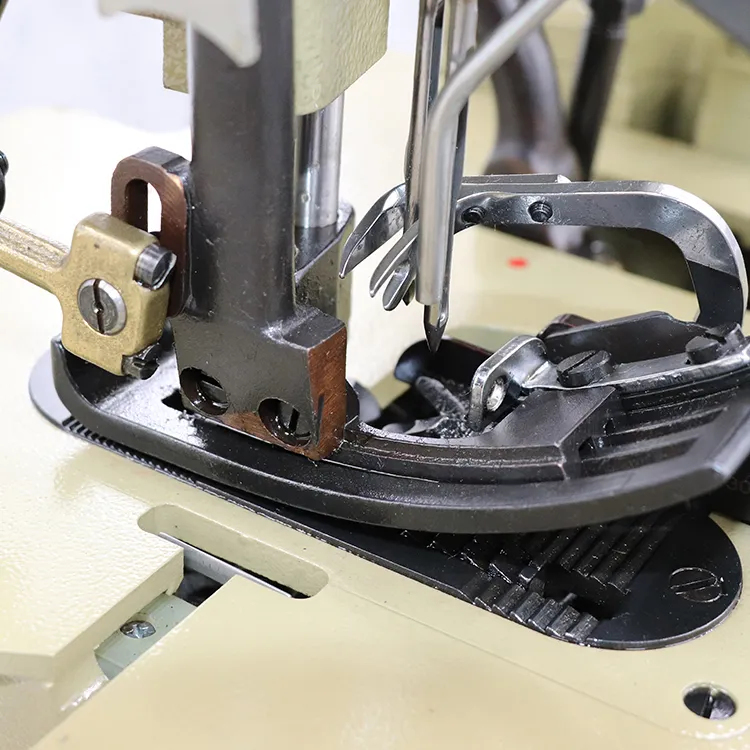
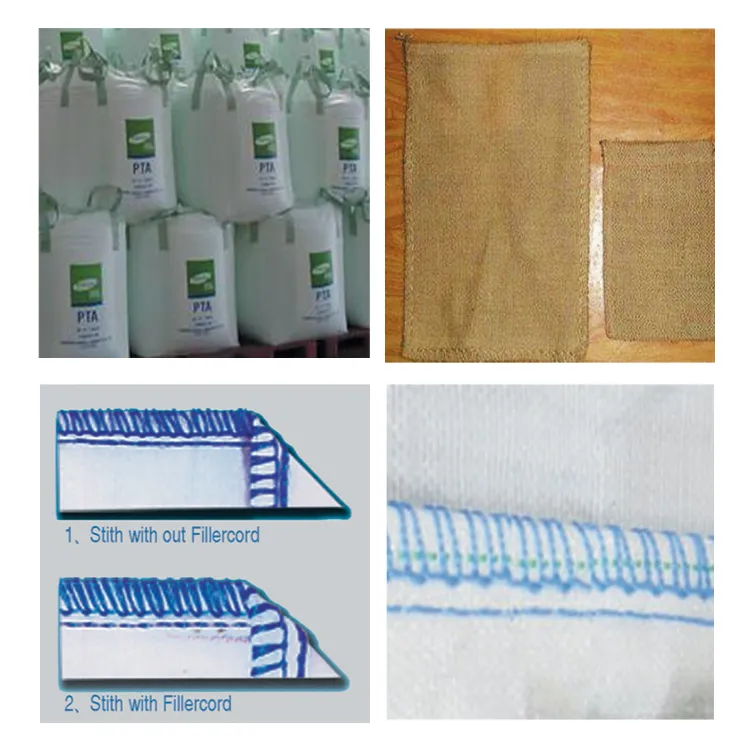
Two needles, two stitch families, one pass: overlock (502) to secure the edge and chainstitch (401) to add tensile backbone. In practice, that combo helps side seams and heavy corner seams survive rough handling, forklift tines, and those infamous top-lift tests. Many customers say the setup is “forgiving” with bulky fillers and webbing—surprisingly so, given the density of PP woven fabrics.
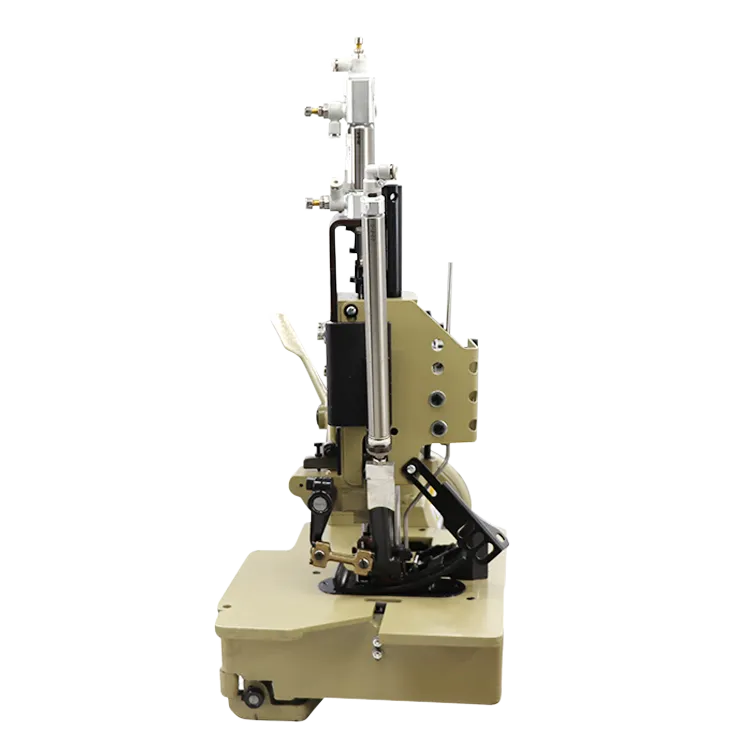
Key specifications (field-proven, real-world values may vary)
| Model | Stitch Types | Needle Gauge | Overedge Width | Max Speed | Presser Lift | Needle System |
|---|---|---|---|---|---|---|
| 81300A / 81300A1 / 81300A1H | 401 chain + 502 overedge (safety seam) | ≈ 7.2–9.5 mm | ≈ 10–12 mm | up to ≈ 1,600 spm | ≈ 14–16 mm | UY 128 GAS (or equivalent), #200–#230 |
Threads: high-tenacity polyester or PP, tex ≈ 80–210; thickness handling: multilayer PP fabric + webbing and filler cord in one pass (operator dependent).
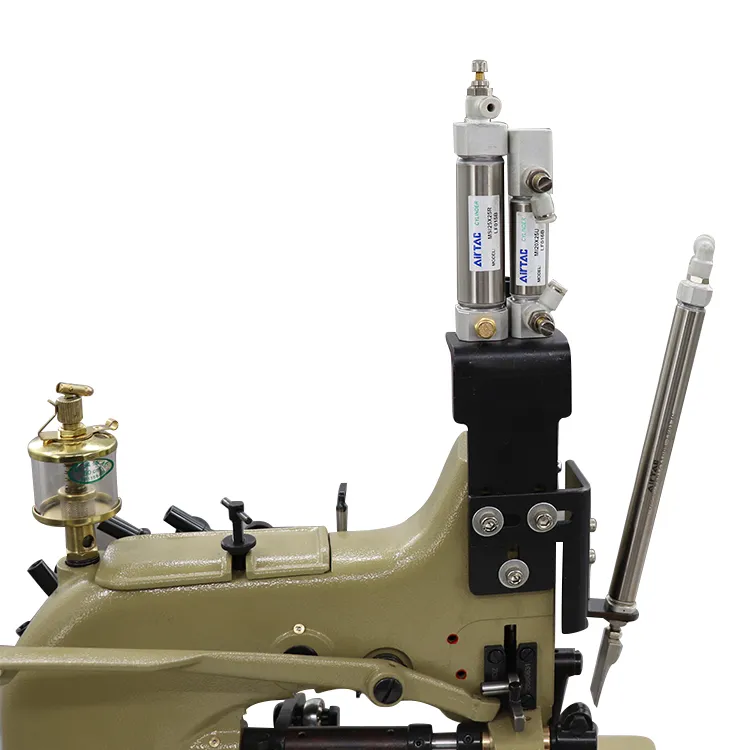
Process flow and testing: how plants actually run it
- Materials: PP woven fabric (≈ 160–230 gsm), reinforcement webbing, filler cord, dust-proof tapes.
- Methods: double-needle 502+401 seam for side panels and corners; SPI ≈ 4–7 depending on spec; differential feed tuned for curl control.
- Quality tests: stitch type verification per ISO 4915; seam strength per ISO 13935-2 or ASTM D5034; FIBC top-lift and drop tests per ISO 21898.
- Service life: with routine oiling and needle changes, plants report 2–3 shifts/day for years; wear parts (loopers, feed dogs) swapped on maintenance cycles.
- Industries: bulk chemicals, fertilizers, food-grade (with cleanroom covers), minerals, seed and grain, geotextiles.
In our audits, well-tuned 81300 lines delivered seam efficiencies often above 85% on PP woven—caveat: fabric batch and thread lot matter more than we’d like to admit.
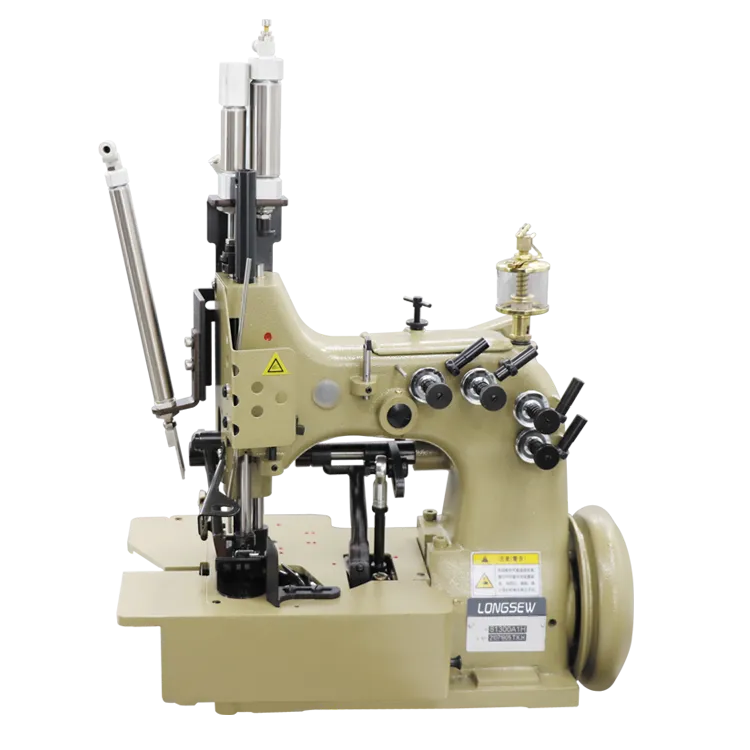
Real-world application and a quick case
One Gujarat FIBC maker moved from single-needle seams to the 81300A1H for corner builds. After a month, QA logged ≈32% fewer seam-related reworks and smoother top-lift passes on 1.5T SWL bags. To be honest, training the operators on thread tension paid for the upgrade as much as the hardware did.
Vendor snapshot (what buyers compare)
| Vendor / Model | Stitch setup | Typical use | Speed | Parts & Service | Price band |
|---|---|---|---|---|---|
| Longsew 81300A/81300A1/81300A1H | Double-needle 502 + 401 | FIBC side/corner seams | up to ≈1,600 spm | China-based HQ, global partners | $$ |
| Union Special 81300 series | Double-needle safety + chain | Heavy FIBC, industrial sacks | ≈1,500 spm | Strong legacy network | $$$ |
| Pegasus W500P (representative) | Safety overlock (select configs) | Medium-heavy technical textiles | High | Broad Asia-Pacific support | $$–$$$ |
Customization, compliance, and operator notes
- Customization: gauges for various filler cords, presser foot profiles for webbing, optional tape folders.
- Compliance: CE-style guarding and ISO 9001:2015 factory QMS (ask for certificates).
- Operator feedback: “predictable” thread path; fewer restarts once tensions are dialed in. Keep spare loopers and size #200–230 needles handy.
Whether you call it a chain stitch sewing machine or a safety-stitch specialist, the 81300 series is, in fact, a pragmatic pick for heavy PP seams. And yes, slower is faster—most plants find their sweet spot below absolute max speed.
References
- ISO 4915:1991 — Textiles — Stitch types — Classification and terminology.
- ISO 21898:2004 — Packaging — Flexible intermediate bulk container111s (FIBCs).
- ASTM D5034 — Standard Test Method for Breaking Strength and Elongation of Textile Fabrics (Grab Test).
- ISO 13935-2:2014 — Seam tensile properties of fabrics — Part 2: Determination of maximum force to seam rupture.
Latest news
-
Industrial Bag Sewing Machine Price and Comprehensive Buying GuideNewsApr.16,2026
-
Industrial Hand Held Bag Closer for Efficient Packaging SealingNewsApr.16,2026
-
Industrial Hand Held Bag Closer Sewing Machine for PackagingNewsApr.16,2026
-
Efficient Industrial Bag Closer Sewing Machine for PackagingNewsApr.16,2026
-
Industrial Sewing Guide for Choosing the Right Closer MachineNewsApr.16,2026
-
Guide to Capital Bag Closer Machine Price and Buying FactorsNewsApr.16,2026
-
Say goodbye to inefficient cutting! This heavy-duty webbing hot cutting machine redefines the new standard for industrial cuttingNewsApr.14,2026

Hebei LongSew Machinery Technology Co. Ltd is beginning as sewing machine parts supplier, now Longsew have over twenty years experience in complete set sewing machine offering.


CLASSIFICATION
CONTACT US
-

No.368 North Youyi Street, Shijiazhuang City, Hebei Province, China
-

-

Copyright © 2026 HEBEI LONGSEW MACHINERY TECHNOLOGY CO. LTD All Rights Reserved. Sitemap | Privacy Policy | Top Blog | Global Service