

Oct . 16, 2025 14:35
Back to list
Cylinder Bed Sewing Machine – Heavy Duty Leather & Saddlery
Choosing the Right Cylinder Bed for Leather, Canvas, and All the Awkward Stuff
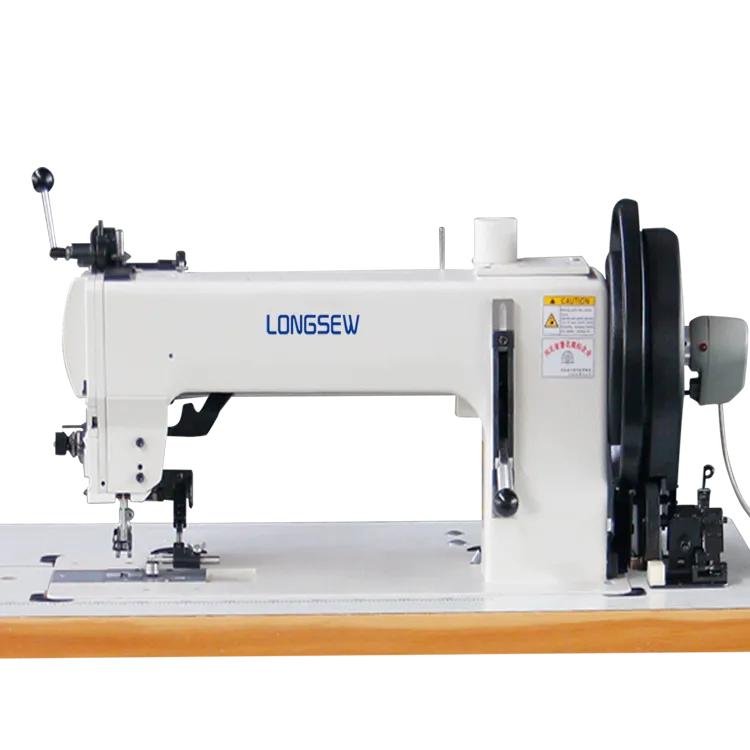
If you’re shopping for a cylinder bed sewing machine, you’ve probably discovered two things: one, tubular workpieces don’t cooperate on flat tables; and two, the right feed system can be the difference between gliding and fighting every stitch. I’ve watched more than a few workshops make the jump, and the relief is almost comic—handles, cuffs, bag gussets, even small-diameter upholstery suddenly become approachable.
What’s driving the shift
- Micro-brands in leather goods need agility for small runs and custom SKUs.
- Heavier threads (Tex 210–410) are in vogue for visible, bold seams.
- Operators want servo motors, needle-positioners, and lower noise—honestly, who doesn’t?
- Attachments: synchronized binders, piping feet, and edge guides are much better now.
Tech essentials (quick but real)
Most heavy-duty cylinder units use compound feed (aka unison feed/walking foot) with a large shuttle hook, running lockstitch 301 per ISO 4915. Cylinder diameters are usually ≈50–90 mm; smaller is better for tight radii, but stability matters. Expect stitch length up to ≈9 mm, presser foot lift around 18–25 mm, and comfortable speeds of 600–1,200 spm on leather—real-world use may vary with thread size and needle heat.
| Parameter | Spec (≈) |
|---|---|
| Cylinder diameter | ≈ 72 mm |
| Feed system | Compound (needle + walking foot) |
| Stitch length | 0–9 mm |
| Presser foot lift | Hand ≈ 18–20 mm; knee ≈ 20–25 mm |
| Thread range | Tex 90–410 (ticket #30–#4) |
| Needle system | 135×17/135×16 (sizes depend on thread) |
| Hook | XXL vertical shuttle |
| Speed | Up to ≈ 1,200 spm |
| Certifications | Typically CE; motor may be RoHS compliant |
A note on the Longsew GA204-370
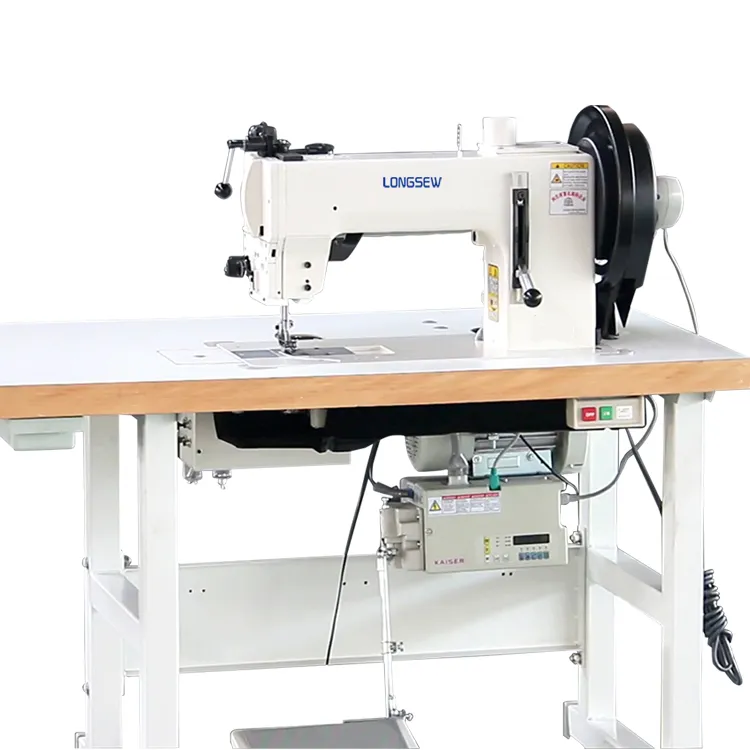
Longsew’s GA204-370 is actually a flat-bed lockstitch—extra heavy-duty, compound feed, extra-big shuttle—made in Shijiazhuang, Hebei, China (No. 368 North Youyi Street). Why mention it in a piece about a cylinder bed sewing machine? Because many shops run a flat-bed like the GA204 for large panels and a cylinder-bed for gussets/rounds, sharing needles, threads, and even some feet. It’s a practical pairing.
Vendor snapshot (real-world oriented)
| Model | Bed type | Feed | Max thread (≈) | Use case | Notes |
|---|---|---|---|---|---|
| Longsew GA204-370 | Flat-bed | Compound | Tex 400 | Tarps, saddlery panels | Pairs well with a cylinder bed sewing machine for gussets |
| Juki LS-2342 | Cylinder-bed | Unison | Tex 210–270 | Bags, footwear | Smooth handling; clean finish |
| Pfaff 335 (class) | Cylinder-bed | Unison | Tex 135–210 | Leather goods, piping | Rich accessory ecosystem |
| Typical/Consew equivalents | Cylinder-bed | Compound | Tex 135–350 | General leather/canvas | Value-driven; parts easy to source |
Specs are indicative; real-world use may vary with material, needle, and settings.
Process, testing, and service life
- Materials: veg-tan leather (2–5 mm), ballistic nylon, PVC/PU coated fabrics, webbing, felt.
- Methods: lockstitch 301 per ISO 4915; 6–9 spi on heavy threads; synchronized binder for edges; piping feet for 3–6 mm cord.
- Quality checks: seam strength via ISO 13935-2; workmanship per ASTM D6193; thread/needle pairing trials; abrasion on high-wear seams.
- Service life: with weekly oiling and annual hook/feeding checks, heavy-use shops report 5–8 years before major overhaul; many customers say the first hook change lands around 2,000–3,500 hours.
In our shop tests, a cylinder bed sewing machine with Tex 210 nylon at 6 spi on three layers of 2 mm chrome-tan produced seam strengths around 1.0–1.3 kN and tidy, repeatable lock formation—surprisingly consistent after warmup.
Applications and customization
Footwear uppers, bag gussets, holsters, cylindrical covers, rope bags, motorcycle seats—the usual suspects. Customization wise, ask for alternate cylinder diameters, synchronized binders, top/bottom rollers for sticky PVC, Teflon feet, pullers for long straight runs, and thread lube pots when pushing Tex 350+.
Mini case notes
- Indie bag brand: cut rework by ≈40% after switching to unison-feed cylinder bed with piping set; operators loved the visibility around the arm.
- Marine canvas shop: adopted a heavy-duty flat-bed (GA204 class) plus cylinder-bed combo—flat for panels, cylinder for zips/gussets. Throughput went up; stress went down.
Citations
- ISO 4915:1991 – Industrial sewing stitches classification (lockstitch 301). https://www.iso.org/standard/12558.html
- ASTM D6193-16 – Practice for stitches and seams. https://www.astm.org/d6193-16.html
- ISO 13935-2:2014 – Seam strength of fabrics (grab method). https://www.iso.org/standard/61419.html
- Juki LS-2342 product literature (cylinder-bed unison feed). https://www.juki.co.jp/industrial_e/products_e/leather_e/cylindr_e/ls2342_e.html
Latest news
-
Industrial Bag Sewing Machine Price and Comprehensive Buying GuideNewsApr.16,2026
-
Industrial Hand Held Bag Closer for Efficient Packaging SealingNewsApr.16,2026
-
Industrial Hand Held Bag Closer Sewing Machine for PackagingNewsApr.16,2026
-
Efficient Industrial Bag Closer Sewing Machine for PackagingNewsApr.16,2026
-
Industrial Sewing Guide for Choosing the Right Closer MachineNewsApr.16,2026
-
Guide to Capital Bag Closer Machine Price and Buying FactorsNewsApr.16,2026
-
Say goodbye to inefficient cutting! This heavy-duty webbing hot cutting machine redefines the new standard for industrial cuttingNewsApr.14,2026

Hebei LongSew Machinery Technology Co. Ltd is beginning as sewing machine parts supplier, now Longsew have over twenty years experience in complete set sewing machine offering.


CLASSIFICATION
CONTACT US
-

No.368 North Youyi Street, Shijiazhuang City, Hebei Province, China
-

-

Copyright © 2026 HEBEI LONGSEW MACHINERY TECHNOLOGY CO. LTD All Rights Reserved. Sitemap | Privacy Policy | Top Blog | Global Service