

Apr . 16, 2026 01:55
Back to list
Guide to Capital Bag Closer Machine Price and Buying Factors
Understanding Capital Bag Closer Machine Price: A Buyer's Guide
When scaling up packaging operations, finding the right balance between performance and cost is essential. The capital bag closer machine price can vary significantly based on the automation level, stitching speed, and durability of the components. Whether you are packaging grains, chemicals, or animal feed, investing in a high-quality bag closer ensures airtight seals and professional presentation. In this guide, we will break down the factors influencing the cost and help you determine which model offers the best return on investment for your specific production needs.
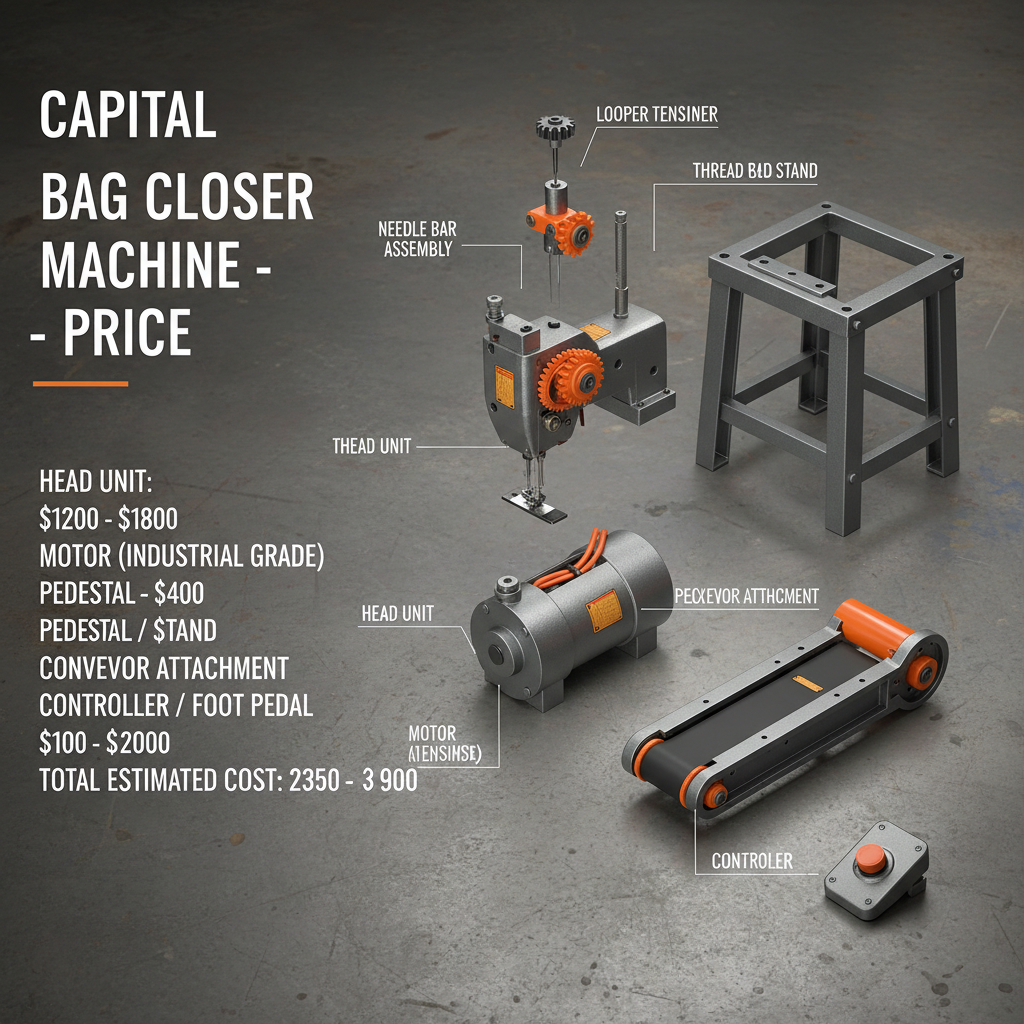
Factors That Influence the Capital Bag Closer Machine Price
Several technical variables dictate the final cost of a bag closing system. Firstly, motor power and efficiency play a huge role; industrial-grade motors designed for 24/7 operation are naturally more expensive than intermittent-use motors. Secondly, the material construction—such as the use of reinforced stainless steel versus standard alloys—affects both the price and the machine's lifespan in corrosive environments. Additionally, the type of stitching mechanism (single needle vs. double needle) and the inclusion of automatic thread cutters can add a premium to the capital bag closer machine price.
Cost Drivers: Key elements include automation level, material grade (e.g., SUS304 stainless steel), stitching speed (bags per minute), and the availability of after-sales technical support.
Comparing Portable vs. Stationary Bag Closers
Depending on your workflow, you may choose between a handheld portable unit or a stationary conveyor-based system. Portable machines offer flexibility and a lower entry capital bag closer machine price, making them ideal for small batches. Stationary machines, however, are designed for high-volume throughput, integrating seamless feeding and closing mechanisms that reduce manual labor costs over time. Below is a detailed comparison to help you decide.
Analyzing the ROI of a High-End Bag Closer
Many business owners hesitate when seeing a premium capital bag closer machine price, but the long-term Return on Investment (ROI) often justifies the cost. High-end machines reduce "down-time" caused by thread breakage and mechanical failure. Moreover, they provide a more consistent stitch density, which prevents product leakage and waste. When you calculate the cost per bag closed over five years, a durable machine actually costs less per unit than a cheap alternative that requires frequent replacement and repair.
Technical Specifications Impacting Price
To truly understand the capital bag closer machine price, one must look at the specification sheet. Features like lubrication systems (manual vs. automatic) and the quality of the needle bar affect how the machine handles different fabric weights. For instance, a machine capable of sewing through heavy-duty polypropylene bags requires a more powerful motor and reinforced gearing than one designed for lightweight paper bags.
How to Maintain Your Machine to Protect Your Investment
Once you have paid the capital bag closer machine price, the goal is to maximize its service life. Regular maintenance is the key to avoiding costly emergency repairs. This includes daily cleaning of the needle area to remove dust and fibers, which can cause friction and overheating. Periodically checking the tension settings ensures that the bags are sealed tightly without breaking the thread. Using genuine replacement parts from a trusted supplier like Longsew ensures that the machine continues to operate at peak efficiency without compromising the integrity of the stitch.
Choosing the Right Supplier for Bag Closing Solutions
Price is important, but the supplier's reputation is paramount. When searching for a competitive capital bag closer machine price, ensure that the vendor provides a comprehensive warranty and technical documentation. A reputable supplier will offer guidance on which machine fits your specific bag material and volume, preventing you from overpaying for features you don't need or under-investing in a machine that can't handle your workload. Look for providers with a proven track record in cross-border trade and international shipping standards.
Conclusion: Finding Your Ideal Capital Bag Closer
Determining the right capital bag closer machine price is not just about finding the lowest number, but finding the lowest total cost of ownership. By considering the production volume, material requirements, and long-term maintenance, you can select a machine that enhances your efficiency and professional image. Whether you opt for a portable or stationary system, investing in quality engineering ensures your packaging line remains a strength of your business rather than a bottleneck.
Frequently Asked Questions (FAQs)
What is the average capital bag closer machine price?
The price varies widely depending on the model. Portable handheld bag closers are generally the most affordable, catering to small businesses. In contrast, fully automated stationary closing systems with conveyors are a significant investment. To get an accurate quote, it is best to provide your production volume and bag material specifications to a professional supplier, as customization can affect the final price.
Does a higher price always mean a better bag closer?
Not necessarily. A higher price often indicates better materials, higher speeds, or more automation. However, "better" depends on your needs. If you only close 10 bags a day, a high-end industrial stationary machine is an unnecessary expense. Conversely, for a factory closing thousands of bags daily, a cheap portable machine would be a liability. The goal is to find the "best fit" for your operational scale.
How often should I replace the needles and thread on my machine?
Needles are consumables and should be replaced as soon as you notice any skipped stitches or fraying of the bag material. Thread should be replaced based on the spool size, but it is critical to use high-tensile strength thread specifically designed for bag closing. Regular replacement prevents machine jams and ensures the structural integrity of your packaging, protecting the initial investment you made in the machine.
Can I use one machine for different types of bags?
Many machines are versatile, but they may require adjustments to the tension settings or a change in needle size to accommodate different fabrics (e.g., switching from woven plastic to heavy canvas). Some premium models offer quicker adjustment settings, which adds to the capital bag closer machine price but provides much-needed flexibility for businesses with diverse product lines.
Latest news
-
Industrial Bag Sewing Machine Price and Comprehensive Buying GuideNewsApr.16,2026
-
Industrial Hand Held Bag Closer for Efficient Packaging SealingNewsApr.16,2026
-
Industrial Hand Held Bag Closer Sewing Machine for PackagingNewsApr.16,2026
-
Efficient Industrial Bag Closer Sewing Machine for PackagingNewsApr.16,2026
-
Industrial Sewing Guide for Choosing the Right Closer MachineNewsApr.16,2026
-
Say goodbye to inefficient cutting! This heavy-duty webbing hot cutting machine redefines the new standard for industrial cuttingNewsApr.14,2026
-
LS300 Series Automatic Pattern Sewing Machine High-Efficiency Model for Safety Harness, Lifting Slings & Heavy-Duty WebbingNewsApr.10,2026

Hebei LongSew Machinery Technology Co. Ltd is beginning as sewing machine parts supplier, now Longsew have over twenty years experience in complete set sewing machine offering.


CLASSIFICATION
CONTACT US
-

No.368 North Youyi Street, Shijiazhuang City, Hebei Province, China
-

-

Copyright © 2026 HEBEI LONGSEW MACHINERY TECHNOLOGY CO. LTD All Rights Reserved. Sitemap | Privacy Policy | Top Blog | Global Service