

Mar . 26, 2026 01:55
Back to list
Whats the Difference Between an Overlocker and a Coverstitch Machine A Comprehensive Guide
What's the Difference Between an Overlocker and a Coverstitch Machine?
Understanding the nuances between an overlocker (also known as a serger) and a coverstitch machine is crucial for anyone involved in garment construction, from hobbyists to professional apparel manufacturers. Both machines are specialized, designed to finish fabric edges, but they achieve this in different ways, resulting in distinct aesthetics and functionalities. Choosing the right machine depends on the types of projects you'll be working on and the desired finish. Longsew provides a wide range of both overlock and coverstitch machines to suit diverse needs.
Understanding the Overlocker: The Versatile Edge Finisher
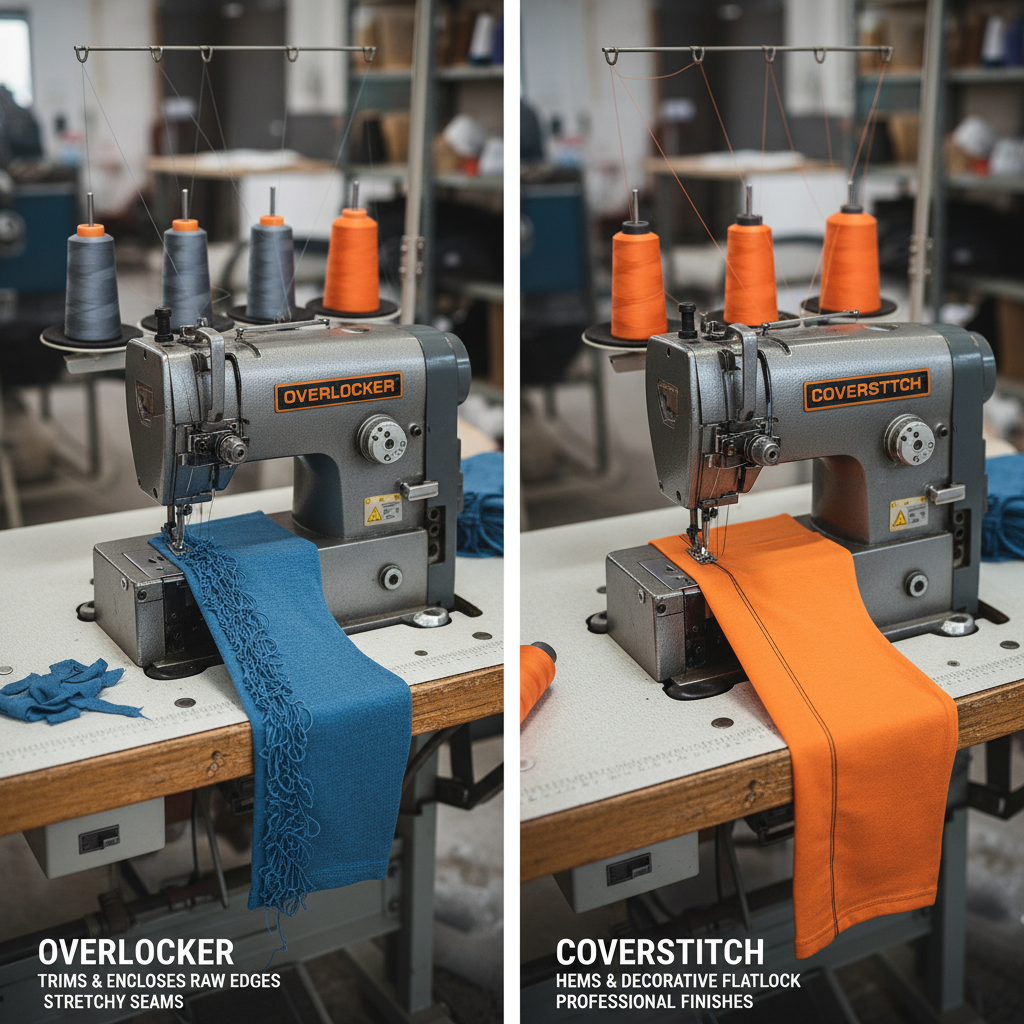
An overlocker excels at encasing the raw edge of fabric within threads, preventing fraying and providing a clean, professional finish. It simultaneously sews, trims, and overlocks the fabric edge in a single pass, making it incredibly efficient. Overlockers are particularly well-suited for finishing seams on knit fabrics, as the stretch of the overlock stitch accommodates the fabric’s elasticity. They are also used for creating rolled hems, flatlock seams, and decorative edge finishes. The versatility of an overlocker makes it a staple in many sewing rooms. Explore Longsew's range of overlock machines.
Key Highlights: Simultaneously sews, trims, and overlocks the fabric edge, preventing fraying and creating a clean finish. Particularly well-suited for knit fabrics.
Delving into the Coverstitch Machine: Hemming and Decorative Stitching
Unlike the overlocker, a coverstitch machine creates a professional-looking hem on knit fabrics. It forms parallel rows of stitching on the right side of the fabric, with a looper thread interlocking on the wrong side. This creates a stretchable, durable hem that is commonly seen on t-shirts, activewear, and other knit garments. Coverstitch machines can also be used for decorative stitching and creating chain stitches. While excellent for hems, they don't typically trim the fabric edge like an overlocker.
Coverstitch Benefits:
• Creates professional-looking hems on knit fabrics
• Produces a stretchable and durable finish
• Ideal for t-shirts, activewear, and other knit garments
• Can be used for decorative stitching
What's the Difference Between an Overlocker and a Coverstitch Machine? A Detailed Comparison
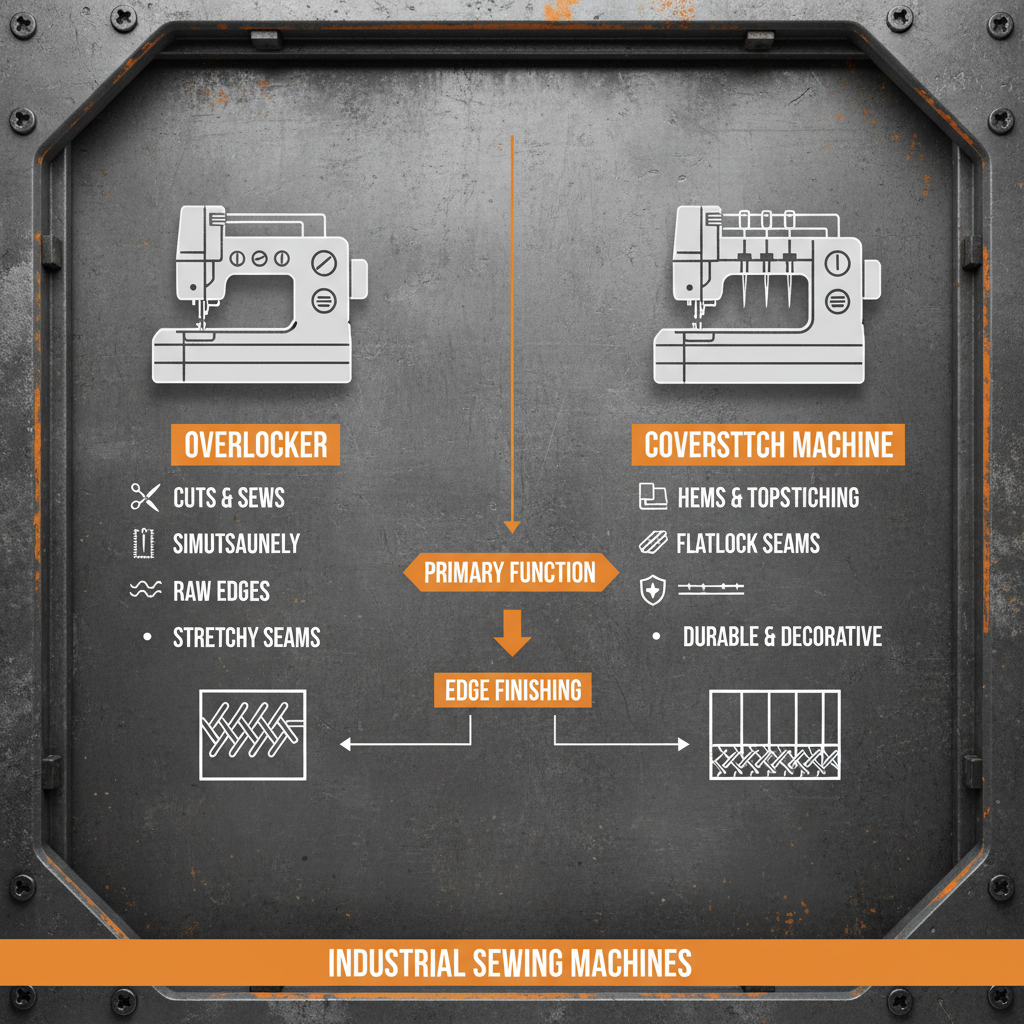
The primary difference lies in their function and the stitch they produce. An overlocker finishes raw edges, while a coverstitch machine creates hems. The overlocker's stitch wraps around the edge, while the coverstitch's stitch runs parallel to the edge. Consider the types of garments you make most often to determine which machine is best suited for your needs. Often, a combination of both machines provides the most comprehensive finishing capabilities.
Choosing the Right Machine for Your Sewing Needs
If you primarily work with knit fabrics and create garments like t-shirts, leggings, and activewear, a coverstitch machine is an excellent investment. If your projects involve a wider range of fabrics and require versatile edge finishing, an overlocker is the more practical choice. Many sewers eventually acquire both machines to achieve the highest level of finishing quality. Consider your budget and the complexity of your projects when making your decision. Browse Longsew's selection to find the perfect machine for you.
Conclusion: Enhancing Your Sewing with the Right Finishing Machine
The choice between an overlocker and a coverstitch machine depends on your specific sewing needs. Both machines offer unique benefits and contribute to a professional, polished finish. Understanding the differences outlined in this guide will help you make an informed decision and elevate the quality of your sewing projects. Longsew offers a comprehensive selection of both overlock and coverstitch machines to meet any requirement.
Frequently Asked Questions (FAQs)
Can an overlocker be used as a substitute for a coverstitch machine?
While an overlocker can create a narrow edge finish that resembles a coverstitch, it won’t achieve the same professional look and stretchability. A rolled hem overlock stitch can be used for lightweight knits, but it lacks the distinct parallel rows of stitching characteristic of a coverstitch. For a true coverstitch finish, a dedicated coverstitch machine is essential. The coverstitch provides superior stretch recovery and a cleaner, more durable hem.
What types of fabrics are best suited for each machine?
Overlockers excel with a wide range of fabrics, especially knits, woven, and stretch fabrics. They efficiently finish raw edges and prevent fraying. Coverstitch machines are specifically designed for knit fabrics with stretch, such as jersey, rib knits, and spandex. Using a coverstitch machine on non-stretch woven fabrics can result in puckering or uneven seams. Choosing the right machine for your fabric type is crucial for a professional finish.
How much do overlocker and coverstitch machines typically cost?
The cost of both machines varies widely depending on features, brand, and automation level. Basic overlockers can start around $300-$500, while advanced models with automatic threading and adjustable stitch length can exceed $1500. Coverstitch machines generally start at around $400-$600, with higher-end models costing upwards of $1200-$2000. Longsew offers machines at various price points to suit different budgets.
Is it difficult to learn to use an overlocker or coverstitch machine?
While there's a learning curve, both machines are manageable for beginners with patience and practice. Overlockers can be tricky to thread initially, but many modern machines feature automatic threading systems. Coverstitch machines require understanding of looper threading and tension adjustments. Online tutorials, instructional videos, and classes can be invaluable resources for mastering these machines. Don’t be afraid to practice on scrap fabric!
Latest news
-
Industrial Bag Sewing Machine Price and Comprehensive Buying GuideNewsApr.16,2026
-
Industrial Hand Held Bag Closer for Efficient Packaging SealingNewsApr.16,2026
-
Industrial Hand Held Bag Closer Sewing Machine for PackagingNewsApr.16,2026
-
Efficient Industrial Bag Closer Sewing Machine for PackagingNewsApr.16,2026
-
Industrial Sewing Guide for Choosing the Right Closer MachineNewsApr.16,2026
-
Guide to Capital Bag Closer Machine Price and Buying FactorsNewsApr.16,2026
-
Say goodbye to inefficient cutting! This heavy-duty webbing hot cutting machine redefines the new standard for industrial cuttingNewsApr.14,2026

Hebei LongSew Machinery Technology Co. Ltd is beginning as sewing machine parts supplier, now Longsew have over twenty years experience in complete set sewing machine offering.


CLASSIFICATION
CONTACT US
-

No.368 North Youyi Street, Shijiazhuang City, Hebei Province, China
-

-

Copyright © 2026 HEBEI LONGSEW MACHINERY TECHNOLOGY CO. LTD All Rights Reserved. Sitemap | Privacy Policy | Top Blog | Global Service