

Mar . 24, 2026 02:15
Back to list
What is the Difference Between Coverstitch and Overlock Sewing Techniques
What is the Difference Between Coverstitch and Overlock?
Understanding the nuances between coverstitch and overlock sewing techniques is crucial for achieving professional-quality results in garment construction. Both are commonly used for finishing edges, but they serve different purposes and create distinctly different looks. This article will delve into the specifics of each technique, highlighting their strengths, weaknesses, and ideal applications. Choosing the right stitch can significantly impact the durability, appearance, and overall quality of your projects. We'll explore how Longsew industrial sewing machines cater to both these techniques.
Coverstitch: The Professional Finish
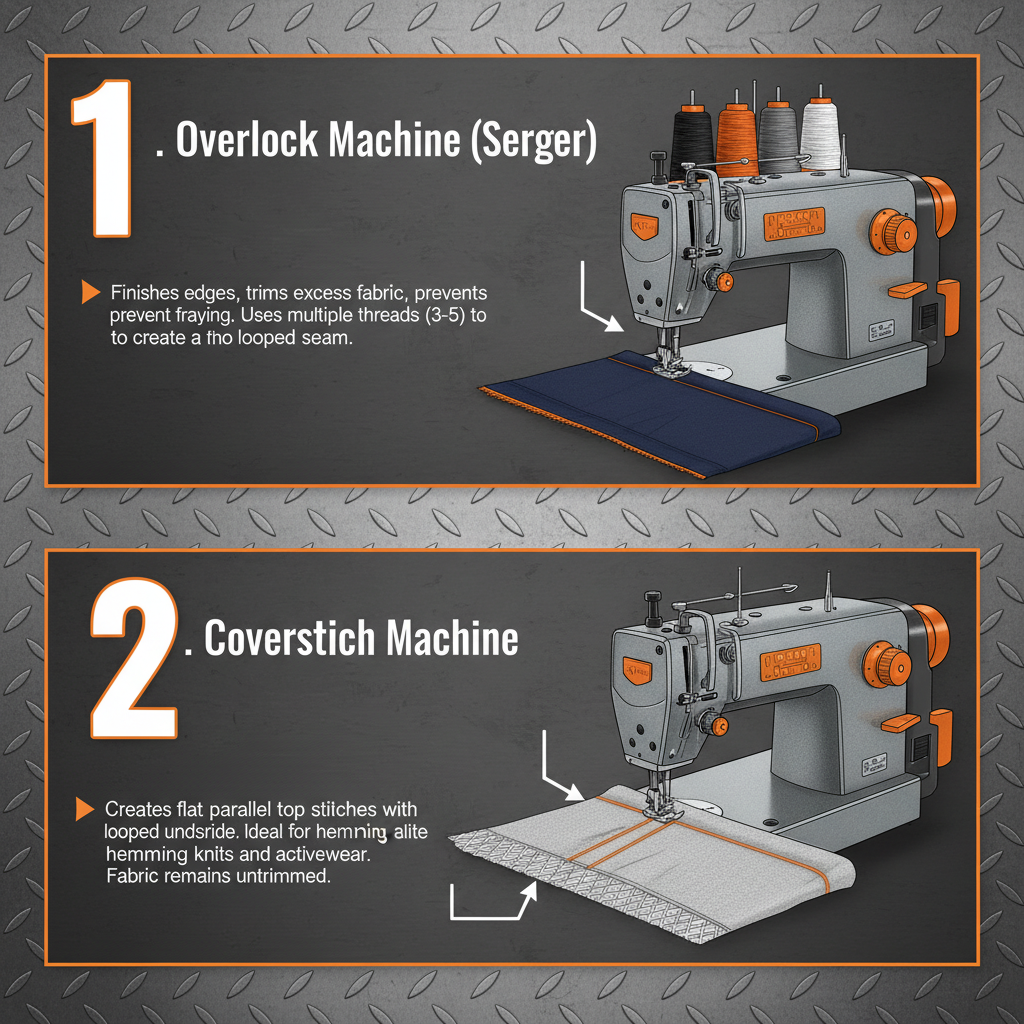
Coverstitch is a technique that creates a professional-looking finish, often seen on ready-to-wear garments, particularly activewear and knit fabrics. It uses loopers to create parallel rows of stitching on the right side of the fabric, with a looper thread interlocking with a needle thread on the underside. This results in a clean, flat seam that stretches with the fabric. It is excellent for hems, decorative stitching, and attaching elastic. The hallmark of a coverstitch is its ability to create a neat, durable seam that won't unravel easily.
Overlock (Serger): The Edge Protector
Overlock, commonly referred to as serging, is a technique that simultaneously sews a seam, trims the excess fabric, and finishes the edge to prevent fraying. It uses multiple threads (typically 3, 4, or 5) to encase the fabric edge in a secure, overlocked stitch. This is ideal for quickly finishing raw edges on woven and knit fabrics. Overlock stitches are often used for seams in t-shirts, sportswear, and other casual garments. It’s known for its speed and efficiency in creating a clean, professional finish.
Key Highlights: Overlock efficiently sews, trims, and finishes edges simultaneously, preventing fraying and creating a durable seam. Ideal for quick and easy finishing of both woven and knit fabrics.
Coverstitch vs. Overlock: A Detailed Comparison
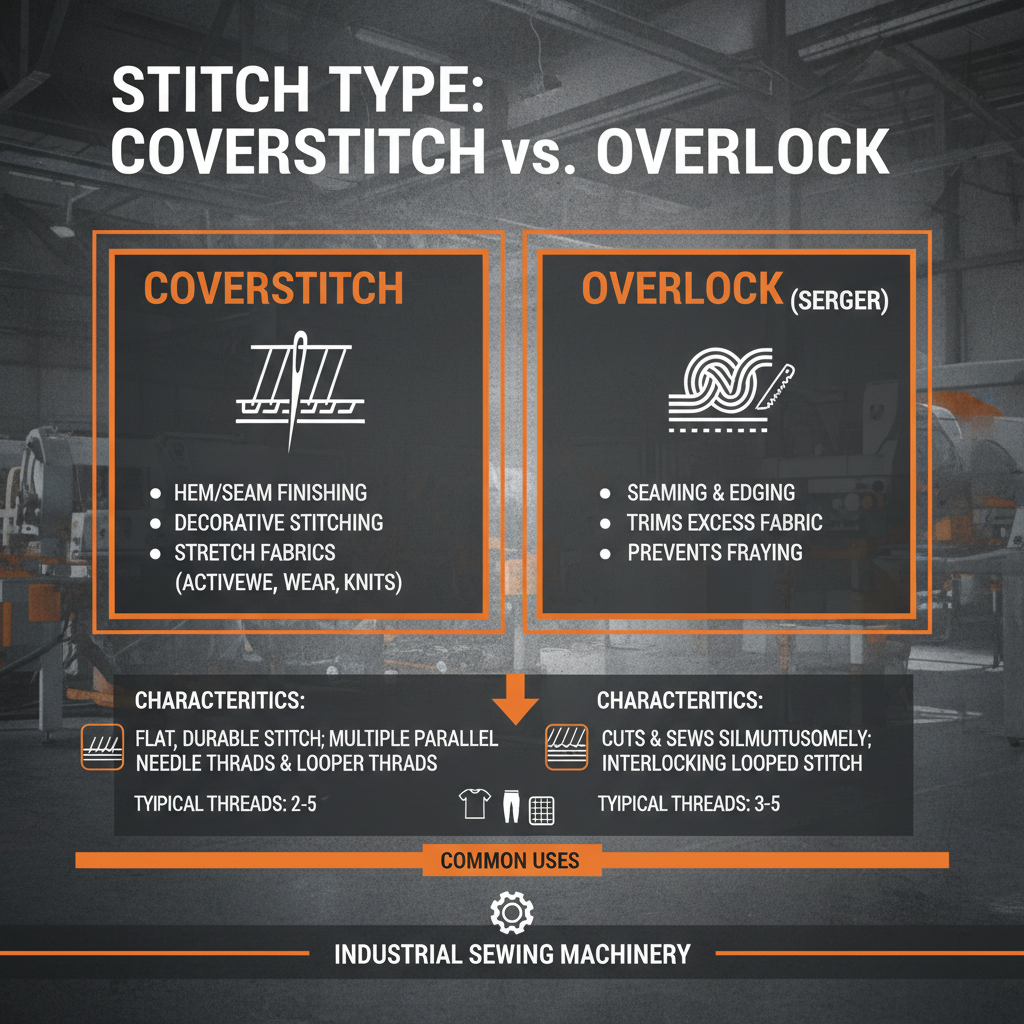
While both coverstitch and overlock are used for edge finishing, they differ significantly in their construction and application. Overlock focuses on encapsulating the edge to prevent fraying, while coverstitch creates a defined, decorative finish. Understanding these differences is key to choosing the right technique for your project. Using the wrong stitch can lead to an unprofessional look or compromised garment durability.
Key Differences:
• Appearance: Coverstitch creates parallel rows of stitching on the right side; overlock creates a wrapped edge.
• Stretch: Coverstitch excels on knit fabrics due to its inherent stretch; overlock provides some stretch but less than coverstitch.
• Fabric Usage: Overlock trims fabric as it sews; coverstitch does not.
• Applications: Coverstitch for hems, activewear; overlock for seams, edge finishing.
Understanding the Technical Differences
The mechanics of each stitch are also different. Coverstitch machines use needles and loopers to create the stitch, while overlock machines utilize loopers and blades to trim and encapsulate the fabric edge. This leads to different stitch formations and capabilities. Longsew offers a wide range of both coverstitch and overlock industrial sewing machines to suit various needs and fabric types.
Choosing the Right Machine for Your Needs
Selecting the right industrial sewing machine depends on your specific project requirements. If you primarily work with knit fabrics and require a professional finish for hems and activewear, a coverstitch machine is essential. For general seam finishing and preventing fraying, an overlock machine is the workhorse. Many garment manufacturers utilize both machines to achieve optimal results. Longsew offers comprehensive solutions for both coverstitch and overlock applications.
Conclusion: Mastering Edge Finishing Techniques
In conclusion, both coverstitch and overlock are valuable techniques for achieving professional-quality results in garment construction. Understanding their distinct characteristics and applications is crucial for making informed decisions and elevating your sewing projects. Whether you’re creating delicate knitwear or durable everyday garments, choosing the right stitch will make a significant difference. Explore the range of Longsew’s industrial sewing machines to find the perfect solution for your needs.
Frequently Asked Questions (FAQs)
Can I use an overlock machine to create a coverstitch?
No, an overlock machine and a coverstitch machine are fundamentally different. While an overlock machine can finish edges and create a seam, it cannot replicate the parallel rows of stitching characteristic of a coverstitch. Coverstitch machines have a different internal mechanism with loopers and needles designed specifically for creating that distinct stitch. Attempting to force an overlock machine to create a coverstitch will likely damage the machine and result in a substandard finish.
What type of fabric is best for coverstitch?
Coverstitch is particularly well-suited for knit fabrics, such as jersey, rib knit, and spandex, due to its inherent stretchability. The stitch moves with the fabric, preventing it from puckering or breaking. While coverstitch can also be used on woven fabrics, it's less common as the lack of stretch can sometimes create a slightly puckered appearance. The key is to choose a fabric that complements the stitch’s characteristics.
What are the benefits of using a 4-thread overlock stitch?
A 4-thread overlock stitch provides a more secure and durable seam compared to a 3-thread overlock. The additional thread adds strength and prevents unraveling, making it ideal for garments that will undergo frequent washing or wear. It’s also a good choice for thicker fabrics or seams that require extra reinforcement. The extra thread creates a wider, more substantial finish, increasing the seam's longevity.
How do I maintain my coverstitch and overlock machines?
Regular maintenance is essential for keeping your coverstitch and overlock machines running smoothly. This includes frequent cleaning to remove lint and debris, oiling moving parts as recommended by the manufacturer, and replacing needles and blades regularly. Proper maintenance not only extends the life of your machines but also ensures consistent stitch quality. Refer to your machine's manual for specific maintenance instructions.
Latest news
-
Industrial Bag Sewing Machine Price and Comprehensive Buying GuideNewsApr.16,2026
-
Industrial Hand Held Bag Closer for Efficient Packaging SealingNewsApr.16,2026
-
Industrial Hand Held Bag Closer Sewing Machine for PackagingNewsApr.16,2026
-
Efficient Industrial Bag Closer Sewing Machine for PackagingNewsApr.16,2026
-
Industrial Sewing Guide for Choosing the Right Closer MachineNewsApr.16,2026
-
Guide to Capital Bag Closer Machine Price and Buying FactorsNewsApr.16,2026
-
Say goodbye to inefficient cutting! This heavy-duty webbing hot cutting machine redefines the new standard for industrial cuttingNewsApr.14,2026

Hebei LongSew Machinery Technology Co. Ltd is beginning as sewing machine parts supplier, now Longsew have over twenty years experience in complete set sewing machine offering.


CLASSIFICATION
CONTACT US
-

No.368 North Youyi Street, Shijiazhuang City, Hebei Province, China
-

-

Copyright © 2026 HEBEI LONGSEW MACHINERY TECHNOLOGY CO. LTD All Rights Reserved. Sitemap | Privacy Policy | Top Blog | Global Service