

Mar . 21, 2026 01:55
Back to list
Understanding Sewing Overlockers What They Are and How To Use Them
What is a Sewing Overlocker? A Comprehensive Guide
If you're involved in sewing, whether as a hobbyist or a professional, you've likely encountered the term "overlocker." But what is a sewing overlocker, and how does it differ from a standard sewing machine? An overlocker (also known as a serger) is a specialized sewing machine designed to finish the edges of fabric, preventing fraying and creating a professional-looking seam. This article will explore the functions, benefits, and types of overlockers, helping you determine if this machine is right for your sewing needs. Understanding the nuances of overlockers can significantly elevate the quality and durability of your sewing projects.
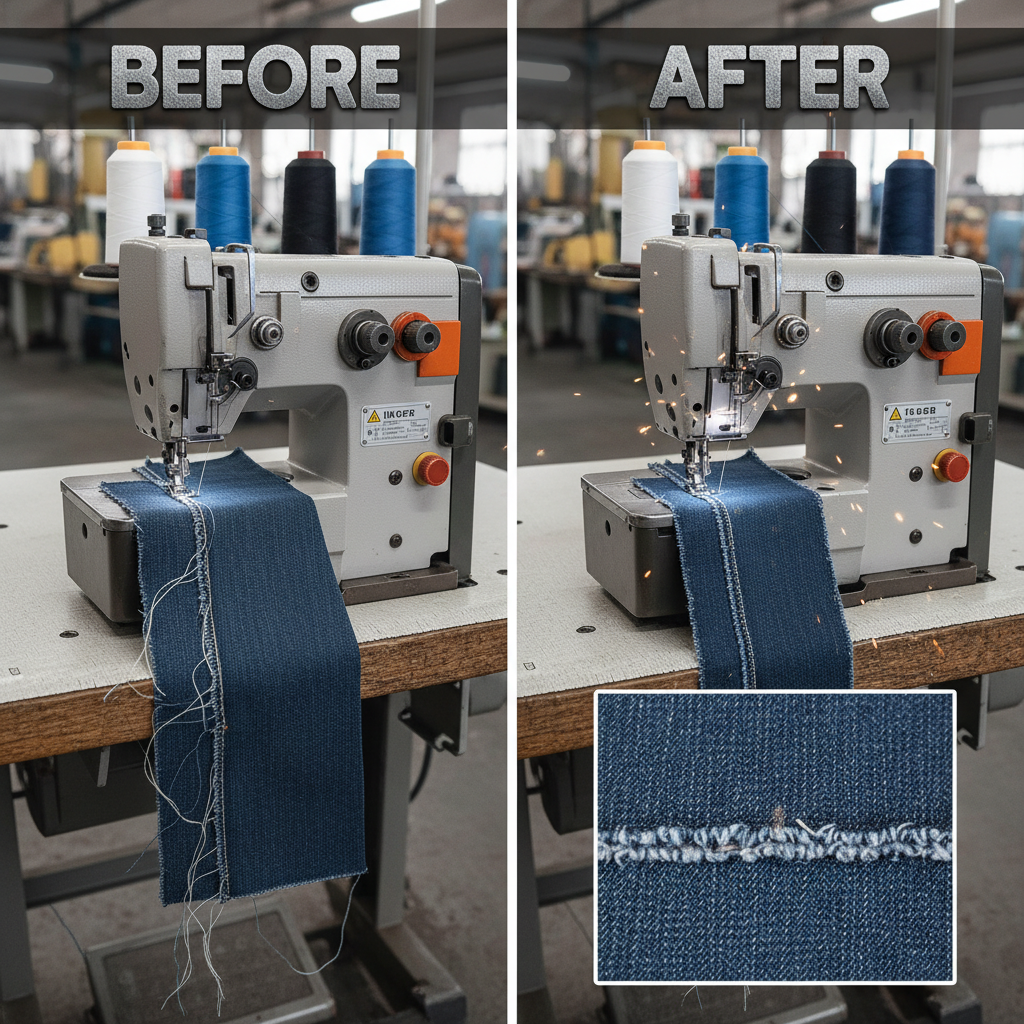
Understanding the Core Function: Overlocking Explained
The primary function of an overlocker is to encase the raw edge of fabric with thread, preventing it from unraveling. Unlike a standard sewing machine that simply stitches two pieces of fabric together, an overlocker simultaneously sews, trims, and finishes the edge. This process creates a neat, professional finish that is often seen in ready-to-wear garments. Overlockers use loopers instead of a traditional needle and bobbin system, creating a secure, flexible seam. This makes them ideal for stretch fabrics and delicate materials that might be prone to fraying. Choosing the right overlocker for your needs, such as those offered at Longsew, can dramatically improve the quality of your finished products.
Key Benefit: The overlocking process creates a seam that is both durable and flexible, making it perfect for garments that require a lot of movement or are made from stretch fabrics.
Types of Overlockers: Finding the Right Machine for You
Overlockers come in various types, each suited to different sewing needs. The most common types include: 3/4 Thread Overlockers – These are the most versatile and popular type, ideal for finishing edges and creating professional seams. 5 Thread Overlockers – Offering greater durability and a more secure seam, these are often used for heavier fabrics and garments that require extra reinforcement. Coverstitch Machines - Primarily used for creating hems and decorative stitching, they produce a professional-looking finish similar to that found on t-shirts. Understanding the specific capabilities of each type will help you choose the machine that best suits your projects. Longsew's selection includes a variety of overlockers to meet diverse sewing demands.
Overlocker Types at a Glance:
• 3/4 Thread Overlockers: Versatile and ideal for most projects.
• 5 Thread Overlockers: More durable, suitable for heavier fabrics.
• Coverstitch Machines: Specialized for hems and decorative stitching.
Overlocker vs. Sewing Machine: A Detailed Comparison
While both overlockers and sewing machines are essential tools for sewing, they serve different purposes. A sewing machine primarily joins fabrics together, while an overlocker finishes edges to prevent fraying. An overlocker's speed and efficiency in edge finishing often surpass that of a standard sewing machine using a zigzag stitch. Furthermore, the specialized loopers in an overlocker create a stretchier, more durable seam, particularly important for knit fabrics. The Longsew range offers both machines to give you the best of both worlds.
Benefits of Using a Sewing Overlocker
Investing in a sewing overlocker provides numerous benefits: Professional Finish: Creates a polished, ready-to-wear look. Durability: Stronger seams that resist unraveling. Speed and Efficiency: Faster edge finishing compared to standard sewing machines. Versatility: Capable of various stitch types, including rolled hems and decorative finishes. Better for Stretch Fabrics: Produces seams that stretch with the fabric, preventing popping or breakage. Explore the options available at Longsew to enhance your sewing projects.
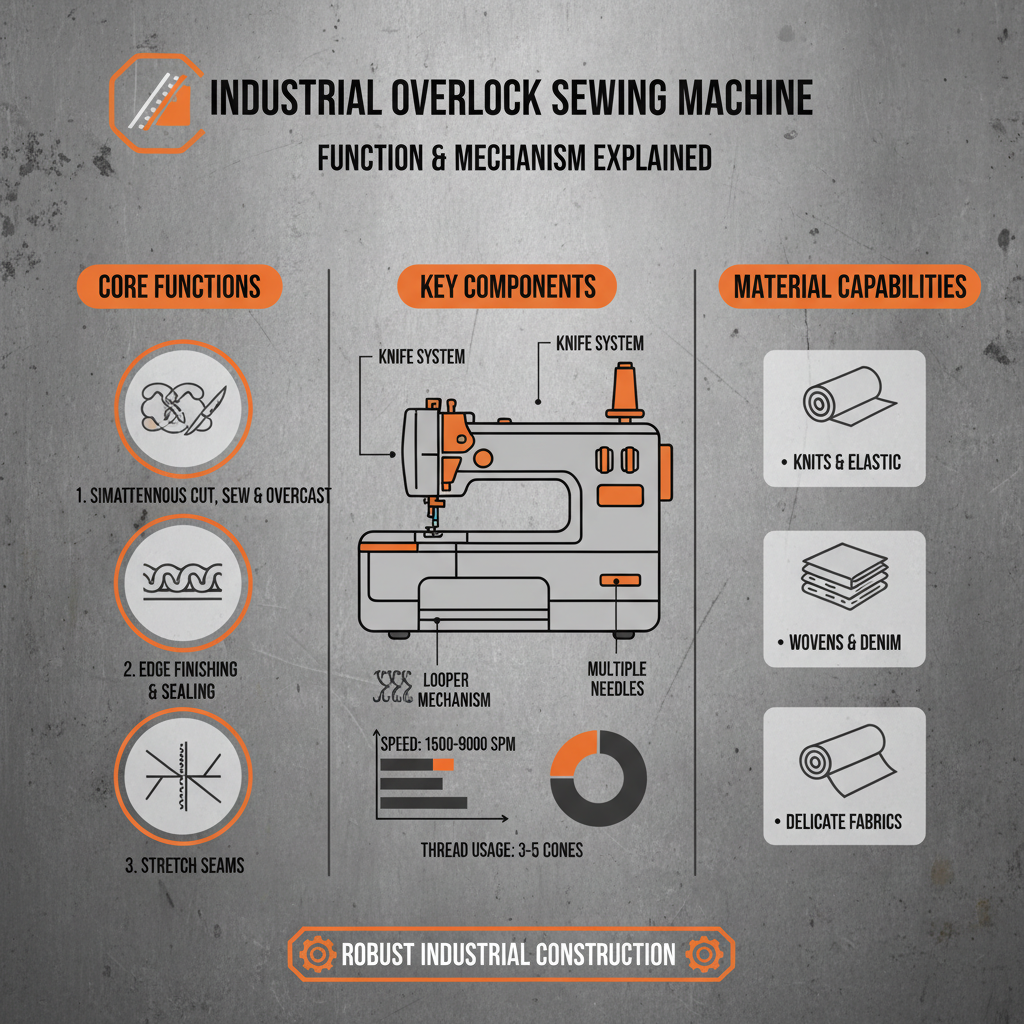
Choosing the Right Overlocker: Key Considerations
When selecting an overlocker, consider the types of fabrics you frequently work with, your budget, and the features you need. Beginners might start with a basic 3/4 thread overlocker, while more experienced sewers may benefit from the advanced capabilities of a 5-thread model. Factors such as ease of threading, adjustable stitch length and width, and the availability of accessories are also important. Longsew provides expert advice and a wide range of overlockers to suit every skill level and budget.
Conclusion: Elevate Your Sewing with an Overlocker
The sewing overlocker is a valuable addition to any sewing setup. Its ability to create professional-looking, durable seams quickly and efficiently makes it an essential tool for both hobbyists and professionals. By understanding the different types of overlockers and their benefits, you can choose the perfect machine to enhance your sewing projects and achieve outstanding results.
Frequently Asked Questions (FAQs)
What fabrics are best suited for overlocking?
Overlockers excel at finishing edges of knit fabrics, preventing them from unraveling due to their stretch. They're also fantastic for woven fabrics like chiffon, silk, and lightweight cotton, providing a clean, professional edge. However, overlockers can handle a wide range of fabrics, from delicate to heavy-duty, depending on the machine's capabilities and the type of thread used. For thicker fabrics, a 5-thread overlocker is generally recommended.
How difficult is it to learn to thread an overlocker?
Threading an overlocker can initially seem daunting, as it involves multiple threads and loopers. However, modern overlockers often feature color-coded threading guides to simplify the process. With practice and patience, it becomes much easier. Many online tutorials and resources are available to help beginners master this skill. Longsew provides detailed resources and support to assist customers with overlocker setup and operation.
Can an overlocker replace a sewing machine?
No, an overlocker cannot completely replace a sewing machine. While it excels at edge finishing and some seaming tasks, it doesn't have the same versatility as a sewing machine for general sewing operations like inserting zippers, creating buttonholes, or decorative stitching. Ideally, an overlocker complements a sewing machine, providing a complete sewing solution.
What maintenance is required for an overlocker?
Regular maintenance is crucial for keeping your overlocker running smoothly. This includes cleaning lint from the loopers and blades, oiling moving parts, and replacing needles and blades when they become dull. Refer to your overlocker's manual for specific maintenance instructions. Proper maintenance ensures optimal performance and prolongs the lifespan of your machine.
Latest news
-
Industrial Bag Sewing Machine Price and Comprehensive Buying GuideNewsApr.16,2026
-
Industrial Hand Held Bag Closer for Efficient Packaging SealingNewsApr.16,2026
-
Industrial Hand Held Bag Closer Sewing Machine for PackagingNewsApr.16,2026
-
Efficient Industrial Bag Closer Sewing Machine for PackagingNewsApr.16,2026
-
Industrial Sewing Guide for Choosing the Right Closer MachineNewsApr.16,2026
-
Guide to Capital Bag Closer Machine Price and Buying FactorsNewsApr.16,2026
-
Say goodbye to inefficient cutting! This heavy-duty webbing hot cutting machine redefines the new standard for industrial cuttingNewsApr.14,2026

Hebei LongSew Machinery Technology Co. Ltd is beginning as sewing machine parts supplier, now Longsew have over twenty years experience in complete set sewing machine offering.


CLASSIFICATION
CONTACT US
-

No.368 North Youyi Street, Shijiazhuang City, Hebei Province, China
-

-

Copyright © 2026 HEBEI LONGSEW MACHINERY TECHNOLOGY CO. LTD All Rights Reserved. Sitemap | Privacy Policy | Top Blog | Global Service